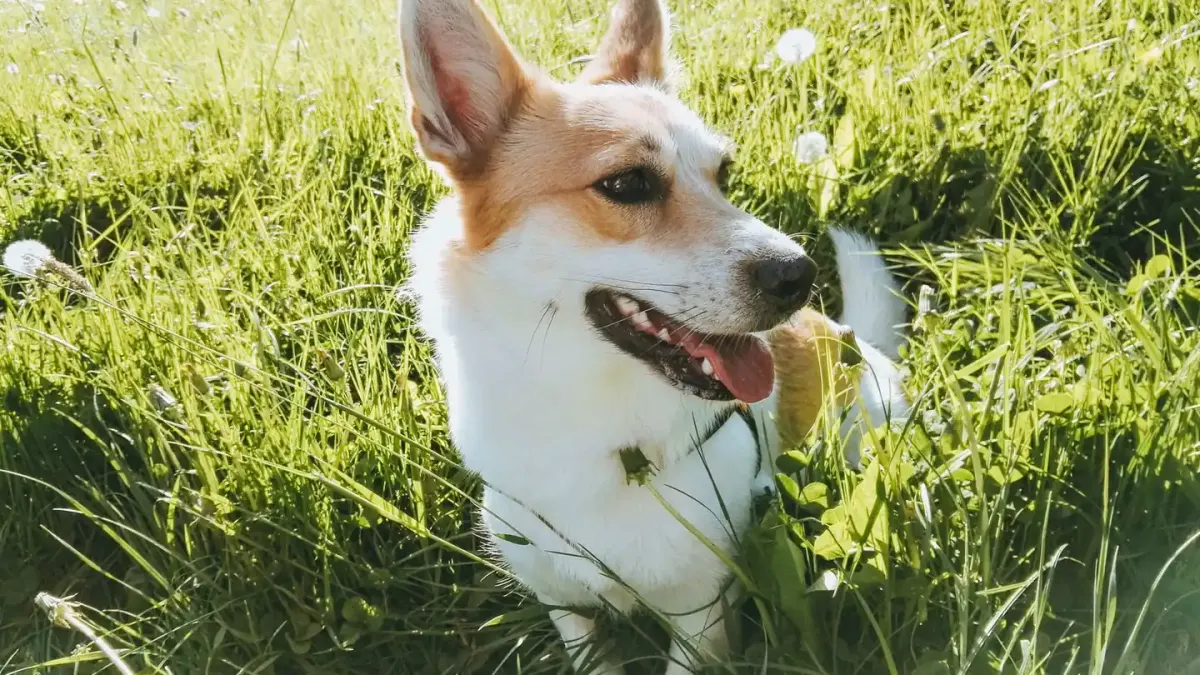
Yesterday evening he trotted to the curb like always, then planted all four feet at the driveway seam and would not take another step. That freeze is information, not disobedience.
My working rule: treat a sudden refusal as a tolerance signal until proven otherwise. Load exceeded what the tissues, gut, or brain could handle that day, and the dog is telling you where the limit sits.
The curb-side checklist — run it in order:
- Stop, slack the leash, and scan breathing, gait, and feet
- Offer a 2-minute reset: shade, water, no coaxing or dragging
- Palpate paws, check nails, look between toes for burrs or heat
- Note context: new route, heat, yesterday’s hard play, slippery floors that morning
- Watch the turn home: eager to return points toward fear or fatigue; still reluctant points toward pain
- Call your veterinarian the same day for yelping, limping, swollen joints, vomiting, diarrhea, pale gums, or collapse
A 6-year-old 68-pound Labrador I follow for weekend field work gave us the textbook version. For three weeks he had been doing longer retrieves on wet ground, then on a Tuesday evening walk he sat after 40 yards and refused treats. His owner thought stubbornness. On exam his left forelimb carried less load, his pads were abraded from a new sidewalk route, and he was breathing faster than usual in 82-degree air. By day 10 of reduced impact activity and paw care under veterinary direction, his willingness to start the walk had returned and his stride looked even again.
Read the stop before you fix the stop
A refusal has texture. A joint-related stop often shows as lagging behind, sitting after a predictable distance, stiffness rising from a rest, or reluctance on stairs and curbs. A fear-related stop shows as scanning, tucked tail, yawning, or balking at one specific corner, grate, or loud intersection. A heat or gut-related stop shows as heavy panting, drooling, slowing, or wanting shade and grass rather than pavement. You can learn more about heat buildup in Exercise Ideas for Toy and Small Breeds: A Load-Smart Guide and Signs Your Dog Is Overheating During Exercise.
Do not prescribe your own new training volume here. That decision belongs with your veterinarian or a canine sports-medicine specialist, especially if lameness lasts more than a day.
Short answer matters here.
Pain changes the math faster than fitness does.
Why tissue tolerance can drop overnight
Think like a team clinician: every walk is load, every rest is a recovery window. Cartilage, tendon, and paw tissue adapt when load and recovery stay balanced. A spike — a long weekend hike, daily fetch on hard ground, extra body weight, or a missed rest day — can leave tissues irritable even if the dog looked fine yesterday.
Nutrition does not rebuild that window overnight, but it may help support the joint environment around it. That is where I stay evidence-bounded. Chondroitin is one example where the language should stay careful: research described as “supports healthy synovial fluid homeostasis” and reported in Frontiers in Veterinary Science. Synovial fluid is the lubricant inside the joint capsule, and homeostasis is worth protecting in an active dog because friction and stiffness rise when lubrication suffers.

Glucosamine sits in the same category. Laboratory work noted it can “prevent experimentally induced cartilage degradation in vitro” as described in The Journal of Veterinary Medical Science. In vitro means in cells in a dish, not proof of pain relief on a sidewalk, so I frame it as tissue support during a veterinarian-guided load plan, not a reason to push through a limp.
The failed approach I see most often looks like this. A 4-year-old 44-pound mixed-breed started refusing the second half of her evening loop. Her owner, worried about lost fitness, added a morning loop to “keep her in shape” and lured her forward with higher-value treats for five days. The balking got earlier, not later, shifting from mile one to the end of the block. Video showed a shortened stride on the right hind and difficulty rising after naps. The extra miles had turned a recovery problem into an overload problem, and the treats had masked the early warning until the gait change was obvious.
Where green-lipped mussel and daily fueling fit
Green-lipped mussel is ingredient-literate shorthand for omega-3s plus glycosaminoglycans studied for joint support. One mechanistic paper noted that “BMO, GMO, and KO all alleviated paw swelling in rats and reduced serum levels of rheumatoid factor (RF), anti-cyclic citrullinated peptide (anti-CCP) antibody, and pro-inflammatory cytokines such as TNF-α and IL-17” in Nutrients. That is rat and biomarker data, not a canine lameness trial, so I use it only to explain why a veterinarian might include it in a broader mobility diet, alongside weight control, adequate protein, and omega-3 balance.
The strongest counterargument deserves airtime: supplements may do little if load, body condition, and pain control are wrong. I agree. No powder corrects a torn cruciate ligament, a nail driven into a pad, an overheated dog, or a fear memory tied to one intersection. Food therapy and supplement science may help support diet, mobility, and recovery, but diagnosis and load decisions come first.
The edge case that changes the plan involved a 9-year-old 18-pound terrier mix who refused only the outbound half of the walk for three weeks in late summer. At home he sprinted to the kitchen, jumped on the couch, and played normally. The pattern pointed away from constant orthopedic pain. A careful history found two triggers stacked together: a skateboard crash at the same corner plus early-morning slick kitchen floors that left him sore for an hour after slipping. By day 14 of a vet-approved plan that changed the route, added rugs, and kept mornings quiet, he walked out willingly again while his overall exercise stayed conservative.
If your dog suddenly stops, keep the response boring and consistent: end the walk calmly, log distance, surface, heat, stool, and stiffness, and share that log with your clinic. For ideas on rebuilding easy movement once your veterinarian clears it, review Dog Treadmill vs Outdoor Walking: What Actually Builds Fitness and Protects Joints. Forward progress from here is measured in willing starts, even strides, and quick recovery — not in miles reclaimed.
Sources
- Synovial fluid homeostasis study — Frontiers in Veterinary Science
- Cartilage degradation in vitro study — The Journal of Veterinary Medical Science
- Marine oil paw swelling study — Nutrients