Dog Treadmill vs Outdoor Walking: What Actually Builds Fitness and Protects Joints
Nine years of watching dogs come through my rehab caseload has taught me that the treadmill question is never really about the machine — it's about whether the owner understands what load their dog is carrying that week.
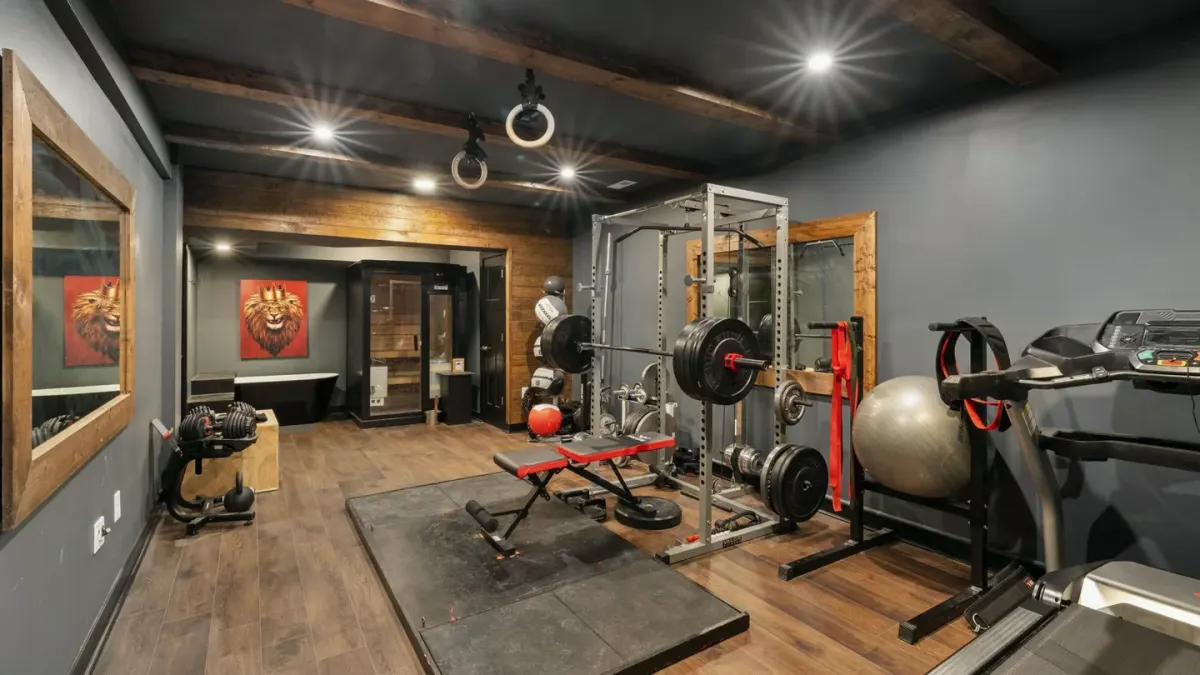
Three winters ago, a client brought in an eight-year-old Labrador named Otis — sixty-two pounds, arthritic in both hips, and increasingly resistant to his usual thirty-minute neighborhood loop once the sidewalks iced over. The owner had bought a treadmill in November, hoping to keep Otis’s conditioning intact through the season. By February, Otis had gained four pounds and started refusing the treadmill belt outright, planting his feet and backing off within ninety seconds of the motor starting. Nothing was wrong with the machine. What had changed was that Otis’s joints, accustomed to the constant micro-adjustments of grass, gravel, and curb cuts, found the flat, repetitive belt surface both boring and, I suspect, subtly harder on a hip that liked variable loading better than fixed loading. That case is where I start when clients ask me to just pick a winner.
The honest answer is that a treadmill and an outdoor walk are not competing for the same job, and treating them as interchangeable is where most owners go wrong. A treadmill controls variables — incline, speed, duration — in a way no sidewalk ever will. That control has real value for a dog recovering from injury, or for building measurable aerobic capacity in a working or sporting dog on a training block. But outdoor walking delivers something a treadmill structurally cannot: varied terrain that forces small stabilizing muscles and connective tissue to work through a full, unpredictable range rather than a single repeated stride pattern.
What “load” actually means for a walking dog
In sports-medicine terms, load isn’t just distance or minutes — it’s the combination of surface, incline, speed, and how much stabilizing work a joint has to do on every single step. A flat treadmill belt at a fixed speed produces a highly uniform load: the same stride length, the same impact angle, over and over. That uniformity is useful when you’re trying to isolate and rebuild a specific movement pattern after injury, which is why treadmills show up so often in canine rehab settings. It’s less useful as a stand-in for the kind of tissue conditioning a dog gets from navigating a curb, a slope, or a patch of uneven grass, where the ankle, stifle, and hip are constantly recalibrating.
I’ve watched this play out with working and sporting dogs specifically. A client’s three-year-old Border Collie training for agility had plateaued on treadmill conditioning alone — good cardiovascular fitness, but noticeably less confident footwork on the uneven ground of a competition field compared to littermates who trained mostly outdoors. We didn’t abandon the treadmill; we cut its share of the week roughly in half and rebuilt the missing terrain exposure gradually, over about six weeks, watching her stride and confidence on hills the whole time. That’s a single case, not a study, but it matches what I’d expect from the biomechanics: a machine can build engine capacity without necessarily building the proprioceptive and stabilizing work that uneven ground demands. If your dog’s exercise needs are shaped by breed and drive as much as by terrain, a piece like Border Collie vs Australian Shepherd: Which Working Dog Fits Your Training Load? is a useful companion read on matching training volume to the dog in front of you.
Where a treadmill genuinely earns its place
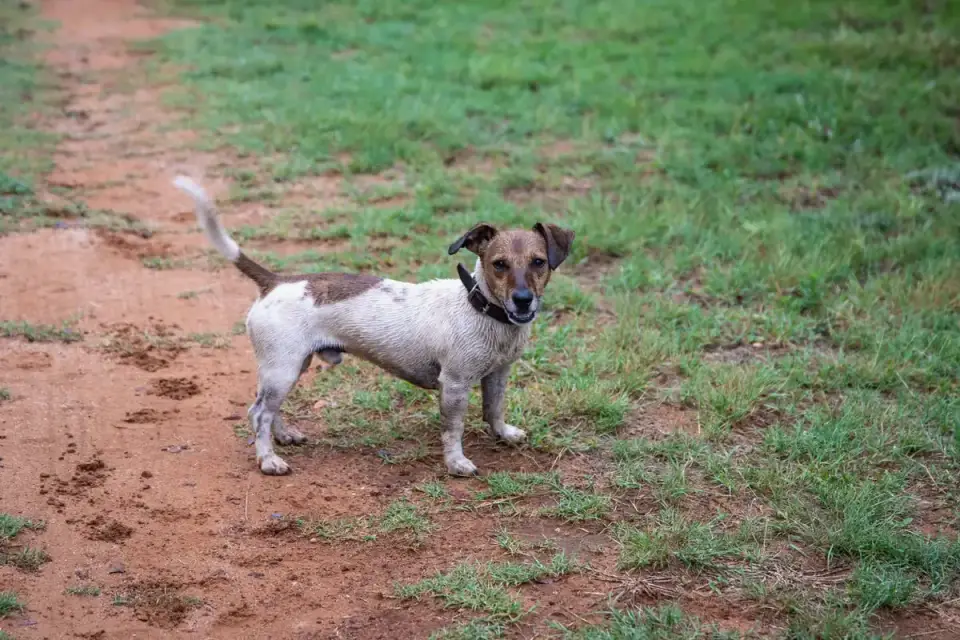
None of this means treadmills are a lesser tool — they’re the right tool for specific jobs. Weather-locked climates, apartment-bound small breeds, and dogs recovering from orthopedic surgery under a rehab specialist’s guidance all benefit from a treadmill’s ability to hold pace and incline constant while a joint rebuilds tolerance in a controlled, progressive way. Toy and small-breed owners in particular are often solving a scheduling and safety problem, not a fitness one, and our guide on Exercise Ideas for Toy and Small Breeds: A Load-Smart Guide covers how to size activity to a smaller frame regardless of which surface you’re using.
Where I get more cautious is extrapolating “more distance” into “more joint health.” Distance and load are related but not identical, and a dog logging miles on a treadmill without any terrain variety can still be under-conditioned for real-world stability. That’s part of why I think about mobility support the way a sports-medicine desk thinks about recovery fueling — as one piece of a load-management picture, not a fix on its own. Ground that in the actual nutritional evidence rather than marketing copy: research published in Frontiers in Veterinary Science found that chondroitin “supports healthy synovial fluid homeostasis,” while a review in the Journal of Veterinary Medical Science noted that glucosamine HCl can “prevent experimentally induced cartilage degradation in vitro.” Neither claim tells you whether your dog needs a supplement, a treadmill, or a longer outdoor walk — that’s still a case-by-case judgment about load, not a substitute for it.
Green-lipped mussel has similar in-vitro backing worth knowing about if a joint-support conversation comes up with your vet: a study in Nutrients reported that mussel-derived compounds “alleviated paw swelling in rats and reduced serum levels of rheumatoid factor (RF), anti-cyclic citrullinated peptide (anti-CCP) antibody, and pro-inflammatory cytokines such as TNF-α and IL-17.” That’s animal-model evidence, not a canine clinical trial, so I’d weigh it as supportive context rather than a promise. If you want a broader, dose-by-dose look at how joint supplements stack up, our sports-medicine team ranked the category in Best Joint Supplement for Dogs (2026): Loadline’s Sports-Medicine Picks, Ranked by Dose and Testing.
The decision I actually make with clients
By late spring, Otis’s owner had shifted his routine: three outdoor walks a week on varied terrain, kept short and slow on his worse hip days, plus one treadmill session for a controlled, low-impact aerobic day when the joint was flaring. He didn’t need a verdict on which tool was “better.” He needed a rotation that matched what his hip could tolerate that particular week, which is the same conversation I have with almost every owner who brings me this question. A treadmill is a conditioning tool with excellent control and poor terrain variety. An outdoor walk is the opposite — less control, far more sensory and proprioceptive value. Most healthy dogs do best with both in the mix, weighted toward whichever one matches the season, the injury history, and the owner’s actual schedule.
So which one should you buy, or use more of this month? That mostly depends on what job you’re asking it to do for your dog’s joints right now — and that’s worth sitting with before the next bag of kibble runs out.
Frequently asked questions
Is a treadmill bad for a dog's joints?
Not inherently — a flat, controlled belt can be gentler on a healing joint than uneven ground, which is why treadmills show up in canine rehab settings. The tradeoff is that a treadmill alone doesn't provide the varied, uneven-surface loading that builds stabilizing strength the way outdoor walking does.
Can a treadmill fully replace outdoor walks?
For most healthy dogs, no. A treadmill is excellent for controlled conditioning, but outdoor terrain provides sensory and proprioceptive work — navigating slopes, curbs, and uneven ground — that a flat belt can't replicate.
Sources
- Chondroitin sulfate and joint homeostasis — Frontiers in Veterinary Science
- Glucosamine HCl and cartilage degradation — Journal of Veterinary Medical Science
- Green-lipped mussel compounds in an arthritis model — Nutrients