
On this page
Most owners hear “strict rest” and picture total stillness, then hear “keep him moving” a week later and feel whiplashed. Both instructions are right — they just belong to different healing windows.
A 6-year-old, 68-pound Labrador mix three days out from a stifle procedure is the classic case. She is bright, hungry, bouncing on three legs in the kitchen, and her owner worries that any step will tear the repair — while also worrying that no steps will turn her into a stiff, muscle-wasted dog by suture removal. By day 10, the incision looks clean but she drags the leg after five minutes of sniffing outside, then pants hard. That contrast is the decision you are actually managing: protect the surgical tissue early, then reload it gradually so tolerance rebuilds.
Do short, leashed, flat-surface outings only as your surgeon directs, add minutes before you add terrain, and use nutrition to support the diet underneath rehab — not to rush it.
Let tissue set the schedule, not the calendar
Healing does not follow a single timeline. Skin closes in 10–14 days, muscle regains tone over weeks, and ligament, capsule, or bone remodeling runs longer. Load tolerance returns in that same order.
That is why I prioritize this sequence for almost every post-op dog:
Do exactly what the discharge sheet says for the first 72 hours. Crate or small-room rest, potty on leash, no stairs, no off-leash, ice or warm compress only if prescribed. Track the markers your surgeon cares about. Weight-bearing at a walk, incision swelling or discharge, pain on rising, and willingness to load the leg for the full potty loop. Progress duration before intensity. A flat five-minute leash walk done well beats a fifteen-minute walk with hills, fetch, or dog-park wrestling. Stop the session for heat, swelling, new lameness, or next-day soreness, then call the clinic before the next increase.
My conviction here is narrow: food and supplements may help support the tissues around recovery, but they do not change mechanical healing time. The strongest counterargument is that a dog who feels better moves more, so pain relief or joint support must be accelerating repair. It often increases activity, which can look like healing — until overload sets the leg back. I still land on load control first, nutrition second, because no ingredient lays down collagen or remodels bone faster than biology allows.
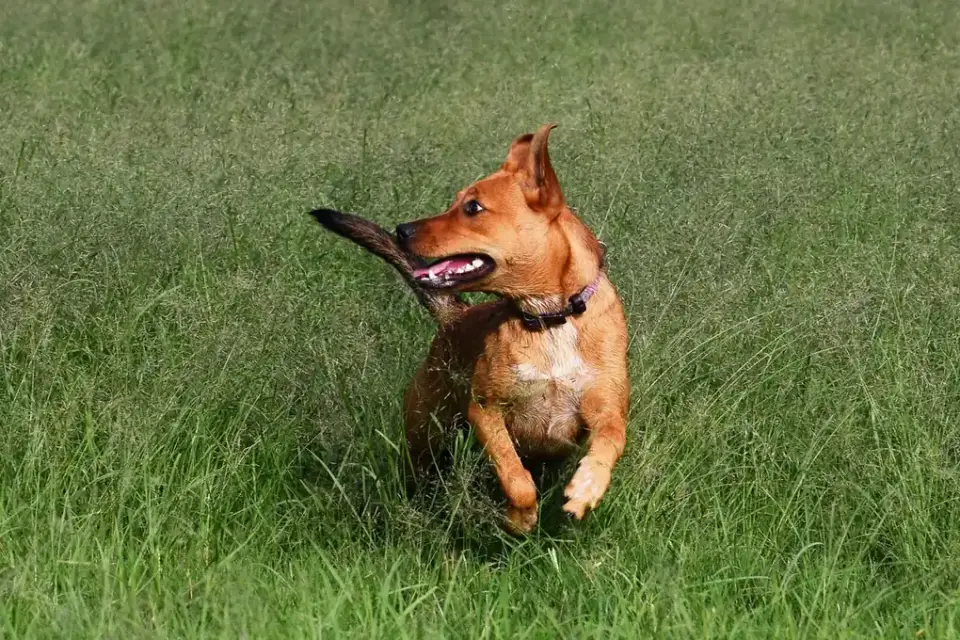
Where controlled motion helps and where rest still wins
A 4-year-old, 34-pound Border Collie two weeks in shows the tradeoff clearly. Her owner, trying to prevent stiffness, added hallway fetch and ten minutes of tug because the dog “had energy to burn.” For two evenings she looked looser and happier, then on the third morning she refused the operated hind leg, the stifle was warm, and the clinic rolled the plan back to potty-only for five days. The failed approach was not intent — it was adding speed, turns, and eccentric load before straight-line tolerance existed. Controlled leash walking supports circulation and maintains motor patterns; sprint-stop-twist play loads the exact planes surgeons most want protected early on.
Use this filter:
Straight, slow, and leashed early. Think driveway and hallway, not park loops. Add one variable at a time. More minutes one week, gentle incline the next, never both together. Keep rehab exercises clinic-prescribed. Cavaletti poles, sit-to-stands, and underwater treadmill have dosing rules for a reason — see how fitness without pounding is framed in Dog Treadmill vs Outdoor Walking: What Actually Builds Fitness and Protects Joints. Watch heat as closely as lameness. A panting, glazed dog is not “working through it,” and the signs described in Signs Your Dog Is Overheating During Exercise apply even on a short rehab walk.
That single-sentence rule carries the whole phase: if you have to ask whether it was too much, log it and do less tomorrow.
What joint nutrition can realistically do here
Food therapy first: adequate high-quality protein, balanced calcium and phosphorus, and enough calories to heal without gaining fat. Extra body weight is extra load on every step, which matters more after surgery than any powder in the scoop.
Supplement science is supportive, not structural. Glucosamine and chondroitin are among the most studied joint support ingredients for dogs, which is why they appear so often in recovery feeding plans, yet study results are mixed and they do not rebuild a cruciate or close an incision. I describe them to owners this way: they may help support the joint environment while rehab rebuilds strength.
The mechanisms are modest and specific. Work summarized in the Journal of Veterinary Medical Science found glucosamine HCl “prevent experimentally induced cartilage degradation in vitro,” a laboratory finding — not proof it speeds post-op return to running. Research in Frontiers in Veterinary Science describes chondroitin as material that “supports healthy synovial fluid homeostasis,” which fits how I think about keeping a resting joint environment nourished rather than forcing range of motion. For green-lipped mussel, a review in Nutrients reported that “BMO, GMO, and KO all alleviated paw swelling in rats and reduced serum levels of rheumatoid factor (RF), anti-cyclic citrullinated peptide (anti-CCP) antibody, and pro-inflammatory cytokines such as TNF-α and IL-17.” That is rodent and inflammatory-marker work, useful context for why mussel contains omega-3 fatty acids and glycosaminoglycans studied for joint support, not a reason to advance exercise faster.
Keep doses, brands, and drug interactions under your surgeon’s approval, especially if NSAIDs, anticoagulants, or sedatives are still on board.
The edge case that changes the plan
A 9-year-old, 18-pound toy mix by week five looks “cleared” on paper but tells a different story on pavement. She walks soundly for eight minutes, then sits, licks the incision line, and wants to be carried home. Radiographs and incision are fine — endurance and confidence are not. Small and senior dogs often lose conditioning faster during confinement, overheat sooner, and mask soreness by simply stopping rather than limping loudly.
For that dog I keep the same straight-line walk but split it: two six-minute loops with a full rest and water break between, same total load with a recovery window built in. Toy-breed pacing ideas from Exercise Ideas for Toy and Small Breeds: A Load-Smart Guide translate well here. If appetite dips, nausea appears, or weight drops, the fueling side needs attention before the mileage side does.
Looking forward, aim for boring consistency: same route, same pace, slightly longer, with a weekly check-in until your veterinary team clears turns, hills, and play.
Frequently asked questions
When can my dog exercise after surgery?
Only on your surgeon's timeline. Most dogs start with short leashed potty walks, then add minutes gradually over weeks if weight-bearing, swelling, and comfort stay normal. Off-leash running, jumping, and rough play wait until formal clearance.
How do I know if we did too much?
New or worse lameness during or after a walk, warmth or swelling at the surgical site, reluctance to rise the next morning, or needing to sit and quit mid-walk. Scale back and call your clinic before progressing.
Should I give a joint supplement to speed healing?
Joint ingredients do not speed tissue healing. With vet approval they may help support the nutritional background for joints and mobility during rehab, while controlled loading and physical therapy do the main work.
Sources
- Cartilage degradation in vitro study — Journal of Veterinary Medical Science
- Synovial fluid homeostasis study — Frontiers in Veterinary Science
- Marine oil paw swelling study — Nutrients