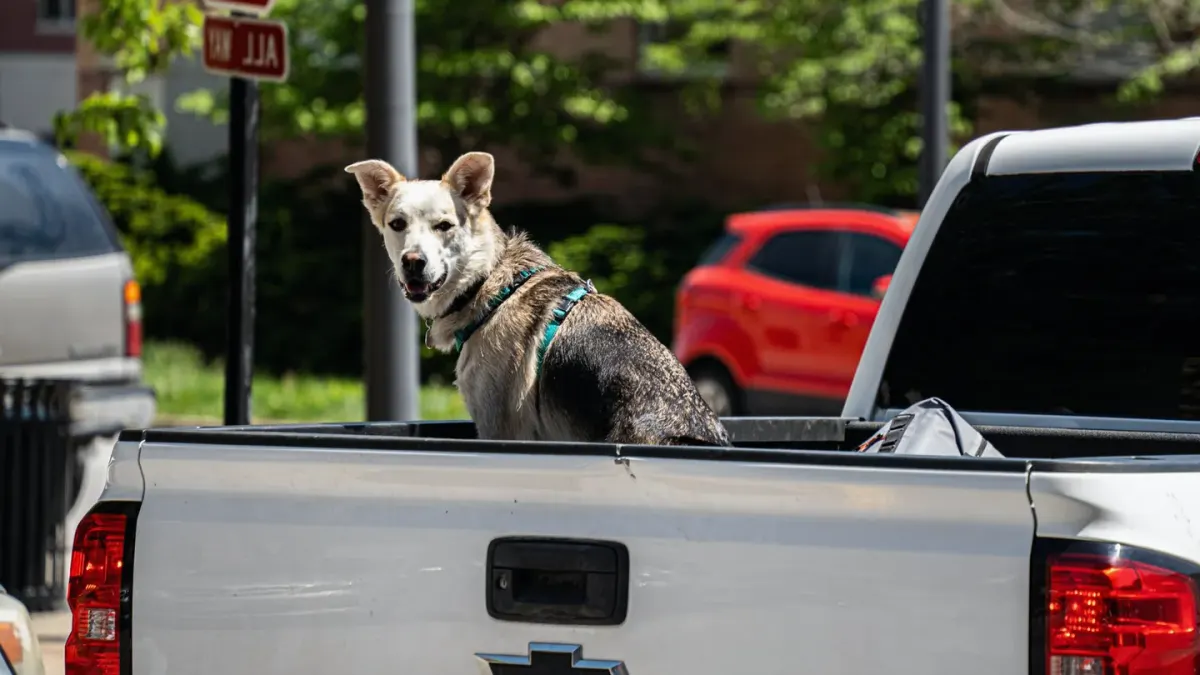
A car door opens at mile 212, a shoulder rolls, and your dog is suddenly loose between the trash cans and the highway. I counsel owners to expect this exact moment before a road trip, because rest stops stack every trigger a dog struggles with: new smells, traffic noise, stiff legs from riding, and a handler who is rushed. The escape looks like defiance. It is usually arousal plus a harness that never fit for backing up.
If it happens right now, do this in order:
- Freeze. Turn sideways, soften your knees, and stop chasing.
- Drop your voice low and stay boring. Say the dog’s name once, then wait.
- Crouch or sit if you can do it safely away from traffic. Toss treats behind you, not toward the dog.
- Open a car door wide as a trap if the dog is car-conditioned and the lot allows it.
- Leash to collar or slip a spare leash around the neck only once you have hands on the dog, then move away from traffic to settle.
- Do not refit the same loose harness in the same excited state and keep walking.
That sequence is the verdict for this whole guide: contain first, settle second, refit third. Most owners try to do all three at once, which keeps arousal high and makes a second escape more likely.
Three weeks in to a new rescue placement, a 4-year-old 52-pound pit mix came to see me after a rest-stop scramble outside Flagstaff. She had ridden well for four hours, then slipped a back-clip harness when she planted her front feet and reversed as a truck air-braked beside her. The owner lunged for the chest strap, the dog ducked, and they spent nine minutes circling the dog-walk island while traffic passed 30 feet away. What changed the outcome was not a better recall cue. The owner finally sat on the curb, opened the back door, and shook the treat pouch. The dog loaded herself. That pattern — freeze, boring handler, car as magnet — settles more dogs than any grab.
Why backing out works so well at rest stops
A harness fails in reverse. When a dog pulls forward, chest pressure tightens most designs. When a dog plants and backs up, the shoulders narrow, the chest strap rides forward, and the whole harness can slide over the head in one motion. Add a stiff body after hours in the car, plus a startle, and tissue tolerance for restraint is low.
This is where I stay decisive even though owners want a product answer. Fit and handling matter more than harness style. A snug belly strap with two fingers of clearance, a chest piece that cannot slide to the throat, and a leash clipped to both harness and collar as backup will prevent more escapes than switching from back-clip to front-clip alone. For the mechanics behind that choice, compare Front-Clip vs Back-Clip Dog Harness: What the Biomechanics Actually Say.
That backup clip is my evidence-bounded recommendation. The strongest counterargument is that two points of attachment feel fussy and owners will skip it on a quick pee stop. That is fair. My answer is still to keep a short double-ended leash or a collar-to-harness connector already attached in the car, because the highest-risk stop is the rushed one.
Do not prescribe your dog more exercise at the stop to “burn it off.”
That single line matters for safety. A sprint around the dog run raises arousal before you have containment.
Settle the nervous system before you fix the gear
Step 1: Lower the load for 5 to 10 minutes
Move 20 to 40 feet from traffic, doors, and other dogs if you can. Stand behind the car as a visual block. Let the dog sniff one patch of grass on a loose leash. Sniffing lowers respiratory rate and gives stiff postural muscles a chance to loosen after riding.
Watch for the markers I use in the exam room: soft blink, shake-off, yawn, then a voluntary check-in glance. Until you see at least one of those, do not ask for sits, photos, or greetings.
Step 2: Refit only when the dog is bored
Check three points. Belly strap snug, chest strap below the throat, neck opening narrow enough that you cannot pull it forward over the ears with light pressure. If the dog is still panting hard, pacing, or scanning, wait. Refitting on a panting dog guarantees you will fit to an expanded chest and end up loose five minutes later.
By day 10 of a driving-heavy move, one client with a 2-year-old 68-pound Lab learned this the hard way. He refit the harness while the dog was still whining at passing trucks, thought it felt snug, then watched the dog reverse out of it at the next stop when a skateboard passed. The failed approach was not the harness brand. It was timing. He had tightened nylon over a fully inflated ribcage, then asked for a heel past a trigger before the dog had decompressed. Once we added a sit-behind-the-car pause with water and three minutes of sniffing before any refit, the same harness held. The tradeoff is real: you lose five minutes now to save twenty minutes of panic later.
For small dogs the physics flip. A 12-pound dog can slip sideways through a chest gap that looks secure, and owners tend to overtighten to compensate. I would rather see a properly fitted harness plus a snug flat collar as backup than a too-tight harness that restricts shoulder movement. Size changes restraint, recovery, and heat risk together, which is why I ask owners to read Traveling With a Small Dog vs a Large Dog: What Actually Changes before a long route.
The edge case owners miss
Some dogs do not settle because the rest stop itself is the problem. Noise-sensitive dogs, adolescent dogs in a fear period, and dogs with motion-related nausea arrive already over threshold. Their gut clock is off, they have not drunk normally, and the vibration and confinement have built a low-grade stress load for hours.
I saw the clearest version in a 7-year-old 41-pound border collie mix on a three-day relocation. By the second afternoon she would freeze at the car door, refuse treats, and pancake when the harness appeared. The owner assumed stubbornness. What changed my read was the timeline: she ate normally at the hotel by 8 p.m. each night but would not take even cheese at noon stops. That day-night split pointed to cumulative travel load rather than disobedience. We changed the plan to shorter driving blocks, a covered crate in the car for visual rest, and toilet stops in quieter grass edges rather than the main dog-walk strip. She never became a relaxed rest-stop dog, but she stopped bolting. Expectation first: some dogs only manage neutral, and neutral is a win on travel days.
Low-stress handling applies here the same way it does in clinic. Side approach, loose leash, minimal looming over the head, treats tossed rather than pushed toward the face. The American Veterinary Medical Association travel guidance makes the same baseline point about planning restraint, identification, and breaks before you load the car, and it is worth a read alongside a full flight or road plan like How to Fly With a Dog: The Complete Guide.
Prevent the next escape
- Fit at home, not at 70 mph. Mark strap holes with a paint pen.
- Travel with a backup: flat collar with ID, harness, and a connector or double-ended leash already staged.
- Practice the car-door recall as a game before the trip, heavily rewarded, never only for the end of fun.
- Park away from the dog-walk island. Choose the far grass edge.
- Keep a slip leash in the door pocket for recovery only, not for daily walks.
- Microchip check and a current ID tag matter more than any harness upgrade. Loose dogs get returned because of identification, not gear.
If escapes keep happening despite good fit and calmer handling, talk with your veterinarian about underlying anxiety, pain, or nausea. A dog that pants, drools, vomits, or refuses water on every drive may need medical support for the travel itself, not just training. That distinction — behavior versus body — is the preventive lens I want you to keep.
You will not fix rest-stop arousal in one trip.
You can make this trip safer by changing the order: stillness, sniffing, then straps.
Frequently asked questions
Should I chase my dog if it slips its harness at a rest stop?
No. Stop, turn sideways, and become boring. Crouch if safe, toss treats behind you, or open the car door as a magnet. Chasing triggers a prey-like move-away game and pushes most dogs toward traffic.
What is the fastest way to secure a loose dog with no backup leash?
Use food or the open car door to contain the dog first, then get hands on the collar. A spare leash, belt, or slip lead from your car kit can work for the walk back to safety, then refit the harness once the dog has calmed.
Why does my dog only escape the harness on road trips?
Rest stops combine stiffness from riding, novel smells, noise, and rushed handling. Backing up narrows the shoulders and lets a normally fine harness slide forward, especially if it was fitted while the dog was panting.
Sources
- Traveling With a Pet — American Veterinary Medical Association