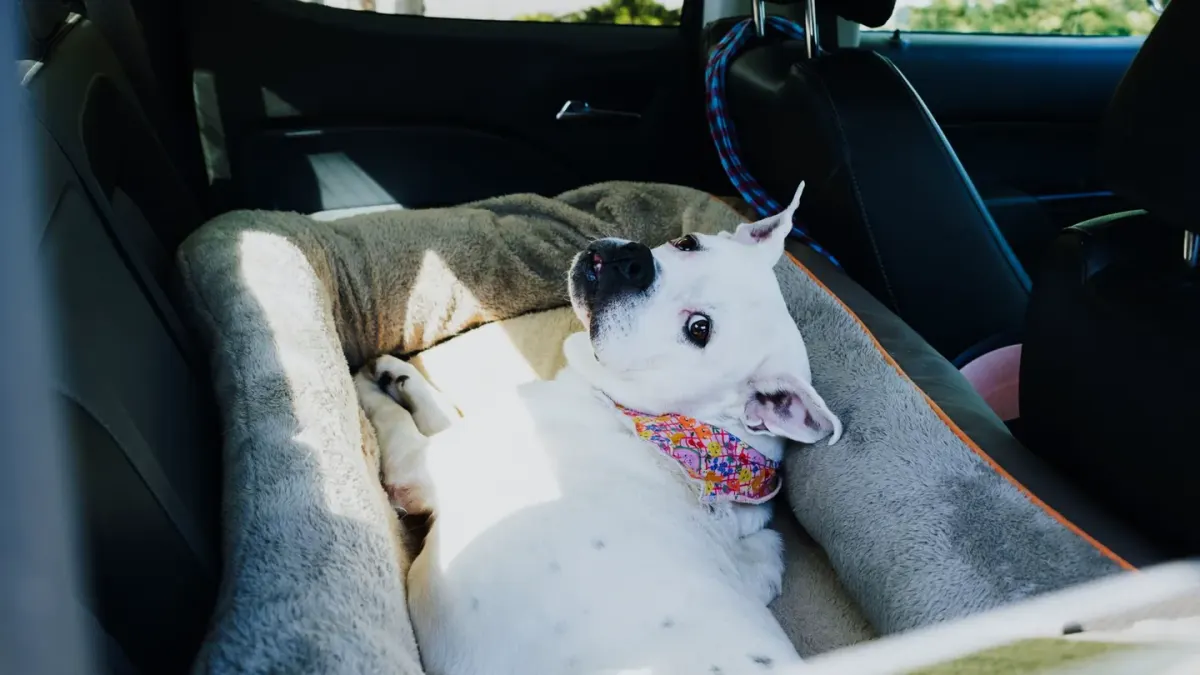
You brake hard at a yellow light and hear the crate thump forward six inches. That sound is load moving where tissue pays for it. I counsel owners to expect this: in an SUV, an unsecured crate becomes a projectile, and even a sliding plastic crate can bruise shoulders, strain necks, and spike stress that ruins recovery for days. My verdict is simple — put a correctly sized crate low and against a seatback, then strap it so it cannot move more than an inch in any direction.
A 4-year-old, 62-pound Labrador taught me how concrete this decision is. He was a weekend trail dog, loose in a large wire crate in the cargo area behind the second row, no tie-downs, thick bed inside for comfort. His owner loved him and thought the bed was protection. Three weeks in to hiking season, one hard stop near a trailhead sent the crate into the seatback and the dog into the crate door, lip split and forelimb lame for two days. The choice being weighed was comfort versus containment, and the observable marker that changed was his refusal to jump into the SUV the next weekend. We kept the same crate footprint, moved it tight to the folded second row, added four rated straps, and rebuilt his loading routine from the ground up.
Put the crate where physics helps you
Center cargo, low floor, braced against the second-row seatback is your best starting point. That position lowers the center of gravity and gives you a solid wall to prevent forward travel in braking, which is the most common high-load event. Fold the third row flat if you have one. Keep it preventive: measure first, because a crate that is too tall tips and one that is too long levers.
If you have not sized it yet, read How to Size a Crate for Your Dog before you buy straps — fit sets everything else. The Center for Pet Safety has tested how crates and restraints perform in crash conditions, and their results favor contained, braced placement over open cargo. The American Veterinary Medical Association also advises securing carriers so they do not slide during normal driving, which is your baseline for low-stress handling.
Strap it so it cannot shift an inch
Use rated tie-down straps or crash-tested crate straps, not bungees. You want a minimum of three points, ideally four, in a cross pattern to factory tie-downs, child-seat anchors, or seat rails — never to plastic trim or cargo covers. Snug each strap until you can push the crate hard and get less than one inch of movement side-to-side and front-to-back.
Route straps through the crate frame, not just the door, and protect wire crates with a second strap around the mid-body so panels cannot splay. Place non-slip matting under the crate, keep the door latched with a secondary clip, and remove loose bowls or hard chews that become missiles. For small versus large setups, Traveling With a Small Dog vs a Large Dog: What Actually Changes explains why mass changes your anchor plan.
My failed-approach story lives here. A 2-year-old, 28-pound cocker spaniel rode in a soft-sided crate wedged between luggage, held by one bungee to a cargo hook. The owner thought tight packing was the same as tie-down. By day 10 of a road trip, the bungee had stretched, the crate had rotated sideways, and the dog was panting, drooling, and refusing treats at rest stops — gut clock disrupted, sleep fragmented, recovery window blown. We tried adding more luggage instead of straps, and it failed again on the next off-ramp. What finally held was boring: a smaller hard-sided crate, four cam straps to metal anchors, and luggage kept separate so load did not shift onto the crate.
Check ventilation, heat, and the ride home
An SUV cargo well can run hot and buzzy. Leave two inches of airflow around vented sides, crack rear windows or run rear climate, and never place the crate flush against glass in sun. Vibration matters for athletes and seniors alike — a thin crate pad over a non-slip base supports joints better than a thick, unstable bed that lets the dog slide. The National Highway Traffic Safety Administration reminds drivers that unsecured cargo increases injury risk in a crash, and a 50-pound crate counts as cargo.
Here is the edge case owners miss. A 9-year-old, 74-pound German shepherd with early arthritis could not step over the high cargo lip into her usual rear crate, so her owner moved her to the second-row seat, belted but uncrated. She rode quieter for a week, then started whining on right turns as she braced with sore elbows. The unexpected consideration was entry height changing the whole plan. We kept her low for joint tolerance — cargo floor with a ramp, crate braced forward, extra recovery day after long drives — and her willingness to load returned. Size and restraint still matter, but access set where restraint could actually happen. For air-versus-car tradeoffs, see How to Fly With a Dog: The Complete Guide.
Do a 30-second check every trip: push, pull, twist. If it moves, re-tension. That habit may help support calmer travel and cleaner recovery than any accessory will.
Frequently asked questions
Where is the safest place for a dog crate in an SUV?
Low on the cargo floor, braced tight against the locked second-row seatback, strapped to metal anchors so it moves less than an inch.
Can I use bungee cords to hold the crate?
No. Use rated cam or ratchet straps to factory tie-downs or seat hardware. Bungees stretch and let the crate rotate or launch in hard braking.
Should the crate door face forward or sideways?
Face the door where you can unload safely curbside, usually rear or side, but keep the strongest crate wall forward against the seatback to take braking load.
Sources
- Crash-Tested Pet Restraints — Center for Pet Safety
- Pet Care and Travel Guidance — American Veterinary Medical Association
- Unsecured Cargo and Crash Risk — National Highway Traffic Safety Administration