On this page
The apartment door opens and a 4-year-old 52-pound brindle mix flattens to the hallway floor, tail thumping but legs unwilling. His foster notes say shelter kennel for five months, no walks beyond the run, nails long, ribs just covered. His new owner wants to do right and is weighing a 45-minute park loop on day two to help him settle. By day 10 the marker that matters is not enthusiasm on the sidewalk, it is how he rises the morning after — stiff for three steps, then loose, telling us the tissues absorbed the load.
My verdict for a blank-history rescue is conservative on purpose: short, split leash walks with a full recovery check, then small weekly additions only if morning movement, breathing, and appetite stay clean. This is general education to discuss with your veterinarian, not a prescription, because load tolerance is individual.
The load I start with when history is blank
When I have no fitness history I treat the first two weeks as tissue testing, not training. Most adult rescues do well to begin the conversation with two 10- to 15-minute leash walks per day on soft, level ground, with sniff breaks built in and at least several hours between bouts. Pace should allow a loose leash and easy nose breathing.
I weigh body condition, age, nail length, muscle symmetry, cough, limping, and kennel stiffness before I weigh minutes. An overweight middle-aged dog, a brachycephalic mix, or a dog that has lived on concrete needs a lower entry point than a lean adolescent, even if enthusiasm looks identical.
Recovery is the second half of the dose. I want owners to check the next morning: how the dog rises, whether stairs are normal, whether panting resolves within minutes, whether meals and play interest are normal at 24 hours. Steady or improved mornings for 5 to 7 days suggest the current load was absorbed.
Load first, ingredients second.
For fueling context during this build, it helps to set the bowl by work done rather than by guess, which is why I often point owners to general guidance like How Much Should I Feed My Dog? A Load-Based Way to Set the Bowl.
How tissue tolerance tells you to hold
Joints, tendons, and pads adapt slower than heart and lungs. A dog can look cardiovascularly ready on day one and still be sore on day two, because connective tissue tolerance lags behind eagerness. That gap is where rescues get hurt.
Three weeks in, the same kind of owner tries to make up for lost time. A 2-year-old 38-pound cattle-dog mix gets two short weekday walks, then a 6-mile Saturday hike with 800 feet of climbing because she finally seems happy. She pulls the whole way, pants hard, drinks, then sleeps. By day three she is short on the right front, reluctant on stairs, and skips breakfast before a planned repeat. The tradeoff is clear: one big effort erased a week of steady adaptation and forced three easy days to regain baseline.
Hold the line when you see next-day stiffness lasting more than a few steps, lagging behind on a familiar route, heavy panting that does not settle quickly, sore pads, or a dog that lies down mid-walk. Heat changes tolerance fast, so learn the early signs described in Signs Your Dog Is Overheating During Exercise. A flat, shaded loop you can cut short beats an out-and-back commitment.
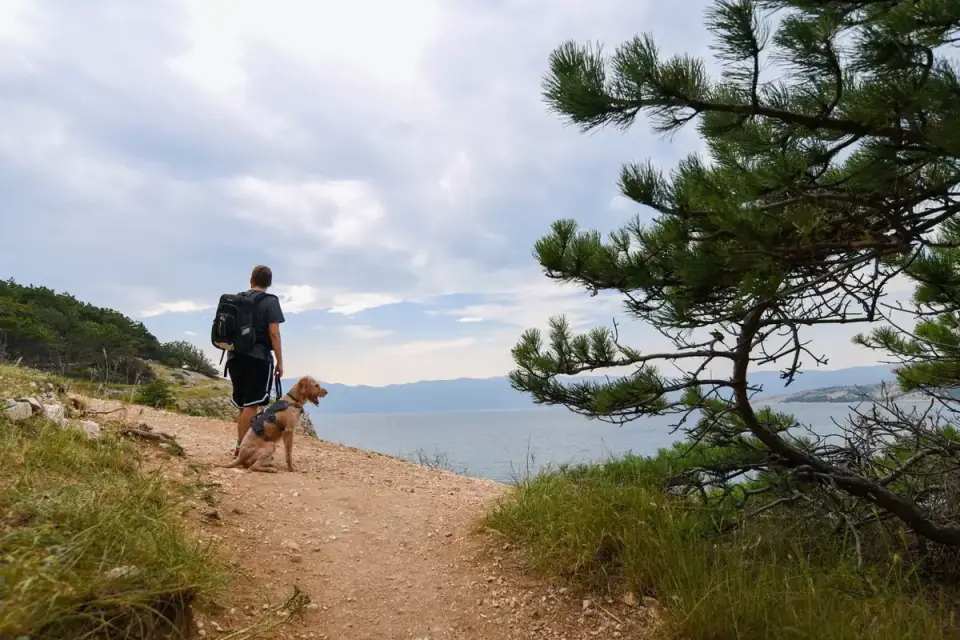
If walks are going well but weather or schedule breaks rhythm, low-pound options that preserve suppleness without pounding — sniff walks, slow figure-eights, brief treadmill introductions where appropriate — are discussed in Dog Treadmill vs Outdoor Walking: What Actually Builds Fitness and Protects Joints. Keep total time similar, keep surface forgiving, and keep one full easy day between harder days while history is still blank.
What food and joint support can realistically do
To weigh what a supplement can realistically do for diet, mobility, and recovery, I stay close to the ingredient literature and keep expectations bounded. Food covers energy and protein for tissue remodeling; supplements may help support normal joint structure, they do not build fitness or replace rest.
Chondroitin has been described to “supports healthy synovial fluid homeostasis” in work published in Frontiers in Veterinary Science, and glucosamine HCl has been reported to “prevent experimentally induced cartilage degradation in vitro” in work published in Journal of Veterinary Medical Science. Those are narrow, mechanistic findings, not proof that a chew lets a deconditioned rescue walk farther.
The strongest counterargument I hear is to drain energy first: run the rescue hard so anxiety fades and settling speeds up. I understand it, because a tired dog looks calmer that evening. I still land on measured loading, because fatigue masks stress signals, raises heat and orthopedic risk, and often produces a sorer, more reactive dog 24 to 48 hours later. Calm behavior built on adequate sleep, predictable split walks, chewing, sniffing, and consistent feeding usually outlasts exhaustion.
The edge case that rewrites the minutes
Then there is the quiet senior who changes the math. A 9-year-old 21-pound terrier mix arrives heartworm-treated, potbellied, with a soft cough when he pulls. His owner expects the standard rescue build-up, but his recovery window runs longer. After two 10-minute evening loops separated by an hour, he sleeps soundly and rises clean by morning at week two. Push to a single 30-minute midday walk in 78-degree heat and he lags, tongue wide, needing shade. For him, split sessions, cool hours, and weight control matter more than adding minutes.
Small and older rescues often need that split-session logic even longer. Shorter legs take more strides per block, airways and knees have less margin, and pads soften quickly on hot pavement. Ideas sized for little frames are covered in Exercise Ideas for Toy and Small Breeds: A Load-Smart Guide.
Use a simple progression rule with your veterinarian: if two weeks of a given load produce clean mornings, normal appetite, and eagerness to start, discuss adding about 5 minutes per walk or one extra short walk per week, never both distance and intensity at once. If soreness appears, return to the last tolerated load for several days. Fitness with no history is revealed by recovery, not by the best day.
Sources
- Evidence on chondroitin and synovial fluid homeostasis (DOI:10.3389/fvets.2026.1536366) — Frontiers in Veterinary Science
- Evidence on glucosamine and cartilage degradation in vitro (DOI:10.1292/jvms.25-0293) — Journal of Veterinary Medical Science