
On this page
Late afternoon sun hits the kitchen tile, and your Border Collie mix locks on. She is four years old and 42 pounds, lean from agility, and she does not hear you call. Her eyes track the glint off your watch, then a shadow from the ceiling fan, then nothing you can see. By day 10 of this pattern you are eating dinner standing up because every fork movement starts another circuit. She is not playing. Her body is tight, her breathing is fast, and she cannot stop herself when the light moves.
The verdict: interrupt the loop, don’t punish the dog
Expectation first, the way I counsel it in the exam room: shadow and light chasing is rarely just a quirky game. It starts as a normal predatory response to movement, then rehearsal turns it into a learned arousal loop. In some dogs it progresses to compulsive disorder. That does not mean every case needs medication, but it does mean laser pointers and teasing reflections have to stop today, and management has to start before training can work.
The strongest counterargument I hear is that the dog looks happy, so why not let her chase? Excitement is not the same as welfare. A dog can look energized while her nervous system loses the ability to disengage.
How a flicker becomes a fixation
Dogs are built to notice quick, high-contrast movement. Motion-sensitive vision plus a predatory sequence of orient, stare, chase, and grab means a darting reflection feels worth pursuing. Repetition strengthens the circuit. Each chase releases arousal, the environment rewards with more flickers, and rest gets skipped.
Boredom, unpredictable schedules, and chronic under-recovery lower the threshold. This is load in the sports-medicine sense: too many arousing reps, not enough tissue and brain recovery. Anxious dogs are especially vulnerable because scanning becomes self-soothing. What begins as chasing a phone glare in a dark hallway becomes scanning walls on a cloudy day with no trigger at all.
Do not test this with a laser. Intentionally creating an uncatchable target is one of the fastest ways to build frustration.
When worry is warranted: frequency, function, and shut-off
Track three things for one week. How often does it happen, what seems to start it, and can your dog stop when you cue or remove the trigger. Occasional interest that redirects to a toy is different from daily episodes lasting minutes, panting and pacing between episodes, or guarding windows and lamps.
My rule is simple: if you cannot interrupt with a normal voice and a treat, or if the behavior is expanding to new surfaces and times of day, call your veterinarian. Pain, vision changes, gastrointestinal discomfort, and anxiety disorders can all raise compulsive behavior, and older dogs with new onset staring or chasing deserve a full baseline exam. That triage is also how we separate a training problem from Reactive vs Aggressive Dogs patterns and true compulsion, which is why referral timing matters. For help choosing help, see Trainer vs. Behaviorist vs. Veterinary Behaviorist.
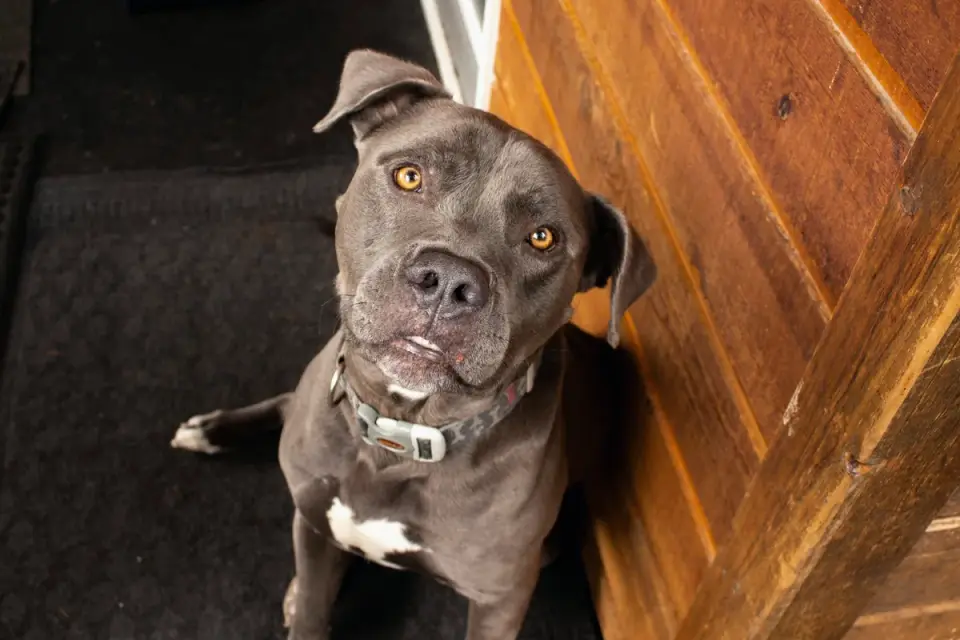
He was a two-year-old 68-pound Labrador Retriever, big and goofy and beloved by two kids who thought the laser was hilarious. For three weeks in January the kids played hallway chase every evening after school, five minutes that stretched to twenty. By week three he was barking at sunbeams at 7 a.m., spinning under the dining table, then lunging at headlights through the blinds at night. The family tried more fetch to tire him out, but longer fetch just built more stamina and faster arousal. The failed approach was logical and made it worse, because the dog never learned an off switch, only a bigger on switch.
Lower the load so learning can happen
Management is treatment here. Block access to the worst rehearsal rooms with doors or frosted film. Put phones face-down, cover mirrored cabinet fronts, use steady lamps instead of flickering bulbs. Keep curtains consistent rather than half-open and fluttering. Give the eyes less to catch.
Then balance the day. Predictable walks, sniff time, chew time, and quiet rest lower background arousal more than another sprint session. Teach one incompatible behavior in a boring room first, like a sustained mat settle or nose-to-hand touch, and reward disengagement heavily. Keep sessions short. If your dog is already panting and scanning, you waited too long.
This is also where calming nutrition questions come up. I keep expectations narrow and evidence-bounded. A review in MDPI notes that “For the remaining species, evidence is derived mainly from preclinical studies or traditional use.” A review in Cureus found that “A systematic review analyzed multiple RCTs and concluded that ashwagandha has a moderate positive impact on stress reduction and cognitive performance.” And a review in Molecular Psychiatry reports “except for one study on psychotic anxiety (SMD = 0.54; 400 mg/day for 8 weeks)” for L-theanine. None of that proves a chew stops shadow chasing.
Calming support may help support a lower baseline, but it never replaces removing lasers and rehearsal.
The edge case owners miss
She was nine years old and 18 pounds, a Miniature Poodle who had never chased anything. Over two months she began staring at the baseboard shadows at dusk, then pawing and whining. The owner assumed canine cognitive change and bought night-lights, which added more glare. On exam the trigger was not age alone but new glare from a replaced glossy floor plus declining vision that made edges harder to read. We changed lighting to warm, diffuse lamps, added a non-slip runner, and kept evenings quiet. By day 14 the dusk pacing had shortened from forty minutes to under five.
The lesson applies broadly: new onset in a senior, behavior only in one light condition, or behavior paired with appetite, gait, or vision change is medical until proven otherwise.
Reading body language helps in the moment, too. A loose Play Bow or Aggression guide is useful for dog-to-dog context, but with shadows look for hard eyes, frozen stare, and inability to blink away. That is overload, not invitation.
If episodes persist despite two to three weeks of consistent management, escalate to your veterinarian or a veterinary behaviorist for a compulsive-disorder workup and a tailored plan.
For related context, read Why Does My Dog Growl When I Pet Him? What the Growl Is Telling You.
For related context, read How to Stop Puppy Biting and Mouthing: A Load-and-Recovery Approach.
Frequently asked questions
Why does my dog chase shadows and light all of a sudden?
Sudden onset often follows a change: new lighting, more reflective surfaces, a laser game, altered schedule, or a medical issue. Track triggers for a week and call your veterinarian if it is daily, escalating, or hard to interrupt.
Should I use a laser pointer to tire out my dog?
No. Uncatchable light builds frustration and rehearsal without closure. Use flirt poles, fetch with a clear pickup and drop, sniff walks, and food puzzles that end with a real reward.
How do I stop shadow chasing in the moment?
Avoid yelling or chasing the dog. Calmly block the light, cue a well-trained mat or touch behavior, reward disengagement, and leave the room. Prevention matters more than correction.
Sources
- Biomedicines chamomile evidence review — MDPI
- Ashwagandha stress and cognition systematic review — Cureus
- L-theanine anxiety evidence review — Molecular Psychiatry