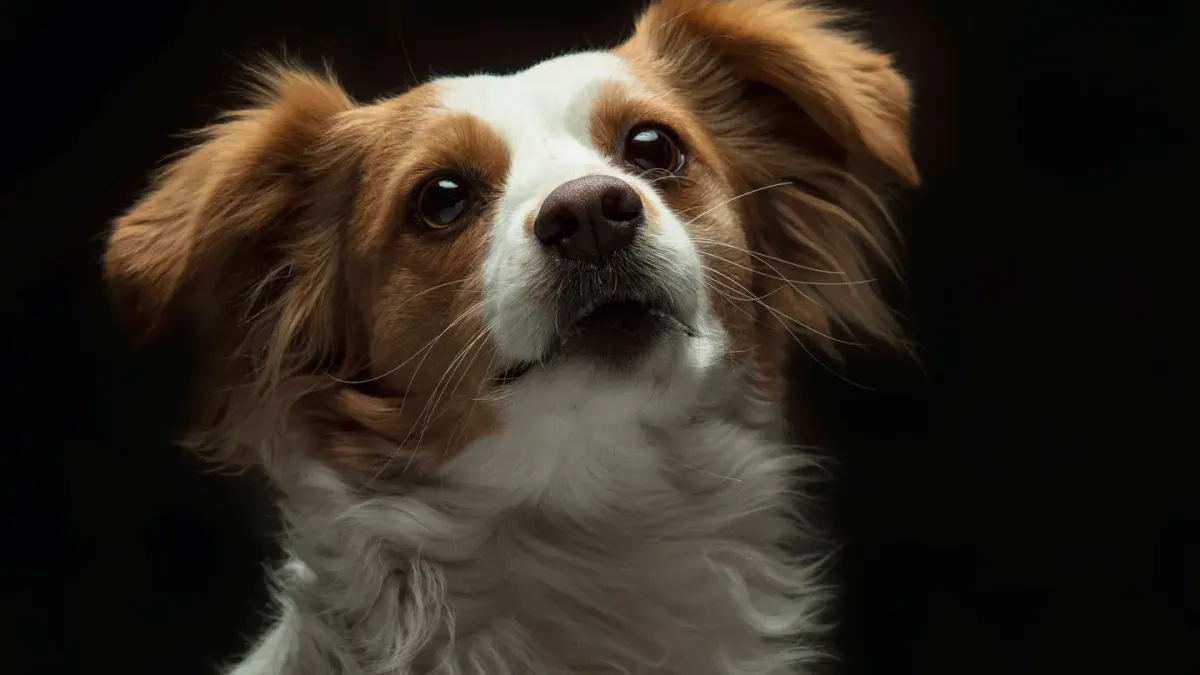
Dorothy had Hanna cornered without meaning to, a 2-year-old spayed German Shorthaired Pointer mix backed between the couch and the coffee table in Brownsville, Texas, while a toddler cousins’ hug held for three seconds too long. Hanna froze, turned her head just enough to show a bright crescent of white at the corner of both eyes, and Dorothy caught it just in time to call the child off.
That crescent was the whole message. Whale eye is not disobedience and it is not guilt. It is an early discomfort signal, and answering it well keeps a tense moment from moving up the ladder toward growling or snapping.
The Loadline call: treat white eyes as load
Think of social pressure the way you think of training load. Normal eye contact stays within tissue tolerance. Whale eye means tolerance is nearly exceeded.
Normal, relaxed eye contact looks soft. The face is loose, the brow is smooth, ears sit neutral, the body stays curved or wiggly, and the dog glances away easily. During play or training, brief check-ins with you are part of good teamwork.
Whale eye looks different. The dog keeps the head still and averts only the eyes, exposing the sclera in a half-moon. The body often goes still at the same time, the mouth closes tight, ears pin back or flatten, and the tail tucks or stiffens. That combination signals conflict: the dog wants distance but is not yet confident enough to move.
The ASPCA describes this kind of averted gaze with a stiff body as avoidance and fear-related communication, not friendliness. The distinction matters because owners of high-drive sporting dogs often misread stillness as steadiness.
How to read the eyes in context
No single feature diagnoses stress. Read eyes plus posture plus situation.
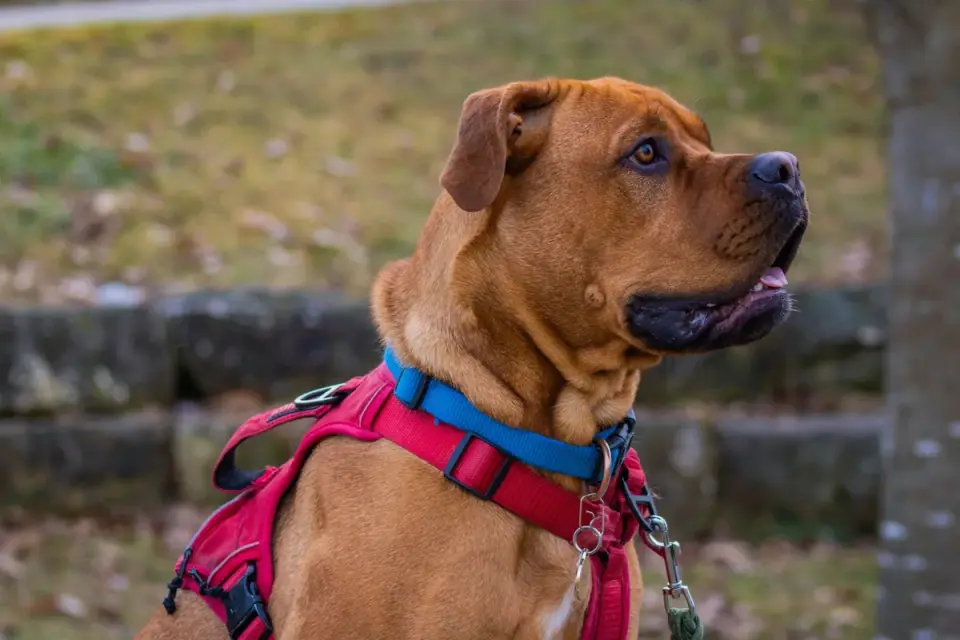
Normal eye contact happens when the dog feels safe. The gaze is brief and blinky, the body leans softly toward you, and the dog can disengage to sniff or shake off. You see this when Hanna checks in on a long-line walk before ranging out again.
Whale eye happens when choice feels limited. Common triggers include a tight hug, a hand reaching over the head, a child climbing into the dog bed, resource guarding around a chew, or another dog crowding at the park gate. The head turns away while the eyes track the trigger. That split is the tell.
One short, substantive rule helps.
Give space first, ask questions later.
What to do when you see it
Stop the pressure. Turn your body sideways, look away briefly yourself, and invite rather than pull the dog toward you. For a hug, calmly interrupt: “Let’s give her room,” then reward Hanna for moving to her mat about 8 feet away. Distance is the recovery window.
Do not punish the look. Growling, lip lifting, and snapping sit higher on the same escalation sequence, and suppressing an early signal leaves you with fewer warnings. The American Veterinary Society of Animal Behavior supports humane, reward-based handling that protects these communication signals rather than correcting them.
Then audit the setup. Was the dog cornered, overtired after a 45-minute fetch session, in pain, or without an exit? For working and sporting dogs, stacked load — travel, trial noise, hard runs on back-to-back days — lowers tolerance for social pressure. Lower the load so learning can happen.
If whale eye shows up often, track pattern for two weeks: who, where, time of day, and what helped. Frequent freezing, hard stares, growling when petted, or mouthing that will not stop deserve a plan, not just management. Start with Why Does My Dog Growl When I Pet Him? What the Growl Is Telling You to map the next signal up the ladder, use Play Bow or Aggression? Reading Dog-to-Dog Signals for dog-to-dog context, and review Trainer vs. Behaviorist vs. Veterinary Behaviorist: Who to Call if fear persists or bites feel close.
Expect baseline first. Most dogs soften within seconds once pressure lifts, and repeated low-stress handling may help support calmer greetings over time. If the signal stays frequent despite space and rest, talk with your veterinarian about pain, anxiety, and referral. That next step keeps both the dog and the people around her safe.
Frequently asked questions
Is whale eye always aggression?
No. It signals discomfort and a wish for distance. It can precede growling or biting if pressure continues, which is why space helps.
How is normal eye contact different?
Normal contact is soft, brief, and paired with a loose body and easy look-aways. Whale eye pairs white eye crescents with stillness, a closed mouth, and head aversion.
Should I correct whale eyes?
No. Avoid punishment and create distance, then adjust the setup so the dog has an exit and rest.
Sources
- Humane Dog Training Position Statement — American Veterinary Society of Animal Behavior