When to Switch a Puppy to Adult Food: A Growth-Plate, Not a Birthday, Decision
Medically reviewed by Roger Clemmons, DVM, PhD, DACVIM (Neurology and Neurosurgery), CVA, CVFT — For general education — not a substitute for veterinary care.
The right day to switch your puppy to adult food isn't a birthday, it's when the growth plates finish closing.

On this page
The owner sat across from me with a nine-month-old Bullmastiff named Otis draped across her feet, and the question she asked was the one I hear more than almost any other in a growth appointment: “He’s basically full grown, can I just switch him to whatever I feed my other dog?” Otis weighed 82 pounds. He’d stop growing, structurally, closer to 18 to 24 months. The birthday on his chart said nine months. Those two numbers were telling two different stories, and in my exam room, the growth plate always outvotes the calendar.
That’s the core of this decision, and I want to state it plainly before we get into the mechanism: the moment to move a puppy onto adult food is set by projected adult body weight and the closure timeline of the long-bone growth plates, not by a fixed age. A 12-pound terrier mix and an 82-pound mastiff cross were never on the same clock, even if they were born the same week.
The Growth Plate Clock, Not the Birthday Calendar
Growth plates are bands of cartilage near the ends of the long bones. They’re where new bone gets laid down as a puppy grows, and they close, or fuse into solid bone, once that growth is complete. Small dogs finish this process early, often by 9 to 12 months. Large and giant breeds run a much longer growth curve, and I’ve watched their growth plates stay open into the second year of life. According to VCA Animal Hospitals, large and giant breed dogs should typically stay on a growth formula until closer to 18 to 24 months of age, well past the point where a smaller dog has already transitioned to adult food.
The reason this matters nutritionally comes down to calcium and phosphorus. A large-breed puppy formula is built to hold calcium in a narrower, lower range than a typical adult diet, because excess calcium during that long growth window can drive abnormal cartilage development and increase the risk of orthopedic problems like hip dysplasia and osteochondrosis. Switch a growing giant breed onto an adult or, worse, an all-life-stages food that runs calcium-heavy too early, and you’re changing a mineral input the skeleton is still actively using to build itself. This is where I reach for the same instinct I bring to a disc case on imaging: look at the structure that’s still forming, not just the age on the chart, before you change what’s feeding it.
The Weight Class Timeline
Here’s how I actually sort it with owners, breed by breed rather than by a single universal date.
Small and toy breeds, generally dogs projected to stay under about 20 pounds, tend to reach skeletal maturity and can move to adult food around 9 to 12 months. Medium breeds, roughly 20 to 50 pounds at maturity, usually sit in a 12-month window, sometimes slightly later. Large breeds over 50 pounds projected at maturity often need puppy or large-breed-specific formulas through 12 to 18 months. Giant breeds, the mastiffs, Great Danes, and Bernese Mountain Dogs of the world, frequently need 18 to 24 months before an adult diet is appropriate, tracking with how long their growth plates stay open.
Mixed-breed puppies complicate this, and honestly, this is where I tell owners to weigh the dog rather than guess the breed. If you don’t know your puppy’s likely adult size, a rough guide many veterinarians use is to double a medium-breed puppy’s weight at four months, or use a large-breed puppy’s weight at six months and roughly multiply by two, to estimate the adult target. It’s imprecise, but it’s more useful than a birthday.
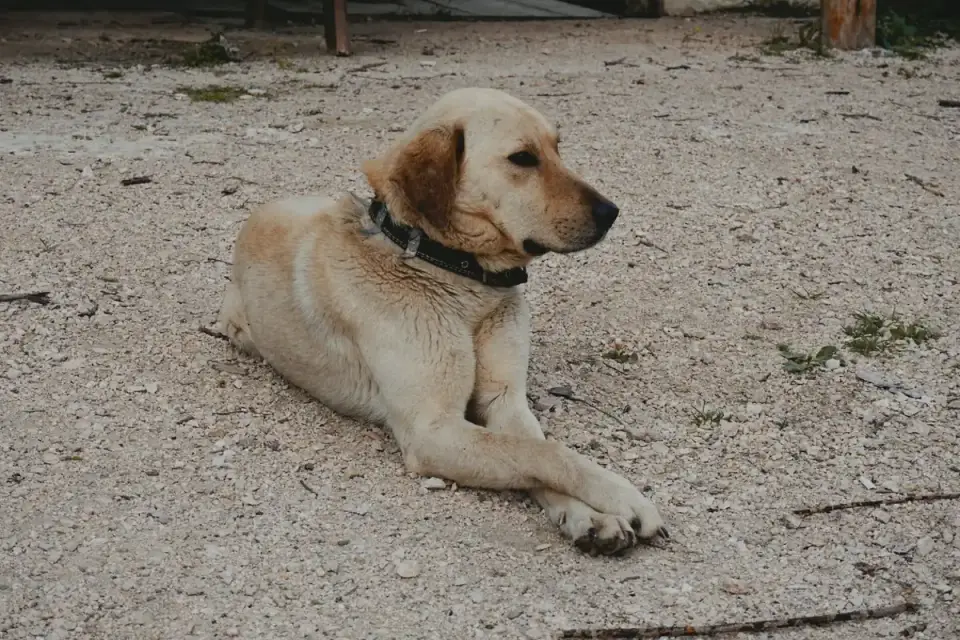
In my practice, the dog that sticks with me on this topic wasn’t a giant breed at all. It was a 34-pound Australian Shepherd named Della, brought in at seven months because her owner, worried about “growing too fast” after reading conflicting advice online, had already switched her to a low-calorie adult food at five months. Della wasn’t limping and wasn’t in pain, but her body condition score had dropped, her coat had gone dull over about six weeks, and she’d started skipping the last few bites of her evening bowl, something her owner said she’d never done as a younger puppy. Medium breeds like Della usually don’t need the extended growth window a mastiff needs, but they still need a puppy-appropriate calorie and protein density until close to a year. We moved her back to a growth formula for another four months, tapering the transition, and by her one-year visit her coat and appetite had both returned to what her owner considered normal for her.
Making the Switch Without Wrecking the Gut
Once the timing is right, how you switch matters almost as much as when. A puppy’s gut microbiome is used to a specific diet, and an abrupt swap can trigger loose stool, gas, or a few days of picky eating, even when the new food is nutritionally appropriate. The standard approach, and the one I give owners regardless of breed size, is a seven-day gradual transition: about 25 percent new food mixed with 75 percent old food for the first two days, moving to a 50/50 mix, then 75 percent new food, before landing on 100 percent new food by day seven, extending the window if a puppy is prone to a sensitive stomach.
This isn’t just folk wisdom. The veterinary literature on gut function in dogs backs the idea that the microbiome needs time to adjust and that diversity alone doesn’t tell the whole story of how well a gut is coping. A peer-reviewed randomized controlled trial on probiotics in dogs published in Frontiers in Veterinary Science found that “diversity metrics did not distinguish non-responders from responders,” a useful reminder that a lab measurement of gut diversity won’t always tell you whether an individual dog is tolerating a change well. I judge that the way most working vets do: by stool quality, appetite, and energy over the transition week, not by a number on paper.
The same logic shows up at the more serious end of gut medicine. A review on exocrine pancreatic insufficiency published in JAVMA notes that “EPI is treated by pancreatic enzyme replacement therapy, nutritional management (low-residue diets with moderate fat content), and supplementation of cobalamin,” and that “future studies are needed to further understand the causes of persistent dysbiosis in animals with EPI following initiation of pancreatic enzyme replacement therapy.” A healthy puppy switching diets is nowhere near that clinical picture, but the underlying principle transfers: nutritional management and gut microbial balance are linked, and a gradual, monitored transition respects that link rather than gambling against it. If you want a longer walkthrough of a slow transition done well, our step-by-step guide to switching a senior dog’s food covers the same seven-day framework applied at the other end of a dog’s life.
Some owners like to keep a puppy’s transition week interesting with a familiar, food-safe treat layered in, and this is a reasonable place for something like blueberries or a small amount of banana, both low-risk and easy on a gut that’s already adjusting to a new base diet. I wouldn’t introduce a brand-new treat in the same week as a food switch, since it muddies the picture if stool changes.
Signs the Timing Was Off
A handful of markers tell me a switch happened too early or too late. Too early in a large or giant breed, and I’ll often see a puppy that’s eating well but losing muscle tone or showing joint stiffness after rest, sometimes months before any radiograph would show a problem. Too late, and owners frequently mention weight creeping up once a smaller or medium breed puppy has stopped growing but is still eating puppy-calorie-dense food built for an animal that’s actively building bone. Neither is an emergency on its own, but both are worth a conversation with your veterinarian, especially in a breed with known orthopedic risk.
Where I Land
I don’t give owners a single date for this because a single date would be wrong for most of the dogs in my exam room. What I do give them is a decision built on projected adult size first, growth-plate timeline second, and a gradual transition third, applied in that order. For a toy or small breed, that’s often a straightforward switch around the first birthday. For anything projected over 50 pounds, I ask owners to be patient through 12 to 18 months, and for giant breeds, through 24. It’s a less satisfying answer than a single number on a bag of food, but it’s the one that respects how differently these skeletons finish building themselves, and in a field where I spend a lot of time reading films of joints and spines that grew wrong, I’d rather an owner wait an extra few months on the right formula than switch early because a birthday came and went.
Frequently asked questions
Is there one exact age to switch a puppy to adult food?
No single age works for every dog. Small breeds are often ready around 9 to 12 months, while large and giant breeds may need a growth formula through 18 to 24 months because their growth plates stay open longer.
What happens if I switch a large-breed puppy to adult food too early?
The calcium and phosphorus balance in adult food isn't formulated for a skeleton that's still actively building bone, and switching too early has been linked to a higher risk of developmental orthopedic problems in large and giant breeds.
How long should the actual food switch take?
A gradual transition over about seven days, slowly increasing the proportion of new food while decreasing the old, gives the gut microbiome time to adjust and lowers the odds of loose stool or appetite changes.
Sources
- Nutritional Considerations for Large and Giant Breed Dogs — VCA Animal Hospitals
- Probiotic responder study in dogs — Frontiers in Veterinary Science
- Exocrine pancreatic insufficiency review — JAVMA