Can Dogs Eat Blueberries? What They Actually Add to an Active Dog's Bowl
Medically reviewed by Justin Shmalberg, DVM, CVA, ACVN, ACVSMR — For general education — not a substitute for veterinary care.
Yes, dogs can eat blueberries — a genuinely useful low-calorie fruit, but the dose and the dog's gut still set the limit.

On this page
Imagine a disc dog named Otto finishing a Saturday trial in August heat, tongue out, sides heaving, owner digging through a cooler for something cold and rewarding that won’t undo the work of the day. She lands on a handful of frozen blueberries instead of the usual jerky strip. It’s a small decision, but it’s the kind that reveals how people actually think about food for a working dog — not as a miracle add-in, but as one more variable in how the animal recovers between efforts. Blueberries are a reasonable answer to that instinct. They are not, on their own, a recovery plan.
The short answer is yes: PetMD confirms blueberries are safe for dogs and notes their benefits and risks are well characterized, and the ASPCA does not include blueberries on its list of foods to avoid feeding your pets. That clears the toxicity question quickly. The more useful question, and the one I’d rather spend the rest of this piece on, is what blueberries actually do once they’re in the bowl, and how much a sensible owner should offer.
What a blueberry actually brings to the bowl
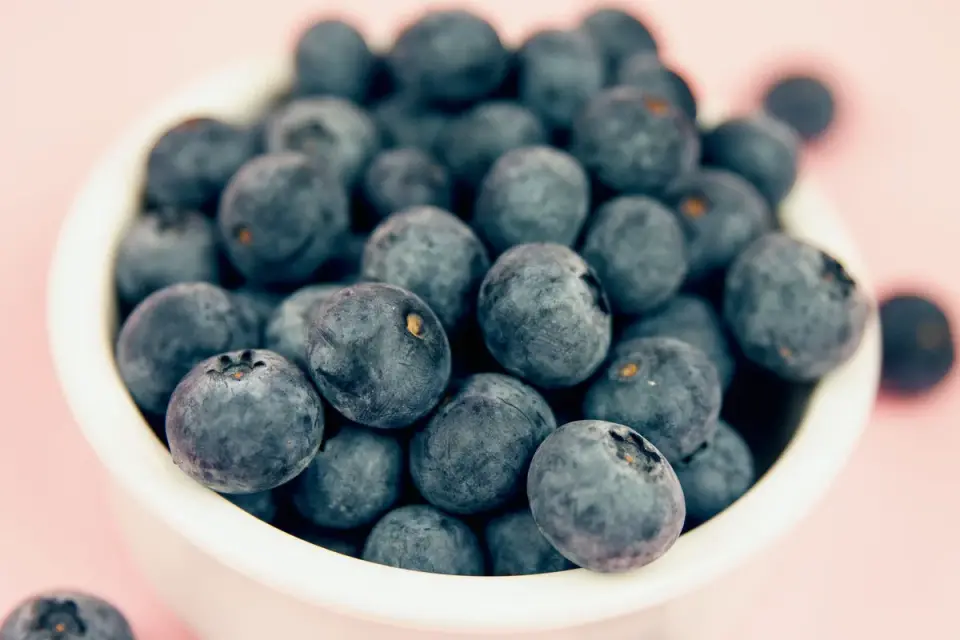
Strip away the marketing language around “superfoods” and a blueberry is mostly water, a modest amount of natural sugar, soluble and insoluble fiber, and a set of polyphenol compounds credited with antioxidant activity. None of that makes blueberries a treatment for anything. It does make them a defensible low-calorie treat, which matters more than it sounds for dogs already carrying a full day’s calories from a complete food. A treat that’s mostly water and fiber costs less metabolic room than one built on rendered fat and starch, and that’s the honest case for blueberries — not that they cure or reverse anything, but that they’re a comparatively good use of a dog’s treat budget.
The serving math, by size
Treat guidance across the board lands on the same principle: treats, blueberries included, should stay under roughly 10% of a dog’s daily calories, with the rest coming from a complete and balanced food. In practical terms that scales with weight — a few berries for a small dog, closer to a small handful for a large one. Wash them first; skip the syrup, the yogurt-covered kind, and anything sweetened. Fresh or frozen both work. I’d rather see an owner underdose a new treat the first time and watch the stool the next day than guess big and deal with loose stool overnight.
Where the sugar and fiber tradeoffs actually bite
Blueberries carry a moderate sugar load for their size, which is a real consideration for a dog with diabetes or a prescription-diet condition — that conversation belongs with your veterinarian, not a feeding chart. The more common issue is fiber, not sugar. Fruit fiber pulls water into the colon, and dogs that get a generous, unfamiliar dose of it — especially dogs with a sensitive gut to begin with — can end up with soft stool for a day. That’s not a red flag about blueberries specifically; it’s the same math that applies to almost any fiber-forward food introduced too fast, which is worth understanding in more depth if you’re managing a dog’s fiber intake generally or comparing blueberries to a starchier option like sweet potato.
Consider a border collie coming off a long weekend of herding work, gut already running lean on appetite from the heat and the miles. Her owner reaches for blueberries as a low-calorie way to reward effort without adding real weight to the day’s intake. That’s sound thinking. But if the same owner triples the portion because “they’re just berries,” the dog’s gut is the one that pays for the miscalculation, not the joints or the muscles that did the actual work. Recovery science, at every level I’ve studied it, punishes overcorrection as readily as it rewards a good instinct.
What the exercise research actually shows
Here’s where I’ll push back on the more breathless claims. A 2025 trial in Animals (Basel) fed working Beagles a diet with 3% added blueberries for four weeks and tracked oxidative stress markers around structured exercise. Dogs preferred the blueberry diet, and it didn’t hurt nutrient digestibility. But four weeks of blueberry feeding did not meaningfully blunt exercise-induced oxidative stress in these untrained dogs — the researchers did note lower resting creatine kinase in the blueberry-fed group during summer heat, a narrower and more interesting finding than “antioxidants protect the athlete.” I’d rather an owner walk away with that nuance than a headline. Blueberries are a food choice worth making on their own modest merits, not a substitute for the conditioning, rest, and gut-health fundamentals that actually govern how a working dog recovers — fundamentals worth understanding as part of the broader diet-and-gut-health picture rather than one ingredient at a time.
The honest verdict
Give blueberries to most dogs without much worry. Keep the portion proportional to the dog, skip anything with added sugar, and back off if the stool goes soft. Don’t expect them to do the work of a genuine recovery plan.
A handful of berries is a good habit, not a strategy. Build the strategy around load, rest, and a gut that’s already working well, and let blueberries be the small, defensible reward they actually are.
Frequently asked questions
How many blueberries can a dog eat in a day?
Treats, blueberries included, should stay under about 10% of daily calories. In practice that's roughly a small handful for a medium dog and a few berries for a small one — start low, especially the first time you offer them.
Are frozen blueberries okay for dogs?
Yes, plain frozen blueberries with nothing added are fine and some dogs prefer the texture. Introduce them slowly, since a very cold, firm treat can be a lot for a dog that gulps rather than chews.
Can blueberries replace a joint or gut supplement?
No. Blueberries contribute fiber and antioxidant compounds to the diet, but they aren't dosed or studied as a substitute for a formulated supplement, and a working dog's recovery needs are broader than one fruit can cover.