
On this page
Jeanette stood in a Norman trailhead lot with Sid, her 2-year-old neutered male Labrador Retriever, 45 minutes into what was supposed to be a big dogs day out — and Sid was more wired than when they started. He had covered three miles without a break, pulled past every sniffing spot, and still vibrated at the crosswalk.
That is the classic distance trap. For most pet dogs, mileage alone does not create satisfaction; varied brain work plus paced body work does. A shorter, richer outing often leaves a dog more settled than a long march.
The verdict for this kind of day: split the outing into scent, skill, and steady movement in short blocks, watch tissue tolerance and heat like a coach watches load, and quit while the dog is still choosing to engage.
Build the day in three workloads, not one long walk
Think like conditioning, not cardio. A working dog tires through nose work, problem-solving, and uneven movement, and each taxes a different system.
A practical template for a two- to three-hour dogs day out:
- Scent block (20 minutes): let the dog lead on a long line in grass or shoreline cover. Sniffing, tracking a tossed treat trail, and checking scent posts loads the brain with little joint impact.
- Skill block (15 minutes): three to five short recalls, hand touches, place work on a log or bench, or wading entries and exits. Keep reps low and reward calm resets between reps.
- Steady movement block (30–40 minutes): easy trail, beach, or town loop at a sniff-and-walk pace, with a water and shade break every 15–20 minutes.
Then repeat or head home. The American Kennel Club notes that exercise needs vary by age, breed, and health status, which is why alternating mental work with moderate movement usually beats adding another mile.
Weigh what a supplement or snack can realistically do for diet, mobility, and recovery here: food does not buy extra miles. A small, familiar training treat allowance plus normal meals and water supports fueling and gut comfort; it does not expand tissue tolerance.
Read heat and fatigue like load exceeding tolerance
Dogs shed heat mainly by panting, not sweating, so warm air, sun, humidity, and excitement stack quickly. Vets often see dogs like Sid look bright until they suddenly slow, drool thick saliva, or seek shade and refuse to re-engage.
Plan around that physiology. The American Veterinary Medical Association advises never leaving dogs in parked cars and watching for heat stress during warm-weather activity, with shade, water, and cooling as the core controls. On the trail that means morning or evening timing, tree cover over open rock, and a turn-back point you decide before you start.
In practice, use observable checks, not a mileage goal:
- Panting that stays loud and open-mouthed 10 minutes after rest means the last block was too much.
- Lagging behind, lying down unasked, or ignoring a known cue means the brain is done, even if the legs look fine.
- Limping, short-striding on turns, or stiffness after a car ride means joint load exceeded recovery capacity.
Dogs that look fine can still be overheated, which is why VCA Animal Hospitals lists excessive panting, drooling, red gums, vomiting, and collapse as heatstroke signs that warrant prompt veterinary care. When in doubt, stop, cool with shade and cool — not ice-cold — water, and call your veterinarian.
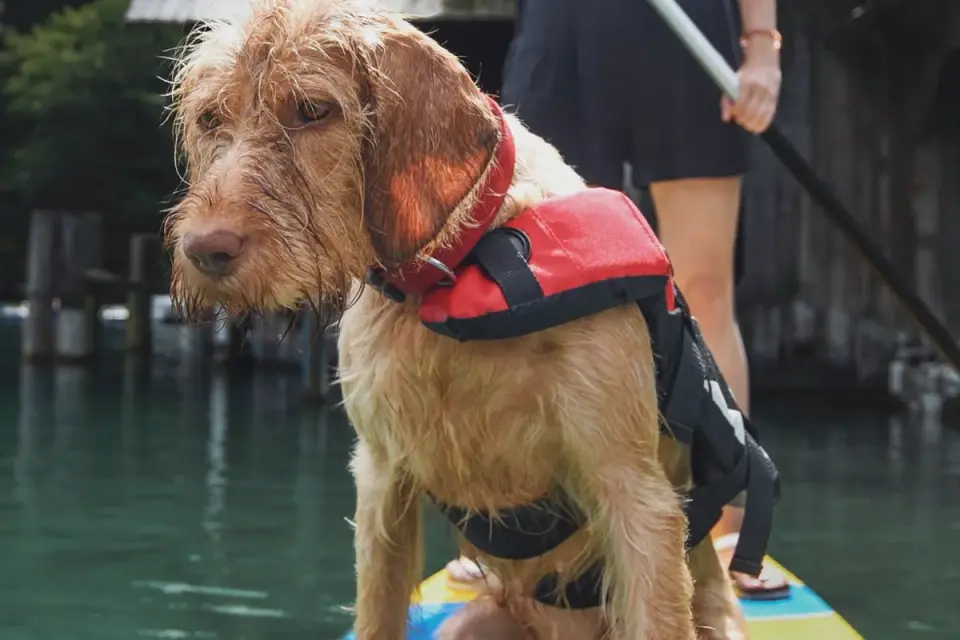
That same load logic applies if your day includes water. Paddling, swimming entries, and beach running load shoulders and feet differently than trail walking, so keep first sessions short and read our sports-medicine notes on kayaking and canoeing with your dog before you add duration.
Make a town day count without overloading the body
Not every dogs day out is a trail. A patio stop, farmers market, or brewery garden can provide plenty of brain load if you treat it like a training session rather than a long down-stay.
Gloria learned this with Royce, her 3-year-old neutered male Rat Terrier mix in Bakersfield, when a 90-minute restaurant wait left the little dog trembling and refusing treats by minute 40. The next outing was 50 minutes total: a sniff walk to the venue, 20 minutes under the table on a mat with two chew breaks, then a sniff walk home. Same town, far better recovery.
Keep town structure tight:
- Choose shade, water access, and space to move away over the most welcoming sign. Our guide to dog-friendly patios and breweries without overloading your dog’s body walks through that surface-and-shade read.
- Bring a mat, water bowl, and one familiar chew; novelty food on an excited gut often backfires.
- Pay for disengagement. Reward settling, eye contact, and choosing the mat over scanning the crowd.
One short paragraph matters here.
Quit town time while your dog can still take food gently and respond to his name the first time.
What to pack for brain, gut, and joints
Pack for recovery, not just distance. Food therapy thinking still applies on an active day: familiar fuel, steady hydration, and gut comfort shape how well a dog bounces back.
- Water plus a collapsible bowl, offered at every transition.
- Usual treats in counted amounts, plus part of the daily ration if training heavily.
- Long line and flat collar or harness for safe sniffing; avoid retractables near bikes and cliffs.
- Boot check, towel, and shade plan; hot pavement and sand burn feet fast.
- Waste bags, leash for leash-law sections, and a written turn-back time.
Skip the kitchen-sink extras. Wild mushrooms on trail edges, dropped onion rings near patios, and communal water bowls are all avoidable gut risks — if you forage near your path, know the field rule in can dogs eat mushrooms and the bloodstream reason onions are toxic to dogs.
For sore or older athletes, shorten movement blocks first and add scent games rather than pushing through stiffness. That tradeoff — less distance, more nose — is usually what produces the calm ride home owners wanted from the day.
Your next good outing starts smaller: pick one scent spot, one skill to practice for five minutes, and one loop you could cut in half without regret.
Frequently asked questions
How long should a dogs day out be?
Aim for 2–3 hours total with alternating 15–40 minute blocks of sniffing, training, and easy walking, ending while your dog still engages readily. Health, age, heat, and fitness change that window more than breed alone.
Why is my dog more hyper after a long walk?
Continuous marching often builds arousal and fitness without mental fatigue. Add structured scent work, short training reps, and rest breaks; many dogs settle faster after 60 rich minutes than after 3 flat miles.
What are early signs to cut the day short?
Panting that does not ease after 10 minutes of shade and water, lagging, ignoring known cues, thick drool, red gums, vomiting, limping, or lying down unasked. Cool, rest, and contact your veterinarian if heatstroke signs appear.
Sources
- How Much Exercise Does a Dog Need? — American Kennel Club
- Warm Weather Pet Safety — American Veterinary Medical Association
- Heat Stroke in Dogs — VCA Animal Hospitals