How to Find Dog-Friendly Patios and Breweries (Without Overloading Your Dog's Body)
The patios that hurt dogs are rarely the ones that ban them — they're the ones that welcome them onto concrete for two hours in July.
On this page
A lot of owners assume the main variable at a dog-friendly patio is the sign out front — allowed or not allowed. I’d argue that sign tells you almost nothing about what actually happens to a dog’s body over the ninety minutes that follow.
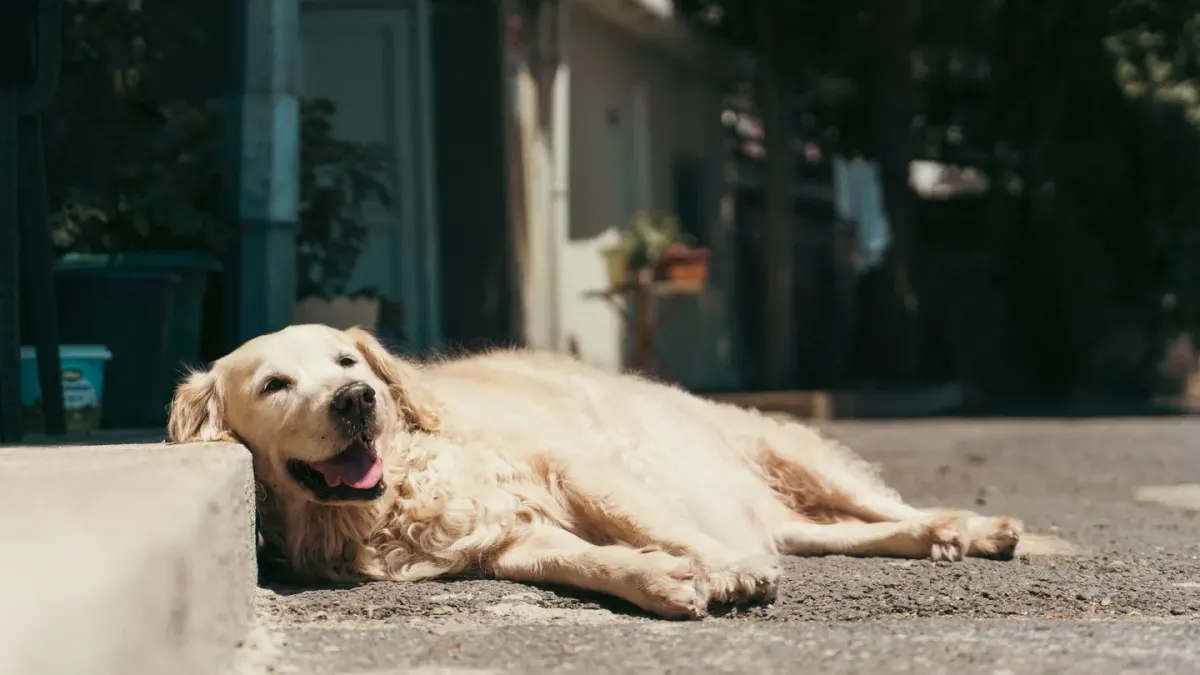
I remember a Lab mix named Otis, six years old, about 68 pounds, who came in for a lameness recheck the week after his owners tried a new brewery patio downtown. Nothing dramatic — he wasn’t limping when they left the restaurant. But by the next morning he was slow getting up, reluctant on stairs, and his owner mentioned he’d spent most of the two-hour visit lying flat on bare pavement in direct sun because the only “pet-friendly” spot was an uncovered corner. He’d also had almost no water offered until the very end. None of that shows up as an acute injury. It shows up as a stiff, footsore dog the next day, and an owner who assumed the patio itself was the problem when the real issue was surface, duration, and hydration stacked together on one hot afternoon.
That’s the frame I want to give you: a dog-friendly patio isn’t a single yes/no filter. It’s a set of load variables — heat, surface, time on the ground, and access to water — that determine whether an afternoon out is a nonevent or a setback.
Surface and Shade Beat the Welcome Sign
The single biggest thing to check before you sit down isn’t whether dogs are allowed — it’s what your dog will be lying on for the duration of the visit. Bare concrete and asphalt absorb and hold heat far longer than grass or shaded decking, and the temperature difference at paw level can be dramatic. According to the AKC, pavement can climb well past the point of causing burns within a minute of contact on a hot day, even when the air temperature feels tolerable to a person standing upright. A patio with a “dogs welcome” sign but no shade, no grass strip, and full sun exposure through the afternoon is a worse bet than a patio that quietly allows dogs but sits under an awning.
Before you commit to a table, walk the patio perimeter and put the back of your hand on the ground for a few seconds. If you can’t hold it there, it’s too hot for paw pads, full stop.
Reading the Visit Like a Training Session
Here’s where I think the load-management lens actually earns its keep. A working or active dog’s tissues have a tolerance window — for heat exposure, for time spent immobile on hard ground, for exertion in a car ride there and back. A patio outing is, in effect, unplanned training load layered on top of whatever else the dog did that day. If your dog already had a long morning hike, a brewery patio visit that afternoon isn’t neutral; it’s additional volume on the same day, on a harder surface, often in direct sun.
I ask owners to treat the outing the way they’d treat a second training session: was there already meaningful load earlier in the day? Is the dog older, overweight, or brachycephalic, all of which raise heat risk according to VetCompass research on Risk Factors for Severe and Fatal Heat-Related Illness in UK Dogs—A VetCompass Study: Risk Factors for Severe and Fatal Heat-Related Illness in UK Dogs, which found body weight relative to breed norms and age over two years both increased the odds of a serious heat event. None of that means skip the outing. It means shorten it, time it earlier or later in the day, and build in a recovery window afterward rather than immediately walking to the car and driving home.
Hydration and Gut Comfort Are Part of the Same Recovery Picture
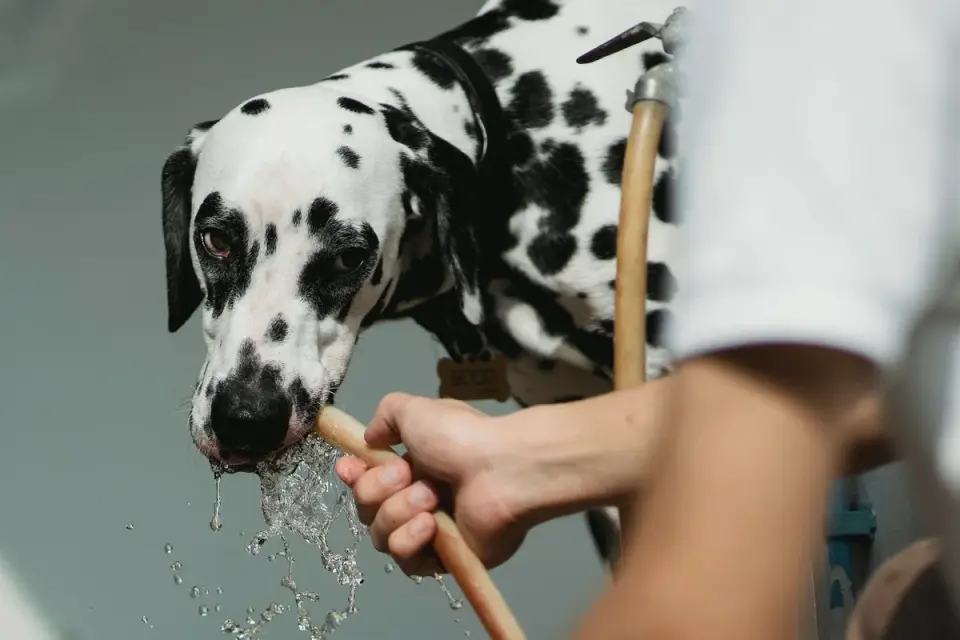
I treat hydration on a patio outing the same way a human performance coach treats fueling before and during a session — not an afterthought, but part of the plan. Dogs that sit for an hour or two in warm air without steady water access arrive home dehydrated, and dehydration compounds both joint stiffness and gut upset, especially if the outing also involved unfamiliar table scraps or a rich bar snack someone couldn’t resist sharing. That’s one reason I ask owners of dogs with sensitive stomachs to be deliberate about what enters the diet on outing days — a topic covered in more depth in our piece on the diet and gut health connection in dogs.
A 2018 study on working dogs given enriched water found measurable improvements in pulse rate recovery and cooler body temperature after exertion compared to plain water, reported in Working Dogs Drinking a Nutrient-Enriched Water Maintain Cooler Body Temperature and Improved Pulse Rate Recovery After Exercise. That study was conducted in working dogs under real exertion, not dogs lounging at a table — but the underlying point generalizes: recovery starts with hydration status during the activity, not after it’s already flagging.
I saw this play out with a nine-year-old Border Collie named Wren, a dog whose owner brought her to patios most weekends because she was famously calm around strangers and other dogs. Over one particularly hot stretch in August, Wren started declining the walk from the car to the table — a two-block distance she’d covered without hesitation for years. Her owner assumed it was early arthritis. What had actually changed was that the two patios she frequented had both removed their shade umbrellas for a remodel, and Wren had spent three consecutive Saturdays lying on hot concrete in full sun with water offered only once she started panting heavily. Once her owner started requesting shaded tables and bringing a collapsible water bowl she refilled every twenty minutes, the reluctance disappeared within two weeks.
What I Actually Tell Owners Before They Book
A common question I get is whether a dog with existing joint issues should avoid patios altogether. I don’t think that’s the right conclusion. The AAHA guide on heatstroke risk in pets makes the same point I’d make clinically: risk is manageable with planning, not a reason for blanket avoidance. For a dog already managing joint load — one on a supplement regimen or recovering from an orthopedic procedure — the calculus is less about whether to go and more about trimming the visit to fit the dog’s current tolerance. If you’re building out a broader joint-support plan for that kind of dog, our breakdown of the best joint supplement for dogs and our look at whether hyaluronic acid actually works for dog joints both cover what the evidence does and doesn’t support — useful context before you decide how much time on hard ground is reasonable for a given dog.
Ask the questions in this order before you sit down: Is there shade or grass, not just permission? How long do you realistically plan to stay? Is water available on request, and will you ask early rather than late? And has the dog already had meaningful activity earlier that day? A patio that answers those questions well is a better choice than one that simply says yes to dogs and leaves the rest to chance.
The Bottom Line
The dogs I see get sore or overheated after a patio visit almost never got there because the venue was unsafe in some obvious way. They got there because nobody screened for surface heat, nobody planned the visit’s length against the dog’s day so far, and water access was reactive instead of routine. Screen for those four things and most dog-friendly patios and breweries are a genuinely low-risk, enjoyable outing — not a hidden hazard.
Frequently asked questions
Is a shaded patio always safer than a sunny one, even if it's cooler outside?
Shade matters even on mild days because bare concrete and asphalt hold heat and stay warmer at paw level than the surrounding air, so a sunny surface can still pose a burn or overheating risk that a shaded one doesn't.
How long is too long for a dog to stay at a patio or brewery?
There's no fixed number, but a good rule is to account for what the dog already did that day — a dog with a long morning walk behind it should get a shorter, cooler-hours outing rather than a full afternoon on hard ground.
Should I bring water even if the venue offers bowls?
Yes. Offering water proactively and often, rather than waiting until a dog is panting heavily, keeps hydration ahead of heat load instead of playing catch-up.
Sources
- How to Protect Dog Paws From Hot Pavement, Sidewalks — AKC
- Too Hot to Handle: A Guide to Heatstroke in Pets — AAHA
- Risk Factors for Severe and Fatal Heat-Related Illness in UK Dogs—A VetCompass Study — NCBI
- Working Dogs Drinking a Nutrient-Enriched Water Maintain Cooler Body Temperature and Improved Pulse Rate Recovery After Exercise — NCBI