Can Dogs Eat Mushrooms? The Field Rule for Grocery-Bin vs. Backyard Fungi
Medically reviewed by Justin Shmalberg, DVM, CVA, ACVN, ACVSMR — For general education — not a substitute for veterinary care.
Most dogs can eat plain, cooked store-bought mushrooms safely, but wild mushrooms are a true veterinary emergency.
On this page
A springer or a shepherd mix working a hedgerow after a warm rain doesn’t distinguish a beneficial fungus from a lethal one. It just finds a soft, earthy-smelling thing at nose height and takes a bite before you’ve finished calling its name. That’s the entire problem with mushrooms and dogs in one sentence: the animal has no way to sort safe from deadly, and often neither do we. I’ve spent enough time on the sports-medicine side of veterinary care to know that most of what derails a good training season isn’t the dramatic injury, it’s the ordinary trailhead moment nobody planned for. Mushrooms are exactly that kind of moment.
So let’s separate the two situations dog owners are actually asking about, because they don’t deserve the same level of alarm.
The Grocery Bag and the Trailhead Are Different Sports
A button mushroom from the produce aisle and a cap growing out of wet mulch in your yard are not the same category of risk, even though they’re both, technically, mushrooms. Plain, cooked, rinsed store-bought varieties, including white button, cremini, portobello, and shiitake, are considered fine for most dogs in small amounts, provided they’re served without the seasonings, butter, garlic, or onion that so often ride along in a human kitchen. Raw mushrooms of any kind are more likely to cause digestive upset than cooked ones, so if you’re sharing a bite, cook it plain first. None of this makes mushrooms a food a dog needs. There’s no mechanism by which a few slices of portobello meaningfully support joint health, coat quality, or recovery, and I’d rather an owner spend that plate real estate on something with an actual job to do in the diet.
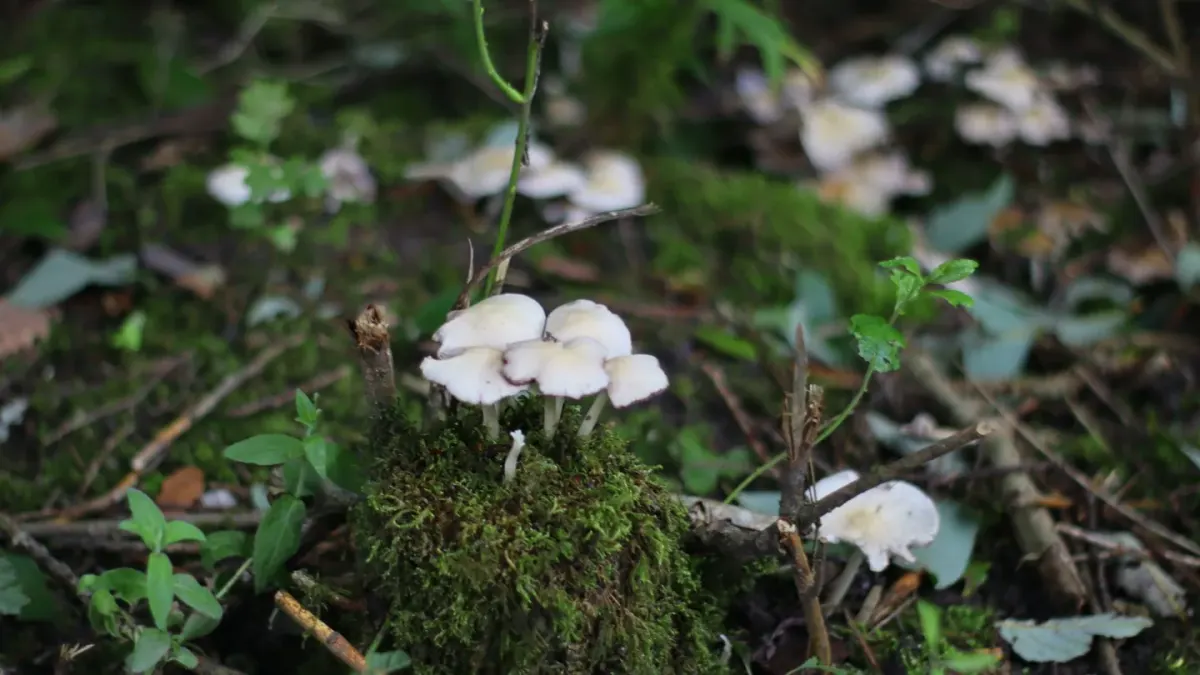
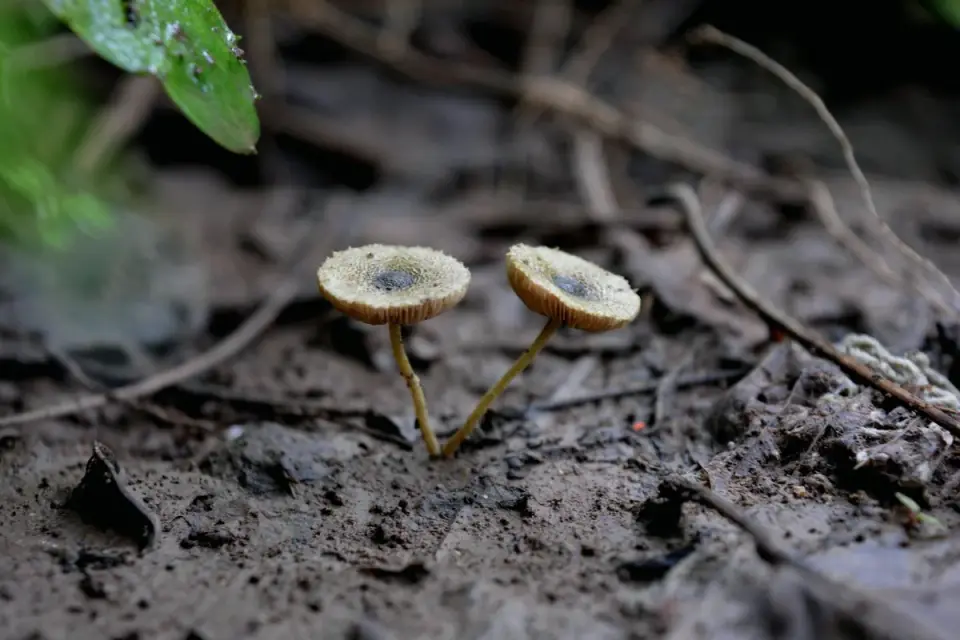
Wild mushrooms are the opposite problem entirely. According to UC Davis School of Veterinary Medicine, the deadliest species dogs encounter include Amanita phalloides (death cap), the destroying angels, Amanita muscaria, Galerina marginata, certain Inocybe species, and false morels, several of which can cause fatal liver failure from a genuinely small dose. Field identification is difficult even for people trained to do it, so the working rule I give owners is blunt: assume any unidentified mushroom your dog finds outdoors is dangerous until a professional tells you otherwise. That’s not caution for its own sake. It’s the only rule that scales to how impossible visual identification actually is in practice.
Why the Clock Matters More Than the Symptoms
Here’s the part that catches even attentive owners off guard: the most dangerous mushrooms don’t always announce themselves right away. Picture a dog that grabs something off the ground during a Saturday morning walk, seems completely normal through the afternoon, plays fetch, eats dinner, sleeps fine. Then, a day or two later, it’s flat, off its food, and its gums have a faint yellow tinge. That delayed presentation is a known feature of amanita-type toxicity, not a fluke. According to ASPCApro, signs of mushroom poisoning include vomiting, diarrhea that’s sometimes bloody, excessive drooling, weakness, wobbly movement, tremors, seizures, yellow gums or eyes, and abdominal pain, and with the more toxic species that early GI phase can fade before liver damage becomes obvious. That quiet stretch in the middle is exactly what makes people wait instead of calling. I’d rather an owner make one unnecessary call to a vet or an animal poison control line than gamble on the assumption that no symptoms yet means no problem developing.
The honest decision point is simple. If you actually watched your dog eat a store-bought mushroom off your own cutting board, plain and cooked, you likely have nothing to do. If your dog picked something up outside that you can’t positively identify, treat it the way you’d treat any other acute poisoning risk: call first, don’t wait for symptoms, and bag a sample of the mushroom if you can do so safely, since that sample can shorten the diagnostic path considerably.
Where Gut Tolerance Fits Into the Bigger Picture
Mushrooms, wild or store-bought, are a reminder that a dog’s gut has to process whatever shows up, planned or not, and individual dogs handle that variability differently. Broader probiotic research bears this out: in one trial looking at how dogs’ gut microbiomes responded to a probiotic intervention, Frontiers in Veterinary Science reported that “diversity metrics did not distinguish non-responders from responders,” meaning two dogs can start from a similar-looking gut profile and still react differently to the same input. That’s a useful frame for thinking about any new food, mushrooms included: a small amount that one dog shrugs off might not sit the same way with another. For dogs managing more serious digestive conditions, that same variability is part of why nutritional management matters so much; the Journal of the American Veterinary Medical Association notes that exocrine pancreatic insufficiency is treated with pancreatic enzyme replacement therapy, nutritional management using low-residue diets with moderate fat content, and cobalamin supplementation, a reminder that gut resilience is built through consistent, evidence-based management, not novelty ingredients. If you’re building out a broader picture of how food choices shape a working dog’s gut, our guides on the diet and gut health connection in dogs and how much fiber is too much go deeper on that mechanism, and our piece on switching a senior dog to a new food covers how to introduce anything new without overloading a more sensitive gut.
The Practical Next Step
Don’t treat mushrooms as a training-table topic. Skip the wild ones entirely, keep any shared store-bought mushrooms plain and cooked, and if your dog ever eats something fungal that you can’t identify, call your veterinarian, an emergency clinic, or an animal poison control line immediately rather than watching for symptoms first. The dogs I worry about aren’t the ones whose owners overreacted to a mushroom in the yard. They’re the ones whose owners waited to see what would happen.
Frequently asked questions
Can dogs eat mushrooms from the grocery store?
Plain, cooked, rinsed mushrooms like white button, cremini, portobello, and shiitake are generally fine for most dogs in small amounts, served without butter, oil, garlic, or onion. Raw mushrooms of any kind are more likely to cause stomach upset, so cooking them is the safer call.
How do I know if a wild mushroom is dangerous?
You mostly can't, and that is the point. Correctly identifying mushroom species in the field is difficult even for trained mycologists, so the practical rule for dog owners is to treat every unidentified wild mushroom as toxic until a professional says otherwise.
What are the first signs of mushroom poisoning in a dog?
Early signs often include vomiting, diarrhea (sometimes bloody), drooling, weakness, or wobbliness. With the most dangerous species, those early signs can fade for a day or two before liver failure sets in later, which is why any suspected ingestion needs a vet call, not a wait-and-see approach.
My dog ate a mushroom in the yard and seems fine. Do I still need to call the vet?
Yes. With amanita-type mushrooms, a dog can look normal for six to twenty-four hours, or even a couple of days, before serious liver dysfunction appears. If you can safely bag a sample of the mushroom to bring along, that helps your vet or an animal poison control line make a faster call.
Sources
- Mushroom Toxicity in Dogs — UC Davis School of Veterinary Medicine
- Mushroom Poisoning in Dogs — ASPCApro
- Exocrine pancreatic insufficiency in dogs and cats — Journal of the American Veterinary Medical Association
- Probiotic response and gut microbiome diversity in dogs — Frontiers in Veterinary Science