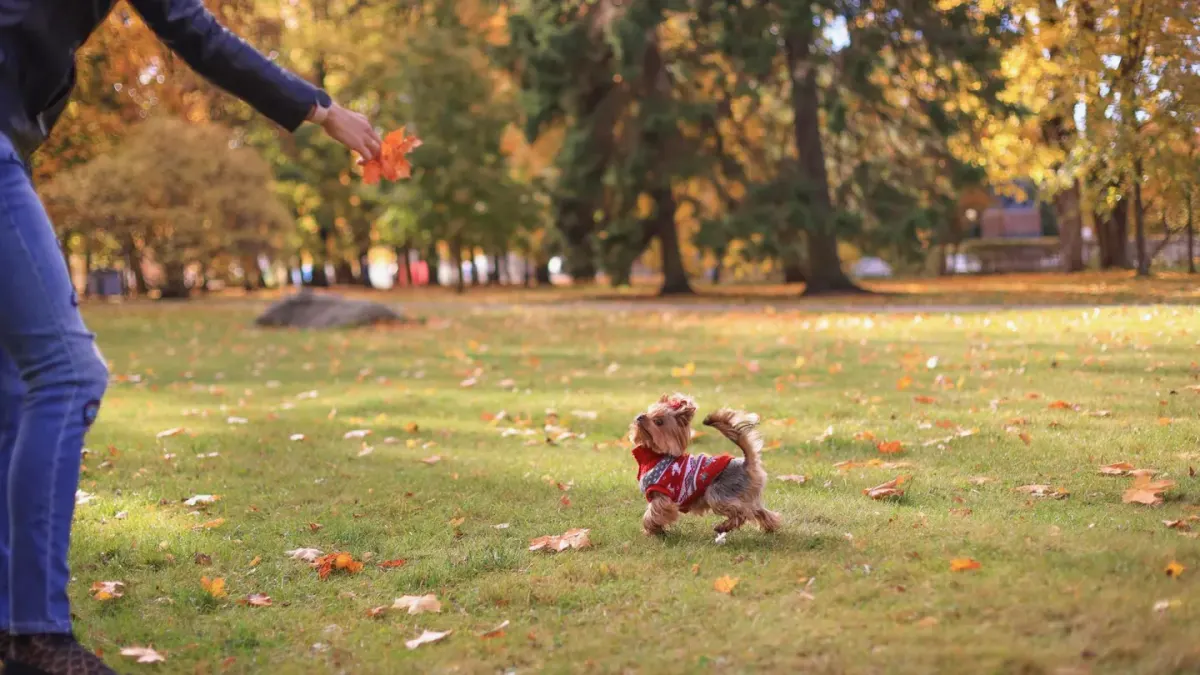
Mud was sheeting off the gate latch on a Saturday morning booking, and a four-year-old, 22-kg Border Collie mix was already vibrating at the end of her long line, eyes locked on the far fence line of a two-acre secure paddock. Her owner had booked 50 minutes, brought two towels and a soggy tennis ball, and wanted to let her “really run it out” after three wet days indoors. That impulse is understandable, and it is also where tissue tolerance gets tested, because a deconditioned dog sprinting on slick grass stacks high peak load onto soft tissue with almost no warm-up.
My read in one line: a rainy field trip works best as controlled intervals with sniff breaks, not an all-out sprint session, and supplements may help support normal joint structure and gut comfort but cannot offset a loading error.
Rain changes the job:
- Walk the fence and footing first — check for standing water, slick clay, holes, and fence gaps before unclipping.
- Budget load in intervals — 3–5 minutes of trot and sniff, then recall and rest, rather than 20 minutes of continuous chase.
- Protect the stop-and-turn — skip hard ball-chasing on wet grass; use scatter searches and short recalls.
- Feed and gut-plan around effort — small pre-visit meal 2–3 hours out, water offered during breaks, normal dinner after.
- Dry and inspect after — paws, belly, ears, and collar area dried; check pads for abrasions.
- Weigh supplements honestly — food therapy and daily diet do more than any single chew; joint and probiotic ingredients may help support recovery, within limits.
That first collie mix shows why the checklist matters. We spent the opening 10 minutes walking the perimeter on leash while she sniffed, then did four short recalls across the flattest 30 meters of the field, each followed by a scatter of kibble in the longer grass to keep her nose down and her speed honest. By minute 35 she had covered plenty of ground without the frantic braking that tears up carpi on wet turf, and she drank twice from the bowl her owner brought. The number that mattered was not top speed — it was that she held a steady trot for 12 minutes total across the session and still offered a clean sit at the gate, tail loose, without panting through her nose.
Wet Ground Changes Load, Not Just Fun
Rain does not make exercise dangerous by itself. It changes friction, visibility of hazards, and how quickly a dog cools, which changes how load lands on muscle, tendon, and cartilage.
I think of it as tissue tolerance: the same sprint that is routine on dry, grippy turf in midsummer becomes higher-risk when the surface gives way under a turning foot. Braking and cutting are the expensive movements. Straight-line trotting and sniffing are cheap.
This is also a recovery-window question. A dog that has been couch-bound Thursday through Saturday, then sprints hard for 45 minutes Sunday, gets a spike in volume with no ramp. For active dogs, Cornell University College of Veterinary Medicine has noted how variable joint-supplement formulations are, which is why I put diet, body condition, and load progression ahead of any bottle when owners ask about mobility support.
Short, deliberate work preserves the joy without the spike.
What I Would Actually Do in 50 Minutes
Treat the rental like a training session, not free time. Walk, then play in waves, then cool down while you pick up.
Start with a 5–10 minute on-leash lap. Look for broken fencing, livestock feed, mushrooms, standing puddles with oily sheen, and deep mud near gates where dogs launch and land. This doubles as a warm-up for shoulders and hips. If you rent fields often, the routine will feel familiar from planning meals for longer outings — the same fuel-and-rest logic I describe in Packing Meals for a Camping Trip With Your Dog applies on a small scale here.
Then run intervals: call, reward, release to sniff, repeat. Use a long line if recall fades around scents. End with 5 minutes of walking before you reload to the car.

The second outing is the cautionary one. A seven-month-old, leggy spaniel type came back to the same paddock after a week of only garden toileting, and his owner brought a chuck-it and planned to “tire him out” in one go. Within six all-out retrieves on saturated ground he was sliding three feet through turns, mouth open, tongue long, skipping a stride on his left front after a hard stop. We stopped fetch entirely, switched to find-it games in a 10-meter strip, and leashed him for the last eight minutes while he shook off and sneezed. He ate grass twice on the walk out and had soft stool that evening, the classic too-much-too-fast gut wobble after excitement and cold water gulps, not a supplement deficiency.
That failed fetch plan clarifies the tradeoff. High-speed chase is the fastest way to overload tissue on a slick field, and no glucosamine or omega-3 dose undoes it in the moment. The National Institutes of Health Office of Dietary Supplements summarizes glucosamine and chondroitin evidence in people as modest and mixed, which tracks with how I counsel owners: these ingredients may help support normal cartilage metabolism as part of a complete diet, but they do not raise tissue tolerance that day. What raises tolerance is gradual exposure and strength over weeks, under veterinary guidance.
Food, Gut, and Joints: What a Supplement Can Realistically Do
Diet is the base. A complete, balanced ration at a lean body condition does more for joints than topping with extras, because every extra kilogram is extra load on every turn. From a food-therapy lens, I favor consistent protein to maintain muscle, adequate marine-source omega-3s where the formulated diet provides them, and steady fiber for stool quality during travel and excitement.
Gut health is part of the same recovery picture. Excitement, cold rain, novel water, and gulped treats can loosen stool for a night. Probiotic strains studied in dogs, such as Enterococcus faecium and Lactobacillus spp., may help support normal digestive balance, but strain, dose in colony-forming units, and storage matter, and effects are supportive rather than curative. Quality oversight matters more than marketing; the National Animal Supplement Council runs the quality-seal program many veterinarians look for when comparing manufacturers, though a seal is about manufacturing controls, not proof of efficacy for an individual dog.
Keep expectations bounded. I will use joint-support ingredients for an aging athlete to help support comfort alongside weight management and rehab, and I will concede plainly where rest, footing choice, and interval design win outright on a rainy weekend. Where supplements stop winning is at the gate of a muddy sprint field — they do not make slick turns safe.
Safety notes that change the plan: avoid field mushrooms and standing-water drinking, rinse muddy paws to reduce licking and irritation, and dry ears in floppy-eared breeds. If you want the broader field rule on fungi, see Can Dogs Eat Mushrooms? The Field Rule for Grocery-Bin vs. Backyard Fungi, and for reading body language on busier outings, How to Find Dog-Friendly Patios and Breweries (Without Overloading Your Dog’s Body) covers the same load-reading skills in town.
The third scenario is where usual advice bends. An 11-year-old Labrador with early stiffness arrived for a Sunday-to-Tuesday rainy stretch with his owner worried he would slip and be sore for days. Instead of canceling, we shortened everything: a 30-minute booking rather than an hour, stays on the high, grassy third of the field, no retrieves, and six brief sniff walks between fence posts with warm car rest and thorough towel-drying after. He took 14 short, nose-down foraging bouts rather than any running, lay down voluntarily twice to chew grass, and rose cleanly both times. The next morning his owner reported he climbed the two porch steps without pausing, which for him was the marker that the dose had been right.
That is the forward question to carry home: did your dog leave tired and loose, or wired and lame?
Frequently asked questions
Should I feed before a secure field visit in the rain?
Give a small familiar meal 2-3 hours before, offer water during sniff breaks, and feed the normal dinner after drying off. Avoid large meals right before sprinting and avoid letting your dog drink from muddy puddles.
How do I keep my dog from going wild for the whole booking?
Use intervals — 3-5 minutes of movement, then a recall, scatter search, or leash walk. Bring a long line, skip slick-ground fetch, and end with a 5-minute cool-down walk.
Do joint supplements protect my dog on slippery grass?
No supplement makes slick turns safe. A balanced diet, lean weight, and gradual load progression protect joints; glucosamine, chondroitin, and omega-3s may help support normal joint structure as part of overall care. Ask your veterinarian what fits your dog.
Sources
- NASC Quality Seal Program — National Animal Supplement Council