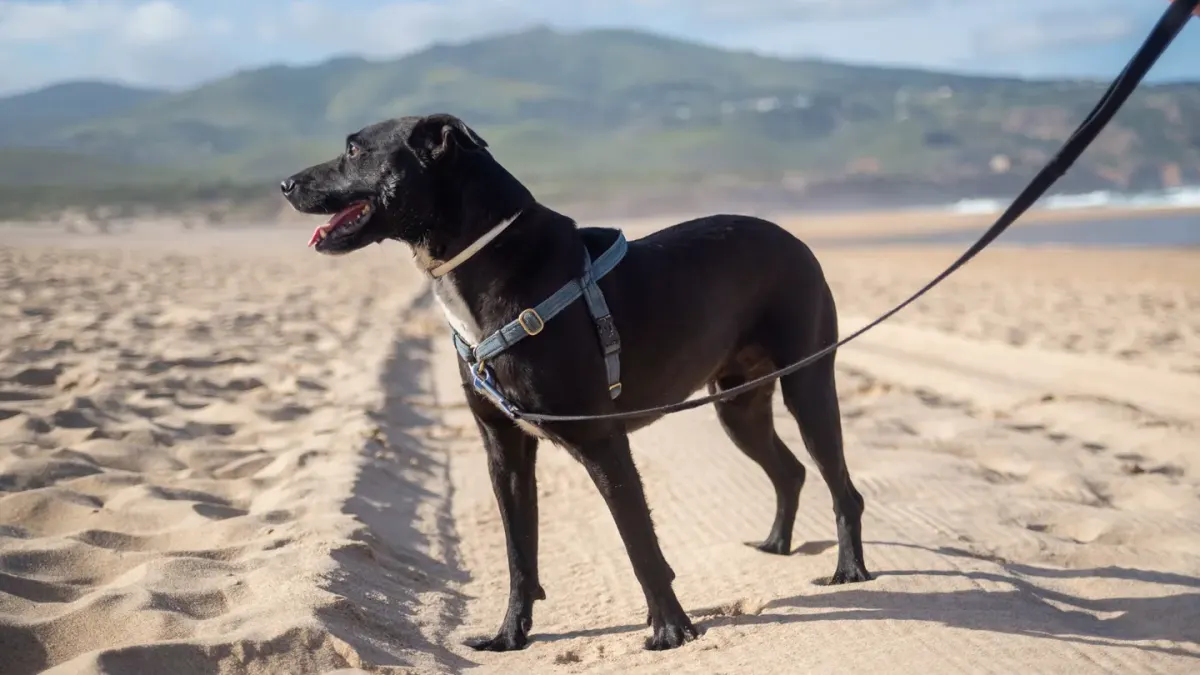
Ian loosened the chest strap on Krypto’s vest two blocks into a Wilmington errand run, after the 10-year-old Basenji started shortening his front stride and panting harder than the 15-minute walk warranted. The vest looked official, with bold patches and sturdy handles, but under load it pulled across the point of the shoulder and trapped heat over the ribs. That mismatch is the whole story with this gear.
A vest does not make a dog a service dog. Training for specific disability-related tasks does, and public-access rights come from federal law, not fabric. The U.S. Department of Justice explains that service animals are dogs individually trained to do work or perform tasks, and businesses may ask only what work the dog performs, not for papers or a demonstration. Choose a vest for what it can actually change: clear communication to the public, plus fit that preserves stride, skin, and cooling.

A vest talks to the public, not to the law
In day-to-day practice, owners buy vests hoping for smoother access. What a vest supports is human behavior around the dog. High-contrast lettering and side patches that read SERVICE DOG or DO NOT PET reduce reaching, talking, and petting attempts, which may help maintain focus during tasks like guiding, alerting, or bracing on cue.
What it does not do is confer status. The ADA National Network notes that the ADA does not require vests, IDs, or certificates, and a vest alone does not create public-access rights if the dog is not trained. Vets often see the fallout when that distinction blurs: a nervous pet in a vest gets more public pressure, not less, because people expect steady task behavior.
My position is direct. Buy the communication value, not the qualification story. Evidence that would change my mind would be a federal rule tying rights to standardized gear, and no such rule exists today.
Fit under load decides whether the dog can work
Think like Loadline here: every strap adds load to tissue, and tissue has a tolerance window. A service vest rests over the shoulder girdle, rib cage, and often the thoracic spine. If the chest plate sits too far forward, it limits shoulder extension with each step. If the girth strap cinches behind the elbows, it can rub skin and alter gait to avoid pressure.
Look for a Y-shaped front that leaves the point of shoulder free, wide and padded girth straps that spread pressure over ribs rather than a cord edge, and at least two inches of clearance behind the elbow when the dog is standing and moving. The same pressure logic that shapes front-clip vs back-clip choices applies here: where the leash attaches changes torque on the chest. A back attachment keeps pull off the shoulders for a steady guide walk, while a front ring can twist a light vest sideways.
Weight matters more than people expect. Patches, handle mounts, and pouches add up fast on a long task day. If the team needs the dog to carry items, apply the same conservative load thinking used for pack weight decisions and keep added vest weight minimal and balanced side to side.
Heat is the other limiter.
Dogs shed most heat by panting and by convection off sparsely haired skin on the belly and groin. A full-coverage vest with non-breathable lining traps that zone.
What to prioritize and what to skip
Prioritize adjustability at three points — neck, chest, and girth — breathable mesh over solid nylon for daily wear, and matte hardware that does not clank or snag on doors. Removable patch panels let you wash the vest without shredding embroidery, which supports skin health because clean gear rubs less.
Skip rigid cape designs for growing or heavily muscled dogs unless you can refit monthly, and skip sewn-on handles unless a mobility professional has trained a specific bracing task. A decorative handle invites the public to grab, and an untrained brace risks shoulder and back injury for both ends of the leash.
In practice, do a working fitting, not a standing fitting. Walk, sit, down, tuck under a table, and climb two or three stairs. Watch for held breath, lip licking when straps tighten, shortened forelimb reach, or a vest that migrates more than an inch. Any of those means adjust, pad, or size up.
Evidence on vest materials and pressure is still thin in dogs, and I will stay honest about that gap. Until controlled gait and pressure-mapping data exist for service vests specifically, fit checks under real movement are the best proxy we have.
For teams that fly or use transit, keep expectations narrow: the vest may help staff identify the dog quickly, but task training and calm behavior in crowds are what preserve access.
For related context, read Front-Clip vs Back-Clip Dog Harness: What the Biomechanics Actually Say.
For related context, read How to Measure and Fit a Basket Muzzle.
Frequently asked questions
Does a service dog have to wear a vest by law?
No. Federal ADA guidance does not require a vest, ID, or certificate. Access depends on trained task work for a disability, not on gear.
Will a vest stop people from petting my service dog?
It reduces approaches but does not prevent them. Clear DO NOT PET patches plus body blocking and a practiced verbal script work better together.
How tight should a service dog vest fit?
Snug enough not to rotate, with two-finger clearance under straps and no contact behind the elbows during movement. Recheck after adding patches or a handle.
Sources
- Service Animals and the ADA — U.S. Department of Justice