On this page
Morning surf was already chopping white when Erik parked near Oxnard with Brooklynn, his 10-year-old spayed Pomeranian mix, bracing her small frame against the wind from the back seat. She wanted the sand, but her load tolerance, heat tolerance, and gut tolerance were all narrower than her enthusiasm. That mismatch is the whole beach problem for athletic dogs. My position is direct: the beach is a high-load, high-heat, high-ingestion environment, and the pre-trip check matters more than anything you pack for recovery. A supplement may help support normal gut or joint function, but it cannot offset heat stroke, salt-water ingestion, or an off-leash sprint on fatigued tissue.
Check water quality, heat load, and legal load first
Tissue fails when load exceeds tolerance, and a beach stacks three loads at once: soft-sand running, heat and humidity, and prolonged excitement. Read the forecast, water temperature, lifeguard flags, and local dog rules before you leash up. Dogs cool almost entirely by panting, with very limited sweating from paw pads, which is why humid ocean air and continuous fetch narrow the recovery window fast.
The AVMA warm-weather guidance frames the core rule well: never leave a dog in a car, watch for heavy panting and collapse, and provide shade and cool water on hot days. VCA Hospitals adds the clinical detail owners of driven dogs need — heat stroke can progress from excessive panting and drooling to vomiting, incoordination, and collapse, and flat-faced, senior, and previously overheated dogs have less reserve.
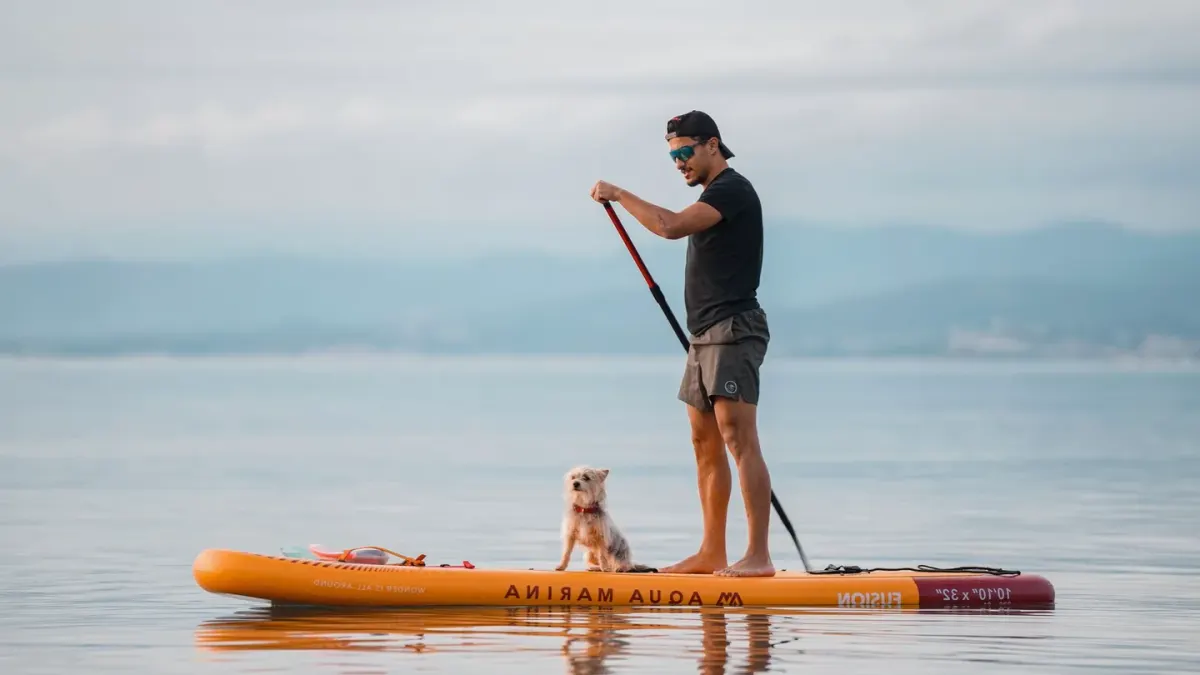
Call that your go or no-go screen. If it is midday, humid, and Brooklynn-sized seniors or sprint-breed adolescents are already panting in the parking lot, shorten the session, move it to early morning, or pick shade and swimming over sand sprints. That logic carries over from paddling sports, as in this kayaking safety guide, where water exposure and recovery windows set the plan.
Screen the shoreline like a playing surface
Sand looks soft until you measure what it does to tendons and feet. Deep dry sand increases muscular work and paw abrasion, wet packed sand hides shells and hooks, and repeated hard stops for a ball load the Achilles mechanism and shoulders. Walk the first 50 yards yourself. Feel for hot sand, broken glass, fishing line, and steep drop-offs near jetties.
Check leash rules, wildlife closures, and rip-current warnings. A long line beats off-leash freedom on a crowded beach because it preserves recall without letting a driven dog sprint to exhaustion. This is the same load-management thinking behind choosing a controlled dog-friendly patio over an overwhelming venue: environment sets dose.
Keep the first bout short.
Then rest in shade, offer small water breaks, and watch gait. A dog that shortens stride, lags behind, or lies down and refuses to re-engage has reached tissue tolerance for that surface.
Audit what goes in the mouth: salt water, sand, and trash
Salt-water ingestion causes vomiting and diarrhea at modest volumes and hypernatremia at larger volumes, while swallowed sand can irritate the gut and, in larger accumulations, contribute to obstruction risk. Add picnic trash, corn cobs, xylitol-containing gum, onion scraps, and fish carcasses and the gut takes more hits than the joints.
Bring more fresh water than you think you need and offer it every 10 to 15 minutes to reduce salt-water drinking. Feed a normal pre-exercise meal three to four hours earlier rather than a large beachside meal, and skip table scraps. The reasons scraps backfire are both mechanical and metabolic, outlined in this review of whether table scraps are bad for dogs, and the blood-level risk from seasoned foods is sharper than most owners expect, as explained in this piece on why onions are toxic.

Travis learned that audit with Macky, his 5-year-old neutered male Yorkshire Terrier, in Kent. Macky weighed under 7 pounds, vomited twice after lapping wave wash during a 40-minute beach walk, and rebounded only after Travis switched to leashed water breaks with a bowl every quarter mile. Small body, small sodium buffer.
Weigh what nutrition and supplements can realistically do
Food therapy and supplement science have a bounded role here. Adequate protein, balanced electrolytes from a complete diet, and fresh water support normal hydration and recovery. Selected probiotic strains such as Enterococcus faecium SF68 and Lactobacillus acidophilus have data for supporting normal stool quality and gut flora during travel and dietary disruption, typically studied around 1 x 10^8 to 5 x 10^9 CFU per day depending on product, but they do not prevent hypernatremia, heat stroke, or foreign-body obstruction.
Joint ingredients sit in the same category. Glucosamine, chondroitin, omega-3s, and undenatured type II collagen may help support normal joint structure and mobility with consistent use, yet none raises the acute load ceiling for a fatigued sprint on sand. I would change that view with randomized, beach- or field-specific trials showing preserved tendon function or faster return to baseline gait after standardized exercise. Until then, rest intervals, surface selection, and total sprint count do more for joints than any chew given that morning.
In practice, vets often see the opposite order: owners dose a joint chew, then allow unlimited fetch. Flip it.
Build the beach recovery window before you leave home
Pack for exit and aftercare, not just play. Rinse salt and sand from coat and paws, check between toes for redness, dry ears after swimming, and offer a small bland recovery meal only after panting has normalized. The EPA harmful algal bloom guidance is worth a pre-trip glance if lagoons or estuaries border your beach, since cyanobacteria can produce rapidly acting toxins and dogs are exposed by drinking or licking their coats.
End the day with a hands-on scan: paw pads, webbing, nails, eyes for sand irritation, and any hot swelling over limbs. Any repeated vomiting, bloody diarrhea, lethargy after cooling, stumbling, or pale gums deserves same-day veterinary assessment rather than watchful waiting overnight. A tired dog is not always a happily tired dog.
Frequently asked questions
How long should an active dog play on sand before a rest break?
Keep the first bout to 10 to 15 minutes, then rest in shade with fresh water. Shorten sprint intervals on deep dry sand and stop if stride shortens, panting stays heavy, or the dog disengages.
How do I keep my dog from drinking salt water?
Offer fresh water every 10 to 15 minutes, use a leash or long line near the surf line, and redirect lapping at waves. Repeated vomiting, excessive thirst, tremors, or lethargy after salt-water exposure needs prompt veterinary care.
Is swimming safer than running on the beach for senior dogs?
Often yes for joint load, but only with a fitted life jacket, calm water, short swims, and a clear exit. Seniors like Brooklynn chill quickly and fatigue faster, so keep swims brief and follow with drying, warming, and rest.
Sources
- Warm Weather Pet Safety — AVMA
- Heat Stroke in Dogs — VCA Hospitals