On this page
A twelve-year-old Boxer named on an exam table, 71 pounds, comes in because he tires two blocks into a walk that used to be routine. His owner mentions the dog just seems “off,” not lame, not coughing — just less. An echocardiogram three weeks later shows a dilated left ventricle. This is the moment L-carnitine stops being a wellness-aisle word and becomes a specific clinical question: is this a carnitine-deficient heart, and does supplementing it change anything.
Start here: L-carnitine’s job is to shuttle fatty acids into the mitochondria of muscle cells, where they’re converted to usable energy. Cardiac and skeletal muscle run heavily on fat oxidation at rest and during sustained effort, so a cell that can’t move fat into its energy furnace runs short — first in the demanding tissue, the heart, then in exercising skeletal muscle. Dogs have an odd wrinkle here: their liver and kidneys can synthesize carnitine, but skeletal and cardiac muscle lack the final enzyme in that synthesis pathway, so muscle depends on carnitine transported in from the liver rather than making its own, according to the PetMD overview of the compound’s role in dogs. When that transport or synthesis chain is disrupted, muscle carnitine can run low even while blood levels look normal.
The Boxer and Doberman story is the real evidence base
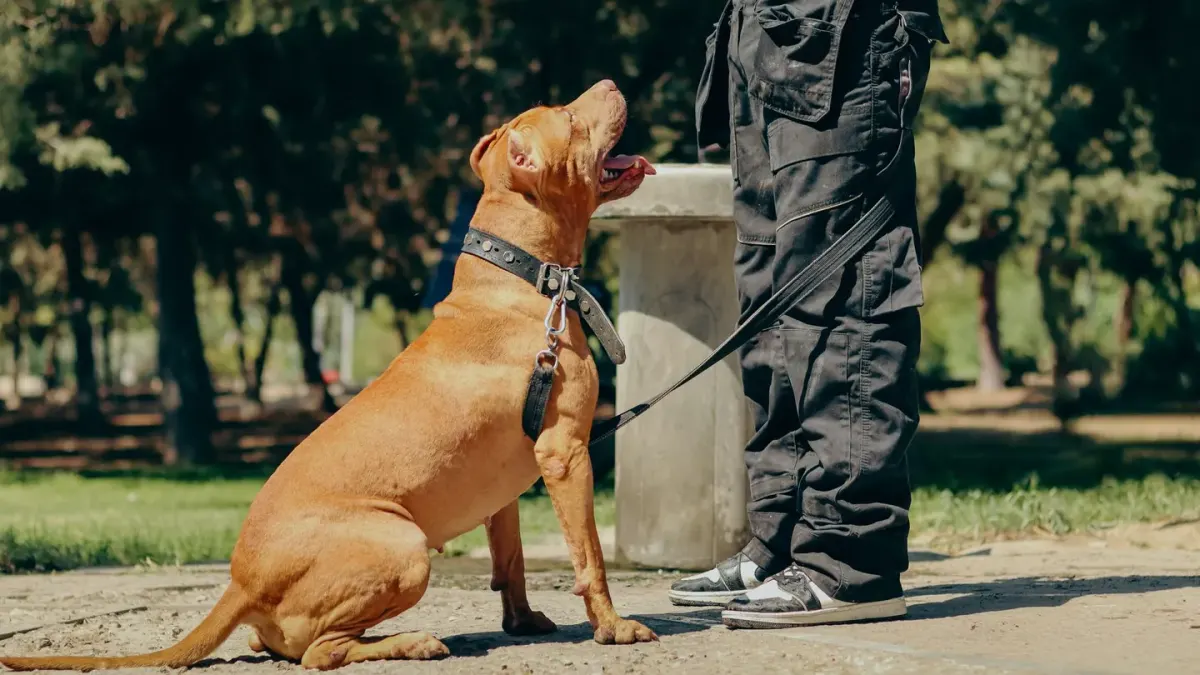
Most of what we know about dog-specific L-carnitine deficiency comes from two breeds: Boxers and Doberman Pinschers, plus other large and giant breeds with elevated dilated cardiomyopathy (DCM) risk. A frequently cited case report found cardiac carnitine concentration of 567 nmol/g wet weight in an unsupplemented Boxer with DCM, compared with a normal mean of roughly 1,493 nmol/g, and the dogs’ clinical status improved with oral carnitine therapy, per the case report indexed on PubMed. That’s a real, measured tissue deficiency tied to a real disease — not a marketing inference. Cornell’s cardiology service also lists Boxers, Dobermans, and other large breeds among those predisposed to DCM, some of which is nutritionally mediated and responds partially to carnitine or taurine repletion, per Cornell University College of Veterinary Medicine.
That is the load-bearing fact, and it’s narrower than most product copy suggests. It does not mean every senior dog with low energy has a carnitine problem. It means a specific subset of DCM cases, concentrated in specific breeds, has documented low cardiac carnitine — and that’s the population where supplementation has a mechanism to point to.

Muscle recovery: a smaller, more athletic-facing story
Separate from the cardiac question, there’s a body of work on L-carnitine and exercising skeletal muscle — closer to what a working or sporting dog’s recovery window looks like. A controlled study in exercised Labrador Retrievers found that supplemented dogs had a lower fractional protein breakdown rate at rest and after exercise compared with placebo, an effect that was more pronounced in females, according to research published via the National Center for Biotechnology Information. Read plainly: carnitine didn’t build new muscle, it modestly reduced how much protein the body tore down around a training session. That’s a recovery-tissue-tolerance story, not a performance-enhancer story, and it’s worth being honest about the size of the effect — modest, breed- and sex-variable, and not a substitute for actual load management.
Here’s a passage worth sitting with. I once worked with a handler running a 6-year-old, 55-pound field-trial Lab through a hard fall training block — long retrieves, cold water, back-to-back days. He’d read that carnitine “speeds recovery” and started dosing it heavily, skipping the rest day he’d normally build in around day 4 of a cycle. By day 10 the dog was short-strided coming off the truck, not from a carnitine shortfall but from cumulative tissue load that no supplement offsets. The lesson wasn’t that carnitine failed — it’s that a supplement can’t substitute for a rest window. That call belongs to the handler and the sports-medicine team managing training volume, not to us.
Human evidence, extrapolated carefully
The NIH’s Office of Dietary Supplements notes that in humans, oral L-carnitine has been studied in cardiovascular contexts including as adjunct therapy in some heart conditions, though the dose-response relationship remains an active research question, according to the NIH Office of Dietary Supplements. That’s human data, and it does not transfer cleanly to dogs — species differ in carnitine synthesis, absorption, and baseline status, as the Boxer research above makes clear. Use it as background on the mechanism, not as proof of a canine dose or outcome.
Dosing for suspected carnitine-deficient DCM is a veterinary decision, not a label-reading exercise. Reported clinical protocols in the literature vary — figures in the range of 50 mg/kg with food have been described for DCM management — but the right number, and whether carnitine belongs in the plan at all, depends on echocardiogram findings, concurrent taurine status, and the dog’s overall cardiac workup. This is not a supplement to dose empirically at home for a heart diagnosis; if you’re weighing an actual DCM case, that conversation belongs with a cardiologist or your regular vet. If your dog is showing hind-end weakness or exercise intolerance and you haven’t ruled out a neurologic cause, our triage checklist for hind leg weakness is a useful next stop before assuming it’s cardiac or metabolic.
Second story, later in the plan. A 9-year-old, 40-pound mixed-breed dog started on a vet-recommended carnitine and taurine combination after a mild DCM finding on echo. Her owner expected a dramatic turnaround. What actually changed, over about six weeks, was subtler: she stopped needing to stop and rest twice on her usual half-mile loop, down to zero stops by week six. That’s the honest shape of a response — helps maintain function within a diagnosed, monitored condition, not a reversal of heart disease. Owners chasing senior energy loss more generally may find our guide on helping a senior dog regain lost energy safely more directly useful than a single ingredient.
Where I land, and the counterargument I take seriously
My position: L-carnitine is worth a targeted conversation with your vet if your dog is a DCM-predisposed breed, or if a workup has already flagged low taurine or carnitine — not as a general-purpose energy or muscle supplement for an otherwise healthy dog. The counterargument, and it’s a fair one, is that carnitine is cheap, low-risk, and some cardiologists add it empirically alongside taurine even without confirmed tissue deficiency, reasoning that the downside is minimal and the upside, in a carnitine-responsive case, can be meaningful. I don’t dismiss that reasoning. But “low risk to try” is different from “evidence it will help your specific dog,” and for owners outside that predisposed population, the honest answer is that a fat-oxidation cofactor helps maintain normal muscle energy metabolism — it isn’t a targeted fix for a heart or muscle problem it wasn’t shown to cause. If your dog is younger and you’re trying to map out what a realistic trajectory even looks like for the breed, our piece on realistic healthy lifespan by breed is a better starting framework than any single ingredient decision.
A third scene, because the edge cases are where this gets misapplied. A rescue org called about a 4-year-old Doberman, otherwise asymptomatic, whose new owner wanted to start carnitine “preventively” because of the breed’s DCM reputation, with no cardiac workup done. That’s the case I’d slow down on: supplementing before you know baseline cardiac carnitine or taurine status tells you nothing about whether it’s doing anything, and it can create false reassurance that substitutes for the echocardiogram the dog actually needs. Preventive supplementation in a high-risk breed is a reasonable instinct, but it doesn’t replace screening.
In short: carnitine’s mechanism is real, the Boxer/Doberman DCM evidence is specific, and the muscle-recovery data is modest and breed-variable — so let the diagnosis, not the bag, decide the dose.
Frequently asked questions
Is L-carnitine safe to give every dog?
It's generally considered low-risk, but it isn't a general energy supplement with proven benefit for dogs outside specific deficiency or cardiac contexts — talk to your vet before adding it, especially if your dog has a heart condition.
Which dog breeds are most likely to have a real carnitine deficiency?
Boxers and Doberman Pinschers have the best-documented tissue-level carnitine deficiency tied to dilated cardiomyopathy, with other large and giant breeds also at elevated DCM risk.
Can L-carnitine replace taurine in a DCM treatment plan?
No. They address different metabolic pathways and are often used together under veterinary guidance rather than as substitutes for each other.
Sources
- L-carnitine for Dogs — PetMD
- Case report: efficacy of oral carnitine therapy for dilated cardiomyopathy in boxer dogs — PubMed
- Canine Dilated Cardiomyopathy (DCM) — Cornell University College of Veterinary Medicine
- L-Carnitine metabolism, protein turnover and energy expenditure in supplemented and exercised Labrador Retrievers — National Center for Biotechnology Information
- Carnitine - Health Professional Fact Sheet — NIH Office of Dietary Supplements