Can Dogs Eat Tomatoes Safely?
Medically reviewed by Roger Clemmons, DVM, PhD, DACVIM (Neurology and Neurosurgery), CVA, CVFT — For general education — not a substitute for veterinary care.
Most dogs can safely eat a few bites of ripe tomato — real danger hides in the green fruit and vine.
On this page
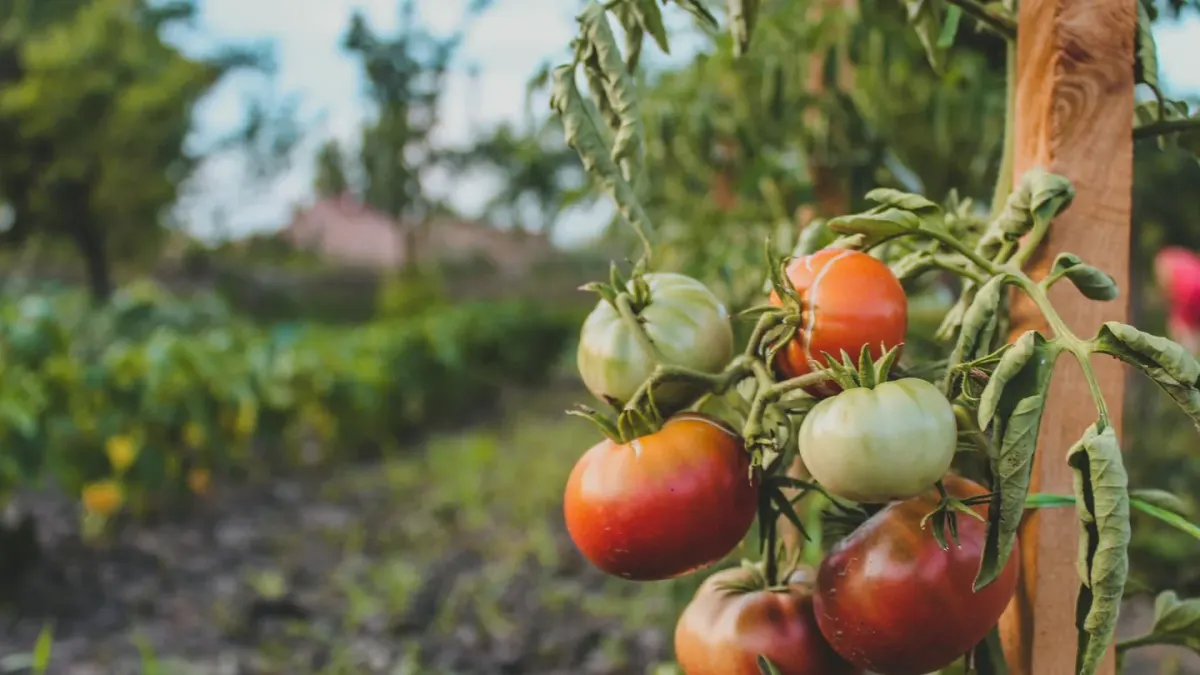
A handler I’ll call Dana runs her cattle dog through chute work most mornings, and behind her training yard she keeps a tomato patch that’s more jungle than garden. One July morning the dog cleared the fence line, grabbed a fistful of tomatoes off the lowest branch, and swallowed most of it before Dana got a hand on his collar. Some of what he ate was blushing red. Some of it was still hard and green. That mixed handful is exactly the scenario that makes tomato questions harder than they look, because the fruit on one branch isn’t the same risk as the fruit two branches over.
Here’s where I land, and I’ll defend it: a bite or two of ripe, plain tomato flesh is a reasonable, low-risk snack for most healthy dogs. The plant itself is a different animal. Leaves, stems, vines, and any tomato that’s still green deserve real caution, not the same shrug you’d give a slice off your salad.
Where the Toxin Actually Lives
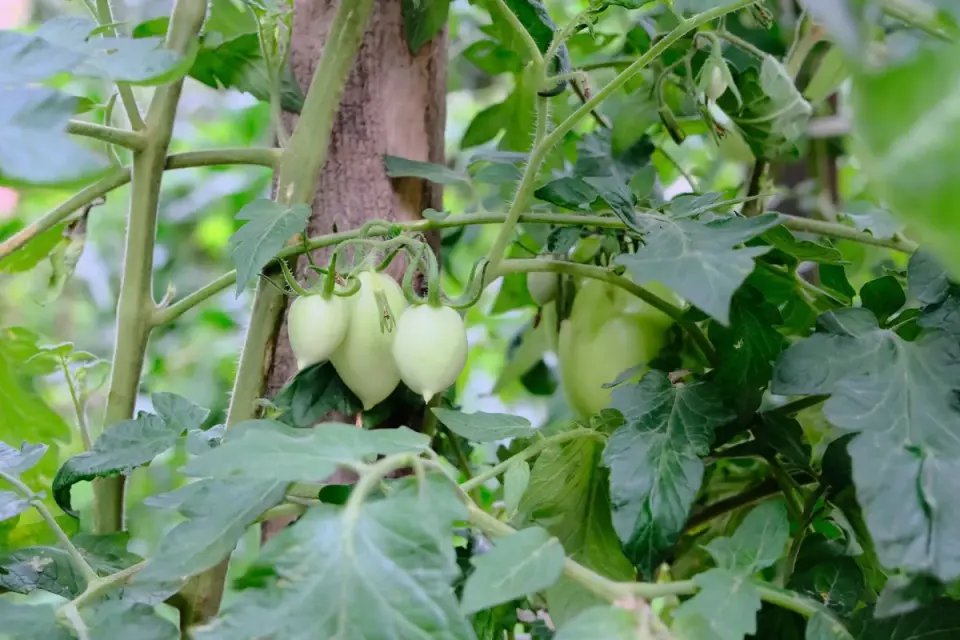
Tomatoes are nightshades, and like their relatives they carry glycoalkaloid compounds — tomatine and solanine — as a built-in defense against being eaten before they’re ready to spread seed. Those compounds are concentrated almost entirely in the leaves, stems, vines, flowers, and unripe green fruit; as the fruit ripens and turns red, tomatine and solanine levels drop sharply, according to Pet Poison Helpline. That’s the whole mechanism in one line: ripeness is a chemistry change, not a marketing claim, and it’s why a red tomato and a green one aren’t really the same food.
This matters more for some dogs than others. A young, food-motivated dog working a garden bed unsupervised is a different exposure than a senior dog offered a single spoonful of tomato sauce base at the counter. Body size, how much was eaten, and which part of the plant it came from all shift the equation — which is also why I’d rather teach owners to read the plant than memorize a single verdict.
What a Bad Batch Actually Looks Like
When dogs do get into a meaningful amount of green tomato or plant material, the picture is usually gastrointestinal first: vomiting, diarrhea, drooling, and a dog that goes off its food for the rest of the day. Heavier exposures can bring on weakness, stumbling, or disorientation, though true tomatine poisoning is uncommon in dogs and most affected dogs recover fully. I want to be precise here rather than dramatic — this isn’t a compound that reliably drops a dog in its tracks. It’s a GI irritant with an occasional neurologic edge at high enough doses, and the dose is doing almost all of the work in how bad a given case looks.
A short, single fact worth sitting with: severity tracks quantity, not the mere presence of tomato in the story.
Reading a Tomato Upset Like a Recovery Window
Once a dog has vomited or run loose stool for a day, the question I actually care about is what the gut needs to get back to baseline — the same question I’d ask after any load the digestive tract wasn’t built to absorb in one sitting. A bland, low-residue approach during that window mirrors how clinicians manage more serious digestive disruptions: nutritional support with moderate fat and easily digested ingredients is a standard piece of managing exocrine pancreatic insufficiency in dogs, a far more serious condition, according to a JAVMA review on exocrine pancreatic insufficiency in dogs and cats. A one-off tomato incident isn’t EPI, but the underlying logic — give an irritated gut less to process, not more — travels well between the two.
Probiotic support after a GI upset is one of the more researched recovery tools we have, though it isn’t a guaranteed fix for every dog. In a 2025 pilot study on a novel probiotic given to dogs with diarrhea, diversity metrics in the fecal microbiome did not distinguish which dogs responded from which didn’t, per Frontiers in Veterinary Science — a useful, honest reminder that not every dog’s gut answers to the same lever, even a well-studied one. For owners rebuilding a training or working dog’s gut after any GI stumble, that same load-and-recovery framing shows up in our diet and gut health connection guide, and fiber dosing questions specifically are covered in how much fiber is too much for a dog.
Dana’s dog, for what it’s worth, had loose stool for about a day and was back to full training volume by the following session — not because of any single intervention, but because his exposure was a mixed handful, not a green-tomato binge, and his gut had the reserve to absorb the hit.
The Counterargument I Still Don’t Buy
I hear a version of this pitch often: tomatoes are rich in lycopene, so a little tomato in the bowl is doing something protective for an aging or working dog. I understand the appeal — lycopene is a genuinely interesting antioxidant compound in human research. But I stay anchored to how a modality is actually thought to work rather than what it might cure, and there is no dog-specific evidence I’d stand behind that a few bites of tomato meaningfully shifts oxidative load in a working dog’s joints or tissue. Treat tomato as a low-stakes, occasional treat if your dog tolerates it — not as a supplement standing in for actual joint or gut science, which is a conversation better had through a sweet potato feeding guide or a real, dosed joint-support product, not a slice of salad tomato.
A Practical Read for the Bowl
Offer ripe, plain tomato flesh only, in small amounts, with no seasoning, garlic, or onion mixed in. Keep dogs out of the tomato bed itself, especially during the window when fruit is still green. Watch any dog that gets into the vine for the rest of the day rather than assuming a quiet hour means the exposure is over. And if your dog has a sensitive gut already, or is mid-recovery from a different GI event, this is a season to skip the garden snack entirely and let the gut finish its own job first.
Frequently asked questions
How much ripe tomato is too much for a dog?
There's no established safe dose because tomato isn't a nutritional necessity for dogs, so the honest answer is: keep it to a bite or two of plain flesh, not a bowlful, and skip it entirely for a dog with a sensitive gut or a known nightshade reaction.
My dog ate a green tomato off the vine — do I need to call someone?
If it was a small nibble and your dog seems normal, watch for vomiting, drooling, or wobbliness over the next several hours. If it was a substantial amount, or your dog ate leaves and stems too, call your veterinarian or a poison control line right away rather than waiting to see what happens.
Sources
- Tomato Is Toxic To Dogs — Pet Poison Helpline
- Exocrine pancreatic insufficiency in dogs and cats — JAVMA
- Pilot study evaluating tolerability and changes in fecal microbiota associated with novel probiotic administration to dogs with diarrhea — Frontiers in Veterinary Science