Can Dogs Eat Strawberries? A Sports-Medicine Read on Fruit, Fuel, and Recovery
Medically reviewed by Roger Clemmons, DVM, PhD, DACVIM (Neurology and Neurosurgery), CVA, CVFT — For general education — not a substitute for veterinary care.
Yes, dogs can eat strawberries safely in small sliced portions, though the fruit belongs in a recovery plan, not a joint-therapy protocol.
On this page
Picture a agility dog cooling down after a Saturday trial, harness off, tongue out, owner crouched by the cooler deciding what counts as a fair reward. A handful of blueberries goes in the bait bag for the ring, but the cooler also holds a carton of fresh strawberries meant for the humans. The owner slices one in half, checks for a stem, and offers it as the dog settles onto a mat. Nothing about that moment is risky, and nothing about it is medicine either — it’s a snack choice, made with reasonable care, in a system that’s already doing the real recovery work through rest and hydration.
That’s the frame worth holding onto: strawberries are safe for the overwhelming majority of dogs, and the question of can dogs eat strawberries has a clear yes attached to it, with a short list of preparation rules. According to AKC, strawberries are a low-calorie treat that most dogs tolerate well, and whole-food fruit fits comfortably into a working dog’s diet the way a lean protein source or a vegetable topper does — as an addition, not a foundation.
What a Strawberry Actually Brings to the Bowl
Strawberries are mostly water and natural sugar, with a modest fiber content and a real, if small, dose of vitamin C and plant antioxidants called anthocyanins. PetMD notes the fruit’s antioxidant and vitamin content as one reason it’s often recommended over higher-sugar options. I’d frame that plainly: those compounds are thought to help buffer everyday cellular stress, the way antioxidants in general are believed to work throughout the body, but a treat-sized serving delivers a small dose relative to a dog’s full diet. That distinction matters more for a dog carrying real training load, where owners are often looking for anything that reads as recovery support.
The Prep Rules That Actually Matter
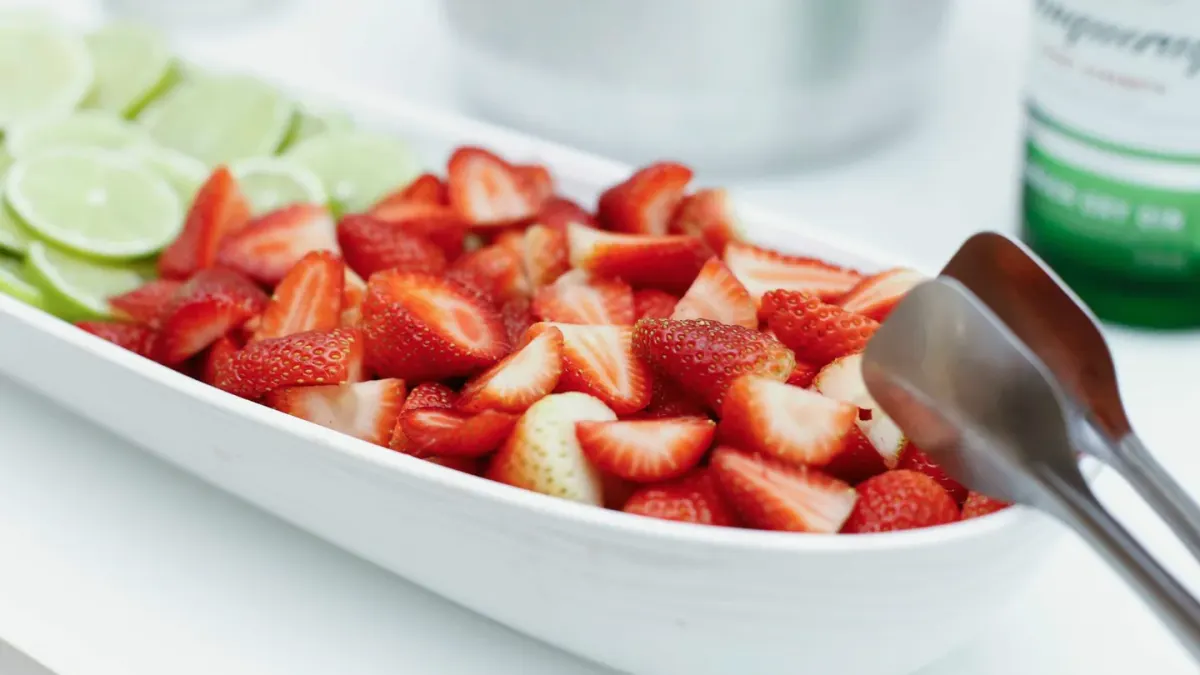
Most of the risk with strawberries isn’t the fruit itself — it’s presentation and packaging. Slice or mash berries rather than feeding them whole, since an intact strawberry is a genuine choking hazard for small dogs and fast eaters alike. Skip the stem and leafy cap; they aren’t classified as toxic by the ASPCA, but the fibrous texture can cause mild GI upset and adds nothing worth the risk. And stay away from canned strawberries, strawberries in syrup, or strawberry-flavored yogurt — added sugar is one problem, and some of those products carry xylitol, a sweetener that’s genuinely dangerous for dogs. Fresh or plain frozen, portioned, and unadorned is the standard worth keeping.
Suppose a handler wants to build strawberries into a weekly routine for a dog doing consistent conditioning work — the honest plan is one to three sliced berries, a few times a week, watched the same way any new food is watched: stool quality, appetite, and any sign of a sensitive gut pushing back. That’s a modest, defensible habit. It is not a substitute for the load-management side of things — how much work the dog did that week, how much rest followed it — which is a training-volume decision that belongs with a vet or a canine sports-medicine specialist, not with a fruit bowl.
Where the “Joint Superfood” Claim Overreaches
I’ll be direct about where I land: strawberries earn a place in a working dog’s diet as a low-calorie, antioxidant-containing treat, and I stay skeptical of language that pushes them further than that. Some pet-nutrition content markets berries generally as anti-inflammatory joint support, extrapolating from human antioxidant research onto a dog’s treat-sized serving. The counterargument deserves a fair hearing — antioxidant compounds are mechanistically plausible contributors to reducing oxidative stress, and that’s not nothing in an aging or heavily worked joint. But a few sliced berries a day don’t deliver antioxidant loads anywhere near what’s used in the human studies this claim borrows from, and no controlled canine work has isolated strawberries as a joint intervention. I’d rather be precise about mechanism than generous with the marketing, which is why strawberries stay filed under fueling and treats in this office, not under joint therapy.
How Fruit Fits the Bigger Gut-Recovery Picture
Gut health and joint recovery aren’t separate systems in a working dog — they’re both part of the same recovery-science picture a training program has to account for. Fiber and hydration from whole foods like strawberries can play a small supporting role in stool quality, similar in spirit to how sweet potato or other fiber-bearing foods are discussed for active dogs. But the heavier lifting in gut resilience tends to come from targeted strategies, not treat fruit. A review in JAVMA on exocrine pancreatic insufficiency notes that management leans on enzyme replacement, low-residue nutrition, and cobalamin supplementation — a reminder that real digestive dysfunction needs a structured protocol, not a produce-aisle fix. And a randomized trial in Frontiers in Veterinary Science found that microbiome diversity metrics didn’t reliably distinguish which dogs responded to a probiotic intervention, which is a useful humility check on how much any single food or supplement — strawberries included — can be expected to move gut outcomes on its own. For handlers building out a fuller feeding strategy, our guide to the diet and gut health connection in dogs and our piece on how much fiber is too much both go further into where that line actually sits.
The Line to Call Your Vet
Most dogs handle strawberries without any issue. The exceptions are worth naming plainly: dogs with diabetes, significant obesity, pancreatitis history, or a chronically sensitive gut should only get fruit with veterinary input, since even natural sugar adds calories and can unsettle a system that’s already working hard to stay balanced. Watch for loose stool, vomiting, or reduced appetite after introducing any new treat, and stop if you see it.
So where does that leave a training-minded owner standing at the cooler with a carton of strawberries and a tired dog? Somewhere reasonable — a small, sliced serving is a fine reward, the fruit isn’t a joint or gut therapy, and the real recovery work still happens in rest, hydration, and whatever structured plan a vet or sports-medicine specialist has already put in place. Is that a satisfying answer, or does it just move the real question back to what a dog’s rest days should actually look like?

Frequently asked questions
How many strawberries can a dog eat in one sitting?
Most veterinary guidance treats one to a few sliced strawberries as a reasonable serving for an average-sized dog, keeping total treats — strawberries included — under roughly 10% of daily calories. Smaller dogs need proportionally less, and any new food should start with a small amount to watch for loose stool.
Are strawberry stems or leaves dangerous?
The ASPCA's poison-control resource does not list strawberry plant parts among toxic foods, but stems and leaves are fibrous and can trigger digestive upset or add unnecessary choking risk, so it's simplest to remove them before serving.
Can frozen strawberries help a dog after a hard training session?
Frozen, sliced strawberries are a fine cold treat and can be a pleasant way to add hydration and a few antioxidants after exercise, but they haven't been studied as a recovery intervention — they're a treat with a side benefit, not a substitute for structured cool-down and rest.
Should dogs with diabetes or sensitive stomachs eat strawberries?
Dogs with diabetes, obesity, or a history of GI sensitivity should only get fruit with a veterinarian's input, since even natural sugar adds calories and can unsettle a sensitive gut.
Sources
- Can Dogs Eat Strawberries? — AKC
- Can Dogs Eat Strawberries? Benefits and Risks — PetMD
- People Foods to Avoid Feeding Your Pets — ASPCA
- Exocrine pancreatic insufficiency review — JAVMA
- Probiotic response and microbiome diversity in dogs — Frontiers in Veterinary Science