Can Dogs Eat Avocado Safely? What the Fat, the Persin, and the Pit Actually Mean
Medically reviewed by Justin Shmalberg, DVM, CVA, ACVN, ACVSMR — For general education — not a substitute for veterinary care.
Avocado isn't the poison internet lore makes it out to be for dogs, but the fat load and the pit are real enough that I don't treat it as an easy yes.

On this page
- So, can a dog eat avocado at all?
- What persin actually does — and why dogs mostly shrug it off
- The fat is the real load your dog’s pancreas carries
- The pit: a mechanical risk, not a chemical one
- If your dog already ate some, what recovery looks like
- Guacamole, oil, and other kitchen forms — where the line moves
- The working-dog verdict
Picture a Vizsla stationed under a picnic table at a Labor Day cookout while someone slices avocado for the guac bowl. This is a dog who spent the morning quartering a hay field, the kind of appetite that treats a dropped chunk of anything as found currency. A sliver of avocado skin lands near his paw. He noses it, and the owner freezes with the knife mid-air, half-remembering a warning about avocado being toxic to dogs and half-remembering a friend whose Lab eats them whole with no issue. Both of those half-memories are a little right and a little wrong, and that gap is where most of the confusion about this fruit lives.
So, can a dog eat avocado at all?
Start with the plain answer: a small amount of ripe, plain avocado flesh is not the emergency a lot of pet-safety lists imply. ASPCA and other poison-control groups still list avocado as a food to avoid, and that caution is reasonable, but the reasoning matters more than the blanket rule. Dogs are not the species this fruit is most dangerous to.
What persin actually does — and why dogs mostly shrug it off
Avocado leaves, bark, skin, and pit all contain a fungicidal toxin called persin. It’s the ingredient behind most of the internet-lore fear, and it deserves a caveat rather than a scare headline. Per the Merck Veterinary Manual, birds, rabbits, and some grazing animals are considerably more sensitive to persin than dogs and cats, who tend to develop, at worst, mild vomiting or diarrhea from it. I don’t dismiss persin outright — individual sensitivity varies, and there’s no dose chart worth trusting — but it’s not the mechanism that lands most dogs in an exam room after a kitchen-counter avocado incident.
The fat is the real load your dog’s pancreas carries
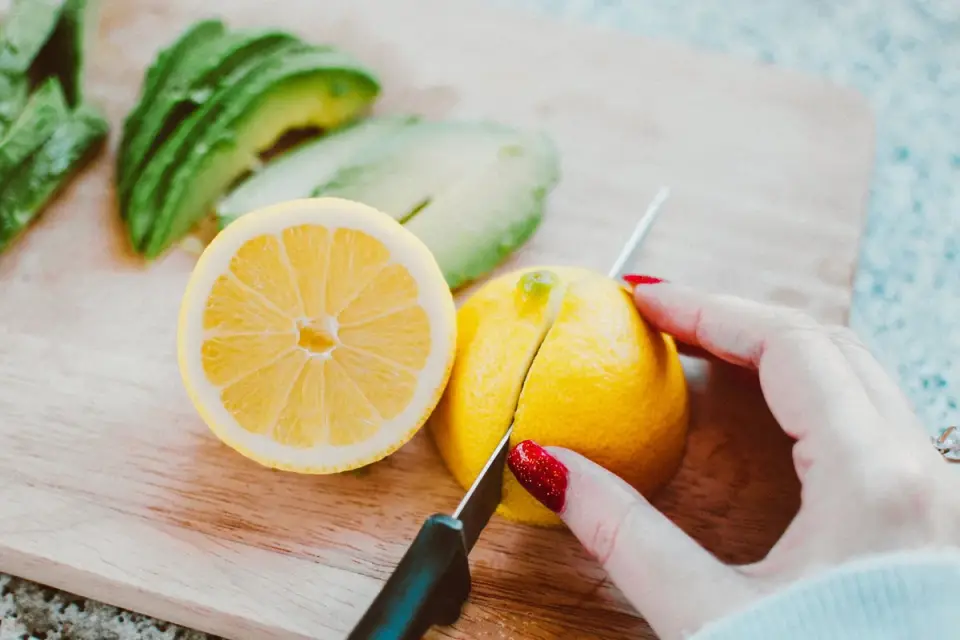
This is where I want owners to actually spend their attention. Avocado flesh runs roughly 15% fat, which puts a meaningful serving in the same neighborhood as a greasy treat, and a sudden fat load is a known trigger for pancreatitis in susceptible dogs — sometimes even from a modest amount. Think of it the way you’d think about a training spike: a dog’s pancreas, like a tendon, has a tolerance range, and a big unplanned bolus of fat can push past it. A dog with a pancreatitis history, a fatty-food sensitivity, or a breed predisposition carries more risk from that avocado bite than a lean, unremarkable gut does.
The pit: a mechanical risk, not a chemical one
Separate the pit from the flesh entirely, because it’s a different category of hazard. It’s smooth, dense, and sized almost precisely to lodge in the esophagus or the intestine of a small or medium dog, and the American Kennel Club flags it as a genuine obstruction risk that can require surgery. This is a mechanical problem. No amount of a sturdy stomach changes the physics of a golf-ball-sized pit meeting a narrowing gut.
Here’s a pattern avocado season brings out reliably in busy households: a dog free-feeding on kitchen scraps during a hectic week, stool going soft, energy dipping before a trial or a long hike, and an owner chalking it up to a bad week instead of connecting it back to what fell off the counter. Most of the time a dog like that settles fine on a bland diet and a few careful days. But the underlying point holds — GI upset in a working dog isn’t just an inconvenience, it’s a missed training block, and prevention is cheaper than recovery every time.
If your dog already ate some, what recovery looks like
A single bite of plain flesh rarely needs more than watching. A meaningful amount, the skin, or the pit warrants a call to your veterinarian, and vomiting, lethargy, reduced appetite, or abdominal pain after the fact should move you from watching to acting. The broader nutritional-support playbook for a stressed gut is worth understanding even outside this specific fruit. Veterinary guidance on more serious pancreatic disease describes a similar structural approach to recovery — not because avocado causes that condition, but because the recovery logic rhymes: “EPI is treated by pancreatic enzyme replacement therapy, nutritional management (low-residue diets with moderate fat content), and supplementation of cobalamin,” according to a JAVMA review, which also notes that “future studies are needed to further understand the causes of persistent dysbiosis in animals with EPI following initiation of pancreatic enzyme replacement therapy.” Probiotic support gets cited reflexively in gut-recovery conversations, but the evidence is more nuanced than marketing suggests — a randomized trial in Frontiers in Veterinary Science found that “diversity metrics did not distinguish non-responders from responders,” a useful reminder that a healthier-looking microbiome on paper doesn’t guarantee a dog that actually feels better. If you’re rebuilding a gut after any dietary insult, our guide to the diet and gut health connection in dogs covers the mechanisms in more depth, and if fiber is part of that recovery plan, it’s worth knowing where the line on too much fiber actually sits.
Guacamole, oil, and other kitchen forms — where the line moves
Guacamole is a different animal than plain avocado. Onion and garlic are genuinely toxic to dogs in enough quantity, and the added salt and lime shift the risk further. Avocado oil, in contrast, is lower-risk for most dogs in small amounts because it strips out the fiber and skin, though it’s still fat and still worth moderating in a dog managing weight or pancreatitis risk. None of this is an argument for working avocado into a dog’s regular bowl. If you’re looking for a produce item that’s earned a more settled yes for active dogs, sweet potato is the more defensible everyday choice.
The working-dog verdict
I land here: avocado isn’t the emergency room trip its reputation suggests, but it’s also not a food worth normalizing, especially for a dog whose job depends on a settled gut and a pancreas that isn’t relitigating a fat spike mid-training-block. The strongest counterargument — that dogs tolerate persin fine and the fear is overblown — is true as far as it goes, but it skips past the fat and the pit, which are the parts that actually put dogs in exam rooms. So the next time a slice lands near a paw at your own cookout: is the taste worth the variable you can’t fully predict?
Frequently asked questions
How much avocado is too much for a dog?
There's no single verified safe dose, which is exactly the problem — a bite of plain flesh is unlikely to do much, but 'how much' scales with a dog's size, existing pancreatic health, and whether skin or pit came along for the ride. Treat it as an occasional taste at most, not a food group.
Is guacamole worse than plain avocado for dogs?
Usually, yes. Onion, garlic, excess salt, and lime in a typical guacamole recipe each carry their own risk profile, stacked on top of the avocado's fat. Keep the bowl on the table, not the floor.
My dog swallowed an avocado pit whole — is that an emergency?
Call your veterinarian right away. A pit can lodge in the esophagus or intestine and cause an obstruction that needs imaging or surgery to resolve, and symptoms like vomiting or an inability to pass stool can take hours to show up.
Sources
- The Scoop on Avocado and Your Pets — ASPCA
- Avocado (Persea spp) Toxicosis in Animals — Merck Veterinary Manual
- Avocado Toxicity in Dogs — What to Do if Your Dog Eats an Avocado — American Kennel Club
- Exocrine Pancreatic Insufficiency and Digestive Health in Dogs (review) — Journal of the American Veterinary Medical Association (JAVMA)
- Probiotic Supplementation and Digestive Health in Dogs (randomized trial) — Frontiers in Veterinary Science