On this page
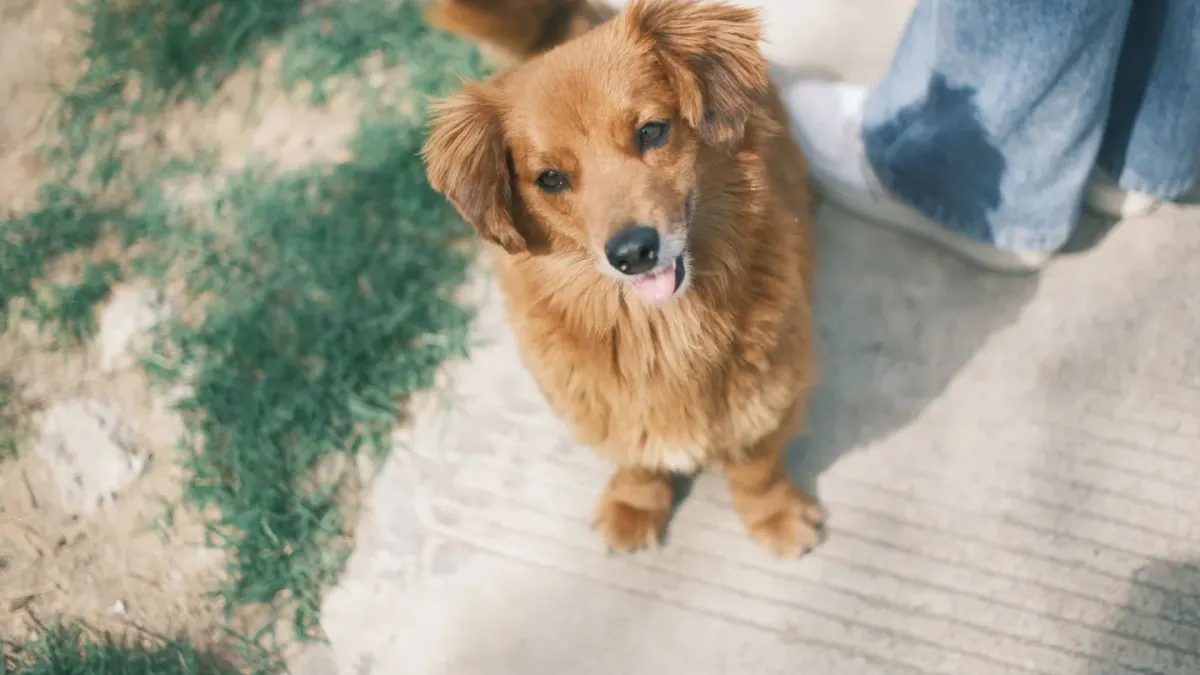
A four-year-old, 78-pound yellow Labrador skidded to fetch a bumper on wet grass, yelped once, then carried his left hind leg back to the truck. By the next morning he would toe-touch for a treat but sit crooked, shifting weight off that stifle, and his owner was already asking whether rest alone would fix it. That crooked sit, the sudden non-weight-bearing lameness after a turn or slip, and the reluctance to push uphill are the classic opening notes for cranial cruciate ligament disease in this breed. Labs do not tear because they are clumsy. They tear because anatomy, body mass, activity pattern, and biology stack load against a ligament with narrow tolerance.
The Lab Knee Was Built For Power, Not Spare Capacity
Think of the canine stifle as a load-sharing system. The cranial cruciate ligament resists cranial tibial thrust every time the hindlimb loads, and in a Labrador that thrust arrives through a heavy, muscular, enthusiastic frame hitting acceleration, deceleration, and rotation in the same stride. Breed surveys consistently place Labrador Retrievers near the top for cruciate rupture, and the pattern is usually degenerative rather than a single clean snap in a healthy cord. Fibers fray over months, synovial inflammation builds, then an ordinary turn becomes the last straw.
That matters because owners often hunt for the one bad jump. The sports-medicine view is tissue tolerance eroding under repetitive load while body condition, thigh-muscle symmetry, neuter timing, and tibial-plateau geometry set the ceiling. I weigh what a supplement can realistically do for diet, mobility, and recovery here, and joint nutrition cannot widen bone angles or replace strength. What it may help support is the joint environment around the ligament — cartilage metabolism and synovial fluid quality — while veterinary diagnosis and load management do the heavy work.
Early research on chondroitin describes a role that “supports healthy synovial fluid homeostasis,” a modest but relevant piece of that environment, reported in Frontiers in Veterinary Science. That does not rebuild a torn ligament.
Why Weight, Neutering, And Conformation Hit Labs Harder
Labs carry three strikes that interact.
First is mass times momentum. A 70- to 85-pound retriever generates far more tibial thrust per stride than a 35-pound dog, and pet Labs often carry extra condition that never looks dramatic under a thick coat. A rib check that feels padded rather than easily felt is already added load on every step.
Second is conformation and gait. A relatively straight hindlimb, steep tibial plateau in some lines, and explosive fetch mechanics — sprint, slam on the brakes, spin — concentrate shear at the stifle. Field-bred dogs that train in bursts on weekends face the same mismatch human athletes know well: high peak load without the base to absorb it.
By age six, an 82-pound black Labrador I followed as a composite example had already shown the tradeoff. She had torn her right cruciate at four, rehabbed through surgery, then returned to daily ball throws because she looked sound. Three weeks into that restart she began lagging on the last hill, sitting out of square, and rising stiff after naps. Radiographs showed effusion in the opposite stifle. The failed approach was not lack of love; it was treating surgery as a reset while repeating the same volume, surface, and body condition that overloaded the first knee.
The third factor is hormonal timing and genetics. Early gonadectomy has been associated with altered long-bone growth and higher cruciate risk in large breeds, and Labs have heritable risk that clusters in families. None of this means every intact, lean Lab is safe. It means risk is probabilistic, which is why a full veterinary orthopedic exam, and often radiographs, matters more than any supplement decision.
What Joint Nutrition Can And Cannot Do For A Cruciate At Risk
This is where I land, and where I part from both skeptics and enthusiasts.
Glucosamine and chondroitin are among the most familiar joint-support ingredients, but laboratory work is narrower than marketing suggests. One canine-focused review notes glucosamine was shown to “prevent experimentally induced cartilage degradation in vitro,” as summarized in the Journal of Veterinary Medical Science. In vitro protection is not clinical proof of ligament strength.
Green-lipped mussel is the integrative ingredient I ground most carefully in the nutritional evidence. It supplies omega-3 fatty acids and glycosaminoglycans that have been studied for joint support, and experimental work in rodents found extracts “alleviated paw swelling in rats and reduced serum levels of rheumatoid factor (RF), anti-cyclic citrullinated peptide (anti-CCP) antibody, and pro-inflammatory cytokines such as TNF-α and IL-17,” reported in Nutrients. That anti-inflammatory signal is interesting for the synovitis that accompanies cruciate disease.
The strongest counterargument is fair: no oral supplement has been shown to prevent cruciate rupture in Labs. True.
I still favor a diet-first, evidence-bounded baseline for at-risk Labs — complete and balanced feeding for lean condition, adequate protein for thigh-muscle maintenance, long-chain omega-3s where the veterinarian agrees, plus a joint supplement with named doses rather than fairy dust — because it may help support cartilage and synovial health during the long recovery windows when load must stay low. For context on doses and testing, see Best Joint Supplement for Dogs (2026): Loadline’s Sports-Medicine Picks, Ranked by Dose and Testing and Dog Hip and Joint Supplements: What the Research Actually Supports.
It will not tighten a loose knee.
How To Spot Trouble Early Without Guessing
Owners notice behavior before they notice anatomy. Watch for a toe-touching hindlimb after play that improves then recurs, a sit with the sore leg kicked sideways, clicking or swelling at the inside of the stifle, thigh-muscle loss on one side, and reluctance to jump into the car. Bilateral disease is common in Labs; favoring one leg quietly overloads the other.
A veterinarian will check for cranial drawer and tibial thrust, assess meniscal click, and image to rule out arthritis, patellar luxation, or hip disease that can mimic lameness. Do not try to diagnose stability at home or push through with longer walks to “strengthen” it. Conditioning decisions after injury belong with the veterinarian or rehabilitation specialist, not a supplement label.
By day 10 after a partial tear, a seven-year-old, 74-pound chocolate Labrador in another composite scenario showed the edge case owners miss. She looked better on leash walks and her owner wondered whether supplements and rest had healed her. On exam she still had subtle effusion and positive thrust under sedation. Partial tears can look functional while the meniscus takes new damage with each pivot. That dog’s plan stayed conservative only because imaging and exam, not optimism, drove the call. Puppies and adolescents add a related wrinkle: rapid growth plus extra pounds raises lifetime joint load, which is why early nutrition and steady growth matter, as outlined in What to Expect in a Labrador Puppy’s First Year: A Health and Development Guide.
If your Lab is sound now, what would change if you treated every pound and every hard weekend as measurable load on the same two ligaments?
Frequently asked questions
Do all Labrador Retrievers tear a cruciate?
No. Risk is higher than average because of size, conformation, genetics, and activity pattern, but many Labs never rupture. Lean condition and veterinary-guided activity lower load without guaranteeing prevention.
Can a joint supplement prevent a cruciate tear?
No supplement has been shown to prevent rupture. Nutrition with ingredients such as glucosamine, chondroitin, and green-lipped mussel may help support cartilage and the joint environment during maintenance and recovery, but it does not strengthen the ligament itself.
Should I rest a limping Lab or see a veterinarian right away?
See a veterinarian promptly for sudden hindlimb lameness, swelling, or non-weight-bearing. Rest alone can mask a partial tear while meniscal injury progresses.
Sources
- Chondroitin and Synovial Homeostasis in Dogs — Frontiers in Veterinary Science
- Glucosamine Protection Against Cartilage Degradation In Vitro — Journal of Veterinary Medical Science
- Marine Oil Extracts, Paw Swelling and Inflammatory Mediators in Rats — Nutrients