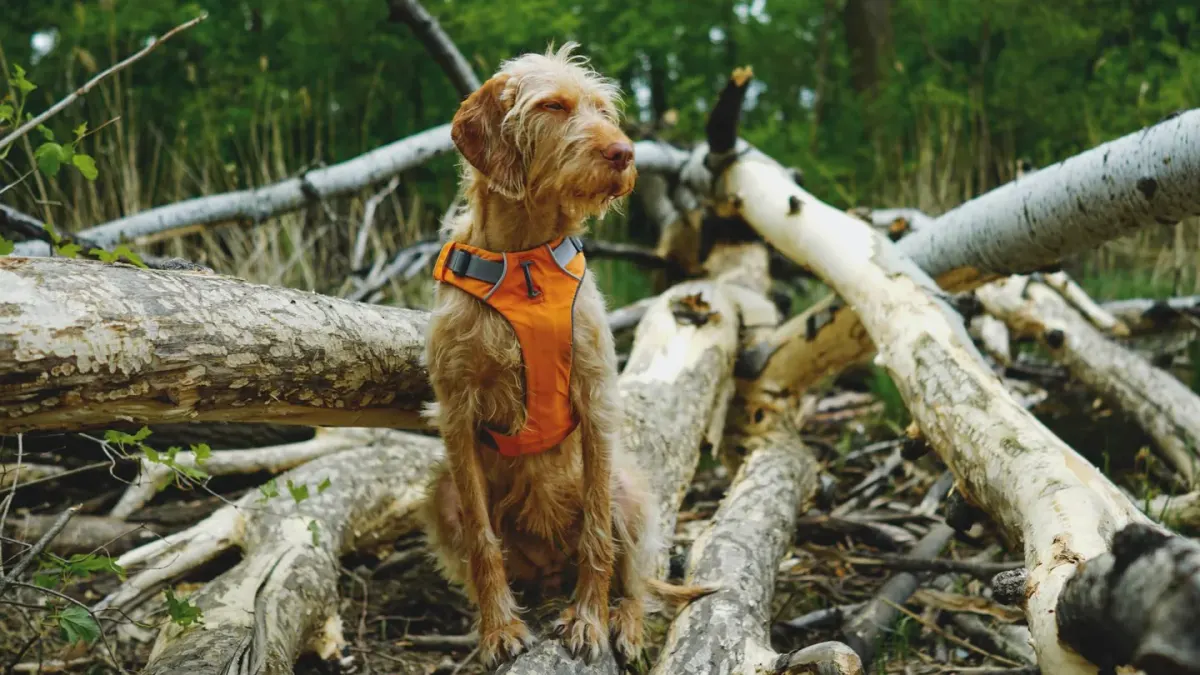
On this page
In day-to-day practice, the dogs who love step-ins most are the steady walkers who stand still for thirty seconds while you slide the straps into place.
So should you trust one when the pace picks up, the trail tilts, or your dog spots a squirrel at twenty yards? For most active teams, my answer is no — keep the step-in for easy days and choose something more locked-in for real work.
The call on step-ins for dogs that work
Judy lives in Des Moines with Dodi, a 6-year-old spayed female Poodle mix who is sweet, a little creaky after long days, and not fond of things pulled over her ears. For their morning loop around the block, a step-in is perfect. Dodi steps in, Judy clips up top, and they go. After they tried the same harness for a two-mile gravel outing, though, Judy noticed a pink rub behind Dodi’s left elbow that faded by the next day, plus a harness that had rotated a half-inch off center by the end.
That shift matters under load.
A step-in supports low, predictable forces just fine. It does not manage twist, surge, or long repetitive leg motion the way a harness with a chest strap and multiple adjustment points can. If your dog runs, hikes steep ground, pulls into a long line, or scrambles over obstacles, I would rather see you in a Y-front or a well-fitted vest with a front and back clip. You can read how clip position changes steering and shoulder freedom in Front-Clip vs Back-Clip Dog Harness: What the Biomechanics Actually Say.
What a step-in actually does to load
A classic step-in is two leg loops joined under the chest with one closure over the back. There is no strap over the neck to slide on, which is why so many head-shy dogs accept it. Pressure lands mostly under the chest and behind the elbows, with lift coming straight up to the back clip.
Where the straps sit
Because the design hugs the underside, fit lives or dies at the girth. Too loose and the whole thing swings side to side. Too tight and the edge digs where thin skin meets leg movement. Vets often see that armpit rub in practice, and the fix is rarely cream — it is clearance. As the American Kennel Club notes in its harness guidance, you want to be able to slip two fingers under straps without the harness sliding freely, and collars and harnesses should never restrict breathing or gait.
Why that layout slips when you run
At a walk, the load is mostly straight back and light. At a trot or gallop, the shoulders swing wide, the chest expands, and every turn adds sideways pull. A step-in has little to resist rotation because there is no sternum strap to anchor the front. VCA Hospitals reminds owners that harnesses spread pressure more broadly than collars, which may help maintain comfort around the neck, but the evidence on shoulder restriction is still thin and design matters more than the label.
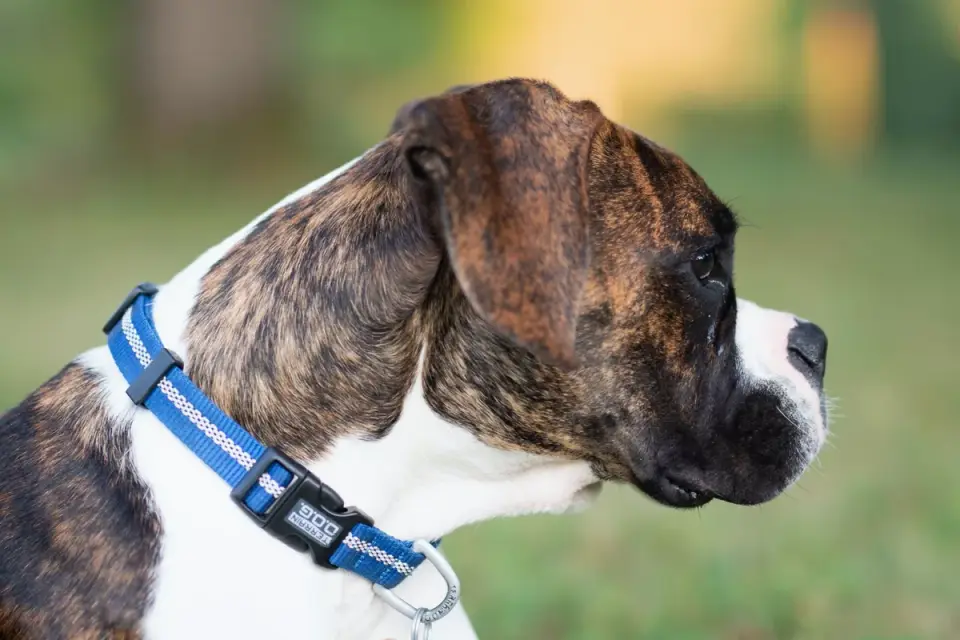
When a step-in earns its place
For casual use, the pros are real. You avoid pulling anything over the head, which helps Fear Free handling. Most dogs learn the routine fast because feet-first feels predictable. Lightweight mesh styles can breathe well in summer, and cleanup is simple.
In practice, I reach for a step-in for senior dogs who need a quick on-and-off, for post-grooming walks when ears are sensitive, and for calm dogs with no pulling history on flat sidewalks. If that is your dog, you are not settling — you are matching gear to load.
When you’ll want more security
Hard running, hiking, canicross, long-line sniffing, and any pulling sport change the math. The same loose under-chest fit that feels comfy at a stroll lets the harness migrate, and migration means friction. Add sweat, dust, and a wet coat and you get hot spots behind the elbows or along the sternum.
Escape risk rises too. A dog that suddenly backs up can fold a leg out of a loose loop faster than you expect, especially lean or narrow-chested dogs. If your dog carries weight for work, the wobble is even less fair to joints. See Should Your Dog Carry Its Own Backpack? for how added load makes stable fit non-negotiable.
A skeptical friend might ask, if my dog does not pull, why does any of this matter? Fair question. Even a polite dog loads one shoulder harder on hills, lunges once for a rabbit, or trips on a root and hits the end of the leash. A more secure harness simply gives you a wider margin when that single rep happens.
A quick fit check you can do at home
Lay the harness flat, loops open. Invite both front feet in, not one dragged forward. Clip, then check three spots: two fingers under the back strap, a full finger of clearance in front of the elbow when the leg reaches forward, and no twisting of the chest piece when you gently pull side to side. Walk ten steps, trot ten steps if your vet says your dog is cleared for that pace, then recheck. Coats compress and straps settle, so what felt snug indoors often loosens outside.
Wash and air-dry on schedule, and re-measure after weight change, a big haircut, or a heavy shed. If you see hair loss, redness that lasts more than a few hours, a change in stride, or head-dipping on one side, pause that setup and ask your veterinarian to watch your dog move in it. That hands-on look beats any size chart.
Bottom line for working legs: love the step-in for what it does well — fast, kind, low-drama walks. When miles, speed, or terrain enter the picture, trade convenience for containment and give those shoulders a freer, steadier line to pull through.
Frequently asked questions
Are step-in harnesses good for dogs that pull?
Usually not. They clip on the back and offer little steering, so a strong puller can lean in and rotate the harness. A front-clip Y-front with a trained loose-leash plan is steadier.
Can a dog slip out of a step-in harness?
Yes, especially if the girth is loose or the dog backs up suddenly. Check elbow clearance and side-to-side twist before every walk, and size down or switch styles if a leg can fold out.
Are step-ins better for small dogs?
They can suit calm small dogs that dislike overhead gear, but tiny frames still chafe behind elbows. Fit and coat matter more than size alone.
Sources
- Dog Harness vs. Collar: Which Is Better for Your Dog? — American Kennel Club