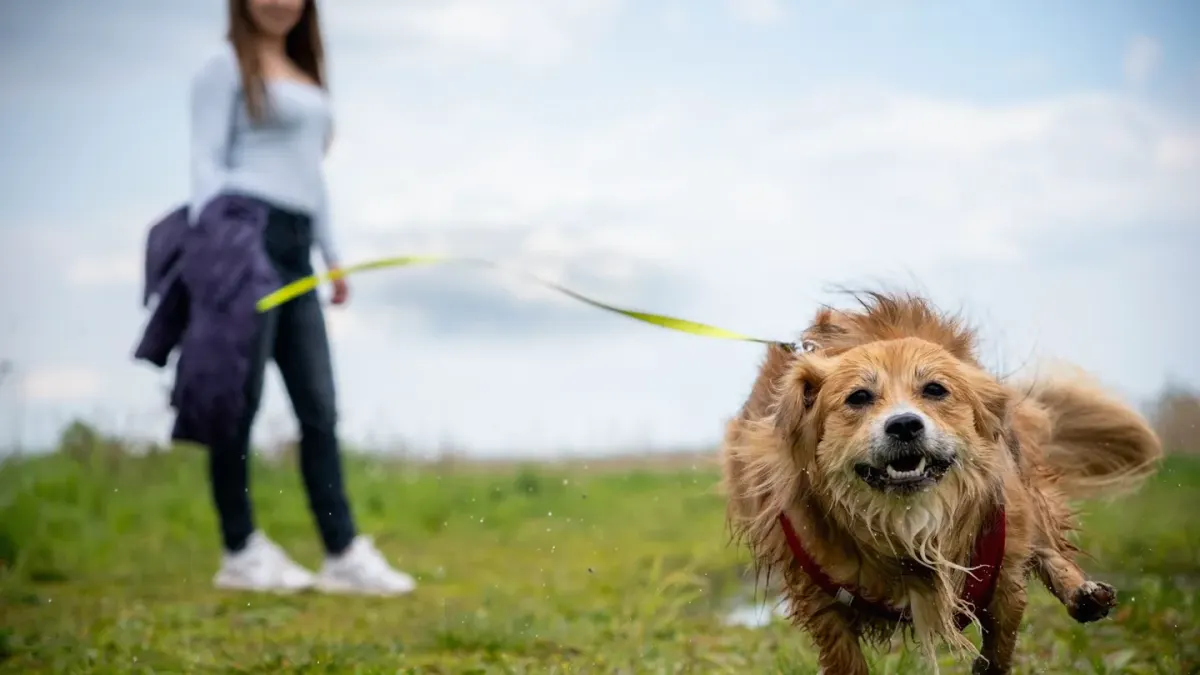
Early light on a milo edge outside Kansas City, Kansas, tells the story fast. James watched his 4-year-old neutered male Pug Bosley push through wet cover on a morning walk, and by the truck the printed letters on Bosley’s thin tag had smeared into a gray blur after six weeks of creek crossings and fence-line brush.
The verdict for active dogs is direct: choose deep diamond or laser engraving cut into stainless steel or solid brass, hung on a stout split ring, with large contact lines and little artwork. For dogs that run, hunt, pull or swim, cut depth and hardware security decide whether a finder can read the tag, while design decides almost nothing.
- Deep cut into metal, not ink on metal: engraving you can feel with a fingernail, high-contrast fill
- Stainless steel or solid brass tag, rounded edges, 1 to 1.25 inch face for most sporting collars
- Heavy stainless split ring or locking S-hook, checked weekly, separate from the leash clip
- Four lines maximum: dog name, two phone numbers, city plus microchipped
- Flat fit against collar, no dangling charms, no tiny script
Brush, Water, and Load Erase Ink First
A working coat is abrasion equipment. Sage, milo stubble, crate doors, buckles and gravel all sand a tag face a little every day, and sunscreen, pond water and mud finish the job on surface printing. Anodized color and UV printing look sharp out of the envelope because the mark sits on top of the metal. Engraving lasts because the mark goes into the metal.
Depth is the whole game.
In load terms, think of the tag as a small load-bearing surface with a high cycle count. Every stride adds tick and slide against the collar ring. The American Veterinary Medical Association frames a visible ID tag as the first step home backed by permanent microchip identification, which is the right hierarchy for field dogs: the tag buys a fast phone call, the chip covers a lost collar. That fast call only happens when lettering survives contact.
Metal, Cut, and Ring: What Actually Holds Up
Stainless steel and solid brass tolerate that cycle count best for most handlers. Both resist rust, both take a deep cut, and both stay legible when darkened with use because the groove still catches light and touch. Aluminum can work for a house dog, yet it gouges faster under brush load and thin stamped letters flatten out. Plastic and coated tags quiet rattle, but teeth, rocks and sun craze them.
Cut method matters more than font. Diamond-drag and deep laser engraving leave a tactile groove. Etching that only darkens the surface without depth fades like print. When shopping, run a fingernail across sample letters. When you can feel the channel, recovery from a muddy swim is a wipe on a pant leg, not a replacement order.
Hardware fails before metal does. Lightweight key rings gap, thin S-hooks straighten, and a tag threaded directly onto a leash clip wears fastest. Use a dedicated stainless split ring through the collar D-ring, then check tension the way you would check a front-clip harness fit before a training block. Vets often see lost-tag dogs after a ring spreads just enough to slip, not after dramatic breakage. In practice, a spare ring in the truck box prevents a week without ID.
Fit counts here too. A tag that lies flat against a flat collar snags less in cover than a long dangling shape. Owners weighing a pack for working miles learn the same lesson: flat and close rides quiet, loose and long catches.
What to Engrave When Space Is Tight
The American Kennel Club notes that current contact information on a readable tag is the fastest route home, which supports keeping artwork minimal and letters large. Clear contact details outperform logos, paw prints and long quotes because a stranger reads at arm’s length in poor light.
Keep it to four lines in plain capital letters:
DOG NAME CALL 555-555-0142 TEXT 555-555-0143 KANSAS CITY KS MICROCHIPPED
Two numbers cover a dead battery or a handler out of range. City narrows the search without printing a full home address. MICROCHIPPED cues a shelter to scan. Skip rabies numbers and vet logos on the primary tag; they crowd the face and shrink the phone digits that actually drive return.
For depth, ask for the deepest cut the maker offers on that blank, plus blackened fill for contrast. Fill will wear, grooves remain. When fill fades, a paint pen refresh helps for a time, but plan replacement when edges round or the ring hole elongates. That wear pattern is normal tissue-tolerance thinking applied to gear: retire the part before failure, not after.
Frequently asked questions
Are engraved tags really better than printed tags for active dogs?
Yes for brush and water work. A deep cut leaves a groove you can feel, so mud and abrasion dull the color but leave the letters readable. Surface print sits on top and sands off.
What information matters most on a quality engraved dog tag?
Dog name, two current phone numbers, city and state, and the word MICROCHIPPED. Keep fonts large and skip artwork that shrinks those lines.
How often should I check the tag and ring?
Check weekly during hunting, agility or trail season. Replace the ring when it gaps and replace the tag when edges round, the hole elongates, or letters no longer catch light.
Sources
- Microchips Help Reunite Lost Pets with Their Families — American Veterinary Medical Association