On this page
Maya had been jogging solo for years when she adopted a two-year-old, 48-pound mixed-breed with endless morning energy, and by the end of week two she was lacing up with a waist leash and wondering if he could just join her three-miler. That hopeful first run is where most running partnerships are decided, not by fitness but by whether the owner reads the dog in front of them. A young adult dog with closed growth plates, clean gait, and solid recall is a very different athlete than an adolescent large breed, a senior with stiff mornings, or a brachycephalic dog built for short bursts. Before adding load, a hands-on veterinary check for lameness history, cardiac risk, and body condition frames everything that follows, and that screen matters more than any gear choice.
That decision — is this dog built to run, and for what kind of running — deserves the lifecycle view we use in sports medicine. Puppies and fast-growing large breeds need skeletal maturity before repetitive impact, seniors need a joint and recovery assessment, and every dog needs a gradual introduction to leash skills at speed. The American Kennel Club notes that age, breed, health status, and prior conditioning should shape whether and how a dog runs, which aligns with how I weigh tissue tolerance: load must match the musculoskeletal system you actually have, not the running partner you hope for.
The first run tells you what kind of athlete you have
Keep the first outings embarrassingly short and observational. A neighborhood loop with walk-run intervals on forgiving footing lets you watch foot strike, breathing recovery, leash manners, and heat response without accumulating fatigue. I pay attention to how quickly panting settles after a stop, whether the dog crowds, forges, or cuts, and whether paws show redness or licking that evening. Soft surfaces, cooler hours, water on hand, and a well-fitted harness with a hands-free leash reduce tripping and shoulder torque while you both learn pacing. If you want a water-based cross-training contrast that still respects load and recovery, our look at Is Kayaking Safe for Dogs? A Sports-Medicine Read on Load, Water, and Recovery walks through a similar pre-screen.
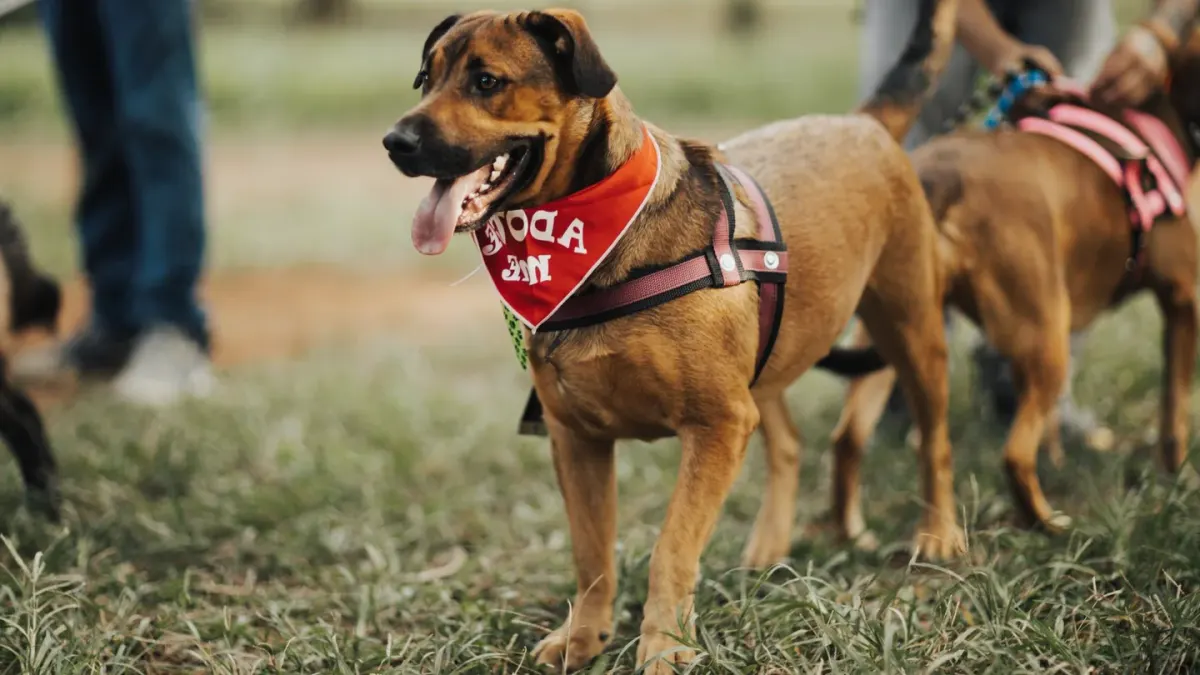
She tried to shortcut that process the following Saturday, and it unraveled exactly the way overload usually does. Three weeks in, buoyed by two clean two-mile outings, she jumped her 18-month-old, 62-pound Labrador mix to a humid five-miler on asphalt because the dog looked eager at mile two. By mile four he was lagging, panting heavily with a thick tongue, and seeking shade; that night he licked his front pads raw and woke stiff getting off the couch. The eagerness early was not fitness, it was arousal, and the combination of too much distance, heat, and hard surface exceeded what his pads and recovering musculoskeletal system could absorb in one bout.
Build tolerance before you build distance
That failed jump illustrates the central tradeoff in canine running: cardiovascular enthusiasm outruns musculoskeletal readiness. Heart and lungs adapt relatively quickly, while tendon, bone, paw pad, and gut tolerance need slower, repeated exposures with real recovery windows between hard days. Alternate running days with walks, keep most volume easy, and hold one variable steady while you nudge another — distance, surface hardness, temperature, or hills — rather than progressing them together. Watch next-day signals with the same seriousness you give the run itself: lingering stiffness, reluctance to rise, shortened stride, paw licking, or loose stool after excitement and heat all mean the prior load exceeded current capacity.
Heat deserves its own limit because dogs shed heat primarily by panting, not sweating, and heavy exercise in warm humidity can escalate quickly. The American Veterinary Medical Association advises exercising during cooler hours, providing shade and water, and recognizing that heat tolerance varies by breed, age, and body condition. For field recognition of danger signs and cooling priorities, the VCA Hospitals overview of heatstroke describes excessive panting, drooling, and lethargy that should end exercise immediately. I treat any run where the dog cannot settle panting within minutes of stopping as a run that was already too much for those conditions.
Food, gut, and joints — what support can realistically do
Running dogs are endurance eaters first and supplement candidates second, and that ordering is my evidence-bounded position. A complete, age-appropriate diet fed to lean body condition, timed so a full meal is not sitting in the stomach during hard effort, plus water access and post-run rest, does more for fueling and recovery than any powder. Gut upset on running days is often a load, heat, stress, and timing problem rather than a deficiency, which is why table-food experiments around training usually backfire; our review of Are Table Scraps Actually Bad for Dogs? explains why high-fat extras are a poor recovery fuel.
Where I do see a defensible adjunct role is in joint-support nutrition for the actively training adult dog, weighed honestly for what it can and cannot do. Glucosamine and chondroitin may help support cartilage matrix metabolism and joint comfort as part of a load-management plan, but they do not rebuild joint structure or erase overload, and effects are modest and gradual. The National Institutes of Health Office of Dietary Supplements summarizes trial evidence for glucosamine and chondroitin as mixed and condition-specific in humans, which tempers expectations when extrapolated to dogs. The strongest counterargument is fair: if diet is complete and training load is appropriate, added joint ingredients add little measurable benefit, and money is better spent on weight control, surfaces, and rest. I land where I do because lean condition plus sane progression carries the outcome, while a well-formulated joint supplement is low-harm background support for a dog repeatedly loading joints — useful context when owners ask What Age Should You Start Giving a Dog Longevity Supplements?
The edge case that rewrites the plan
Not every dog fails in the legs; some fail in the airway or the thermostat. On a crisp October morning I watched a four-year-old, 26-pound French Bulldog out-hike everyone for twenty minutes, then hit an invisible wall by day 10 of a new jogging routine with louder breathing, prolonged open-mouth panting, and a refusal to trot that his owner first read as stubbornness. Brachycephalic anatomy, prior airway surgery, obesity, cardiac disease, or a history of heat illness compresses the safe envelope far more than muscle fitness suggests. For those athletes the honest performance call is to keep running bouts minimal or choose a lower-heat activity entirely, with veterinary guidance setting the ceiling rather than a training plan.
That is the throughline for beginners. Start with a veterinary screen, earn leash skills and pad toughness on soft, cool routes, progress one stressor at a time, and judge each run by next-day recovery as much as miles logged.
Frequently asked questions
What age can a dog start running?
Skeletal maturity varies by size and breed, with large breeds maturing later. Ask your veterinarian to confirm growth-plate closure, sound gait, and appropriate starting volume for your individual dog.
How far should beginners run with a dog?
Start with short walk-run intervals on soft surfaces in cool conditions and judge tolerance by breathing recovery during the run and stiffness, paw health, and stool quality the next day. Progress gradually with rest days and veterinary input.
Should I feed my dog before a run?
Avoid a large meal immediately before hard exercise and allow digestion time, with water available. Feed a complete diet to lean condition and keep high-fat extras minimal around training.
Sources
- Warm Weather Pet Safety — American Veterinary Medical Association
- Heat Stroke in Dogs — VCA Hospitals
- Glucosamine and Chondroitin — National Institutes of Health Office of Dietary Supplements