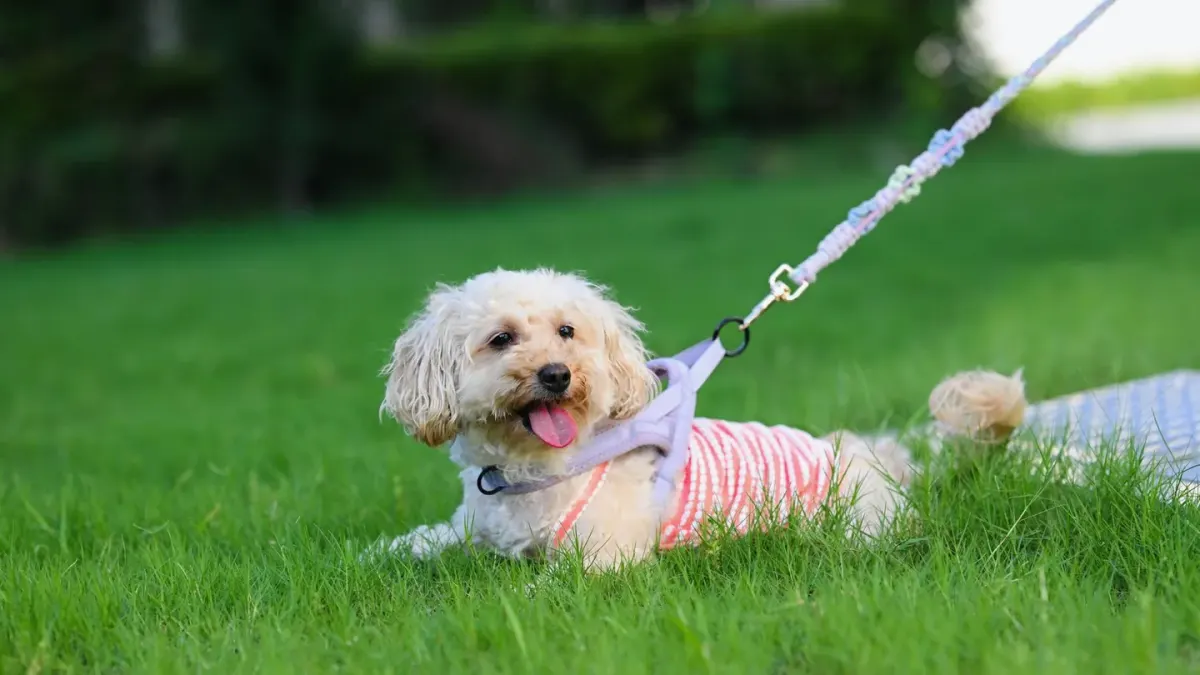
A 30-foot line dragged through wet grass, then balled up damp in a tote, is how most training leads die early. The verdict from day-to-day practice is simple: rinse grit off quickly after field work, wash by material on a schedule, dry fully under tension, and retire a lead with soft stitching or a sticky clip. That routine supports reliable recalls and protects hands, joints, and necks from a sudden failure under load.
In practice, vets often see the same pattern after muddy recall work: the dog is fine, but the gear tells the story. Grit left in nylon webbing acts like sandpaper on fibers and bartack stitching, salt and pond water stiffen leather, and a clip packed with sand stops closing fully. A long lead multiplies that load because a dog hitting the end at 20 feet carries more momentum than on a 6-foot leash.
What grit, water, and sun do to webbing and hardware
Nylon and polyester webbing lose strength through abrasion and ultraviolet exposure, not just one hard pull. Embedded sand cuts inner filaments every time the line folds, stitch holes wick moisture that weakens thread, and UV fades and stiffens the sheath. Coated webbing resists water but still traps grit at the edges, while leather dries, cracks, and stretches when it cycles between soaked and baked.
Hardware fails more quietly. Spring-gate clips collect hair, sand, and dried slobber in the hinge, the spring loses snap, and the gate starts hanging half-open under sideways load. Swivels freeze for the same reason, which twists the line and concentrates force on one edge. Cleaning supports function because it removes the abrasive load before it becomes structural damage.
That mechanism is why general gear-care guidance from REI emphasizes gentle cleaning, thorough rinsing, and complete air-drying before storage, rather than heat or harsh solvents.
Wash, dry, and protect by material
Prose beats a long checklist here, because owners over-scrub and under-rinse. For nylon or polyester long lines, shake off loose dirt, soak 15 to 20 minutes in cool to lukewarm water with a small amount of mild soap, then agitate by hand along the full length. Pay attention to the handle loop, the clip end, and any sewn junctions where grit hides. Rinse until the water runs clear, because leftover soap attracts dirt and stiffens webbing.
For coated Biothane-style lines, skip the soak. Wipe the full length with a damp cloth and mild soap, scrub lightly around embossed holes and rivets with a soft brush, then rinse and wipe dry. For leather training leads, wipe with a barely damp cloth, clean sparingly with saddle soap only when soiled, condition lightly after drying when the leather feels dry, and never soak or machine wash. Across all types, use no bleach, no hot water, and no washing machine spin that hammers hardware against the drum.
Drying matters as much as washing. Lay the line straight or hang it loosely in shade with airflow, work the clip open and closed a few times while damp to flush grit, then let it dry completely before coiling. Store loosely coiled in a breathable bag, out of direct sun and away from car-trunk heat.
Disinfection only matters after illness, kennel cough exposure, or shared class equipment. When that happens, follow basic cleaning-then-disinfection principles outlined by the Centers for Disease Control and Prevention: clean visible soil first, apply a compatible disinfectant for the labeled contact time, rinse well, and dry fully. Test a small section first on coated and leather leads.
My evidence-bounded recommendation is hand wash and air-dry every two to four field sessions for nylon, wipe-down after every muddy session for coated webbing, and clean-and-condition leather monthly in active use. I would change that interval if controlled abrasion testing showed coated webbing or specific weaves retained strength longer with less frequent washing, but current material guidance does not support that yet. The honest limit is that no published trial tells us the exact wash count that preserves a dog lead, so owner inspection has to close the gap.
When to keep washing and when to retire the lead
A clean lead can still be unsafe. Retire it when webbing feels thin, glazed, or fuzzy through its full thickness, when bartack stitching looks flattened or broken, when leather shows deep cracking at folds, or when a clip gate sticks, gaps, or opens with light thumb pressure. If the swivel no longer turns or the handle loop has a soft spot, that lead becomes a drag line for enclosed areas only, then trash.
Owners handling long lines for sport dogs can borrow the same load-management thinking used for harnesses in Front-Clip vs Back-Clip Dog Harness: What the Biomechanics Actually Say and for sizing crates that keep gear organized in How to Size a Crate for Your Dog. A well-maintained 15- to 30-foot line should run smoothly through the hand, lock cleanly at the clip, and coil without kinks. If washing no longer restores that feel, replacement is the preventive move.
Your practical next step is a five-minute post-session reset: rinse, hang straight, flick the clip clean, and check one foot of stitching near the clip.
Sources
- How to Care for and Repair Gear — REI
- About Cleaning — Centers for Disease Control and Prevention