
Saturday at the trailhead, a four-year-old 58-pound Lab mix slipped his collar chasing a squirrel and looped back through thick oak cover for six anxious minutes before his owner found him by sound alone. She asked me the next week what tracker would have actually helped in that cover, on that hill, with her phone at one bar. That is the whole decision. Not the box features. Your dog, your route, your ability to keep the unit charged and attached. Pick for signal where you walk, fit your dog will tolerate, and a plan you will maintain.
Do this first: map your use in one minute. Urban sidewalks and dog parks need fast live tracking and escape alerts. Trails, farms, and hunting cover need true satellite positioning that works beyond Bluetooth range. Apartment dogs that bolt out doors need quick pairing and small size. Start with location, then choose the tech.
The verdict from day-to-day practice
For most pet dogs, choose a lightweight GPS-plus-cellular collar unit with live tracking, a virtual fence, and at least 24 hours of real-world battery in tracking mode. That combination supports recovery of a loose dog without adding meaningful neck load.
Keep it simple after that. Bluetooth-only tags may help maintain contact in the house or yard, but they depend on nearby phones and fade fast in woods or open fields. Radio collars have range without a subscription, yet they cost more and suit working-dog teams better than daily walks. When owners tell me they stopped charging or stopped paying the plan, the tracker stops helping.
Basic satellite positioning still does the heavy lifting outdoors, as explained by U.S. GPS.gov, while your phone display depends on cellular coverage to show that dot on a map. That split explains most disappointments in practice.
Match the tech to where you actually walk
Check coverage before you buy. Pull up your carrier map for your park, trail, and neighborhood, and ask a neighbor with the same network what they get at ground level. Cellular-based trackers need that link to report, and dead zones delay updates no matter what the box promises. The Federal Communications Commission notes the same limit for phones calling 911 — location accuracy falls when signal and satellites are blocked.
Then weigh size and weight. Small dogs under 20 pounds and narrow-necked breeds do best with a tag-style unit on a snug harness clip rather than a heavy collar pod that swings. Thick-coated dogs need shorter attachment prongs or a flat mount so the unit does not mat hair or trap moisture. If your dog scratches, shakes, or paws at it for more than three days, refit or swap.
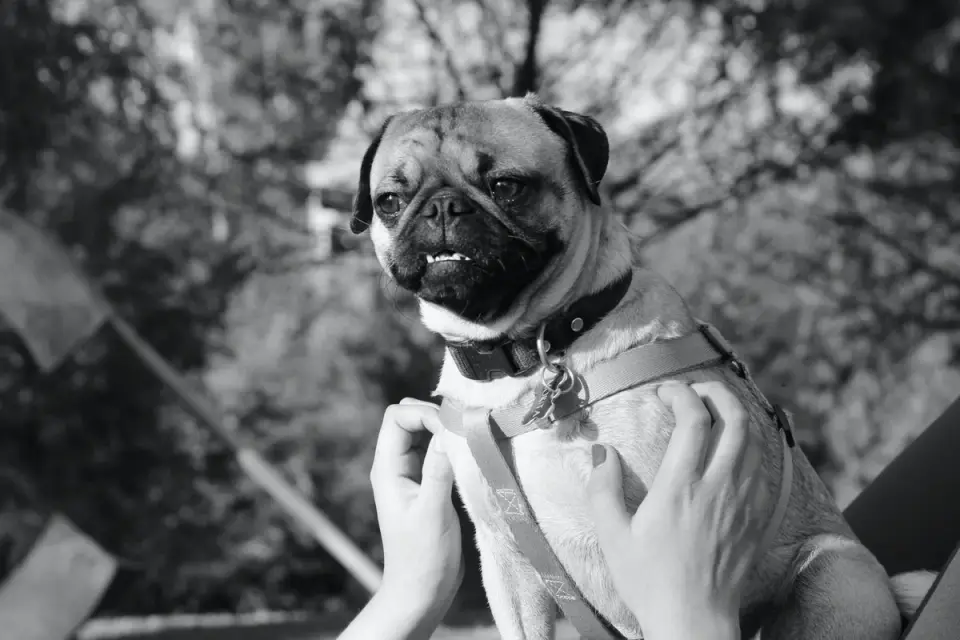
Three weeks in, a seven-month-old 34-pound spaniel came back for a harness recheck wearing a bulky GPS pod hung on a loose collar. The owner loved the live map but admitted she left it on the charger twice that week because the collar rubbed and the dog hid when he saw it. We moved the same class of tracker to a harness side-clip, tightened to two fingers under the strap, and set the safe-zone alert to her half-acre yard. By day 10 she was charging on a schedule and the rubbing spot had grown hair back. The failed approach was not the brand. It was collar bulk plus friction plus no charging habit, and fixing fit fixed compliance.
Use escape alerts well. Set one tight home zone and one wider neighborhood zone. Test both by walking the boundary with your phone. Turn off extra pings that drain battery in the first week.
Fit it like gear, not jewelry
Treat a tracker like load on the neck or back. Center the weight, keep edges smooth, and check skin under the mount twice weekly during shedding season.
For collar mounts, you should slide two fingers flat under the collar all the way around. For harness mounts, clip over the shoulder, not dangling at the throat. Rinse mud and sand from contacts after wet walks, dry fully, and watch for redness behind the ears or at the withers. Prevention here is skin checks and clean, dry gear.
A nine-year-old 72-pound senior retriever with stiff hips showed the edge case I watch for. He never roamed, so his owner assumed he did not need tracking, until a fence contractor left a gate ajar and the old dog wandered two blocks to a creek on a hot afternoon. We chose a slim GPS-plus-cellular tag on his walking harness rather than a heavy collar, set the alert chime low because loud tones startled him, and paired it with the routine from How to Size a Crate for Your Dog for safe confinement during repairs. For seniors, arthritic dogs, and anxious dogs, comfort and simple alerts beat extra sensors every time.
Water, battery, and fees decide whether you keep using it. Look for true swim-level water resistance if your dog dunks, not just splash proof. Ask for battery life in live-tracking minutes, not standby days. Read the subscription terms for price changes, family sharing, and what happens when you pause in winter.
Tie gear together. A tracker rides better on a well-fit harness — see Front-Clip vs Back-Clip Dog Harness: What the Biomechanics Actually Say — and dogs that carry weight need margin, as in Should Your Dog Carry Its Own Backpack?. Fit the harness first, then add the tracker.
Stop chasing perfect accuracy. Ten to thirty feet of wander under trees is normal.
Frequently asked questions
Do I need a subscription for a dog GPS tracker?
Most live GPS-plus-cellular trackers need a monthly plan to send location to your phone. Bluetooth tags and some radio collars do not, but range and live maps are limited.
Will a GPS tracker work in woods or hills?
Satellite signal weakens under dense cover, in canyons, and between tall buildings. Expect slower updates there and test your regular route before you rely on it.
Where should the tracker sit on my dog?
Centered and snug on a well-fit collar or over the shoulder on a harness, with two fingers of clearance. Check skin twice weekly for rubbing, especially in thick-coated dogs.
Sources
- GPS.gov: GPS Overview — U.S. GPS.gov
- Cell Phones and 911 — Federal Communications Commission