German Shepherd vs Belgian Malinois: Which Working Dog Actually Fits Your Load?
Picking between a German Shepherd and a Belgian Malinois starts with an honest look at your dog's real workday.
On this page
Which dog can your life actually support — not which dog looks better on a training video?
That’s the question I ask clients before we get anywhere near coat color or ear shape. I’ve sat across the exam table from families who picked a Belgian Malinois off a police-K9 documentary and a working line German Shepherd because a breeder had a litter ready that weekend, and both groups ended up back in my office within a year, dog reactive to boredom in ways that looked like “behavior problems” but were really unmet output. A twenty-month-old Malinois I treated, about 55 pounds, started shredding drywall and pacing the same stretch of hallway every evening around 6 p.m. — right when his owner got home from a desk job and had nothing physical left to give him. That’s not a training failure. That’s a mismatch between a dog’s engine and a household’s fuel supply.
Run the checklist before you run the comparison
- Daily output you can realistically give: 30–45 minutes of structured exercise, or 90+ minutes of hard physical and mental work?
- Household experience level: first working-breed owner, or someone who has already lived with high-drive dogs?
- Space and containment: standard suburban yard, or acreage/secure runs for a dog bred to chase and grip?
- Job you actually need done: family guardian and versatile companion, or a dog built for explosive sport, protection, or detection work?
- Tolerance for intensity indoors: a dog that settles on the couch after exercise, or one that stays “on” until it’s physically spent?
- Joint and spine risk you’re willing to plan around: budget and attention for lifelong hip and mobility monitoring either way.
If you read that list and you’re already unsure about the top two items, that alone is useful information — it usually points toward the calmer end of either breed’s spectrum, or toward a different breed altogether.
What’s actually different in the body
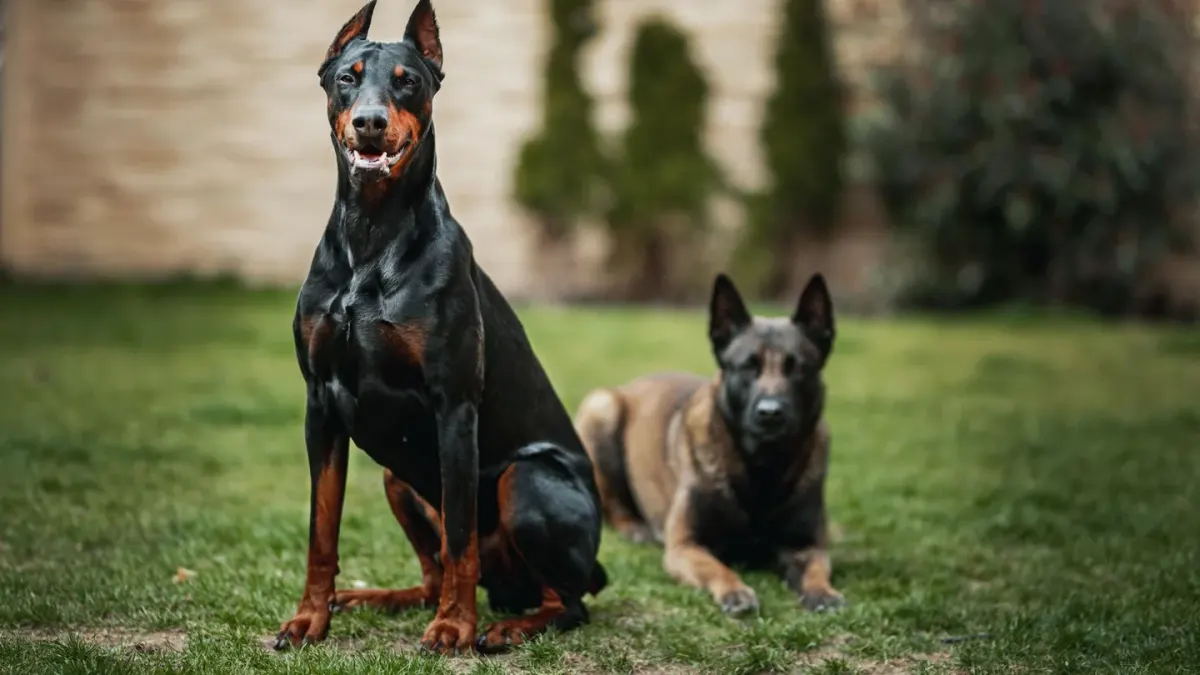
The two breeds get lumped together because they’re both German-heritage-adjacent herding and protection dogs used heavily in police and military work, but their frames load differently. According to the AKC, both breeds stand roughly 22–26 inches at the withers, but a male German Shepherd can reach up to 90 pounds versus 60–80 pounds for a male Malinois — and the Shepherd’s body is built longer than it is tall, while the Malinois is closer to square. That length matters biomechanically: a longer spine and more angulated rear assembly, which is part of the classic Shepherd silhouette, puts more shear stress through the lumbosacral junction and hips during hard turns and jumps. The Malinois’s more compact, square frame distributes that same explosive effort over a shorter lever arm.
Temperament tracks the same split. The AKC describes German Shepherds as strong, independent, and usually serious family protectors with broad versatility across herding, obedience, agility, and tracking, while Malinois are described as energetic, intelligent, and inquisitive, with an intense desire to work directly alongside their handler. In practice, that means Malinois often tolerate less unstructured idle time before they self-assign a job — chewing, herding the kids, or fence-running — and German Shepherds are somewhat more forgiving of an off day.
The joint question, in plain terms
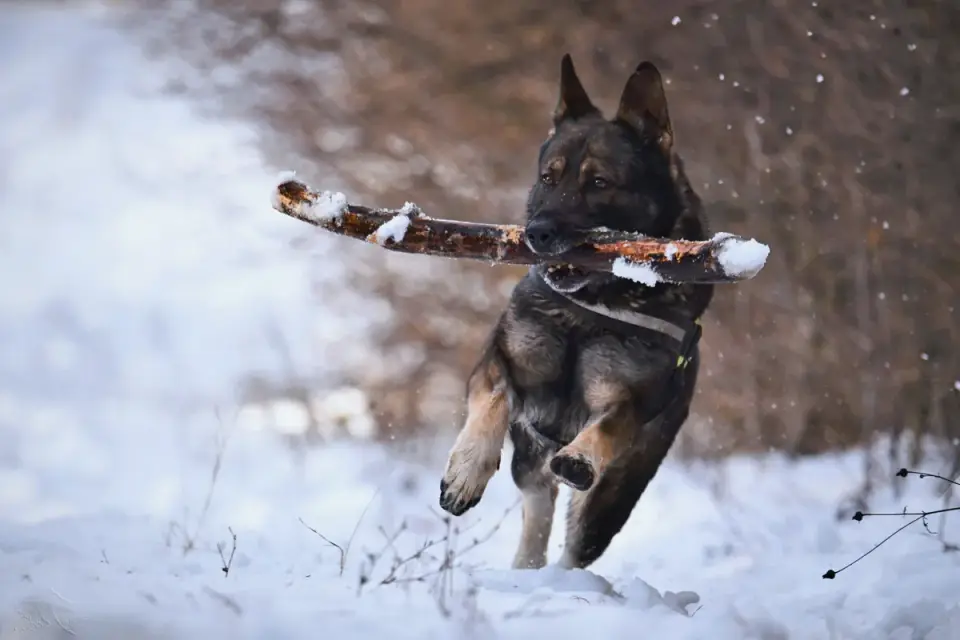
Hip dysplasia is the one both breeds get asked about, and it isn’t an even split. The Orthopedic Foundation for Animals (OFA) has tracked hip evaluations across breeds for decades through its public screening database, and German Shepherds have consistently ranked among the higher-prevalence large breeds for hip dysplasia in that registry, while Belgian Malinois submissions have historically shown meaningfully lower rates. That doesn’t mean every Shepherd develops dysplasia or every Malinois is immune — genetics, growth-phase nutrition, and how a puppy is exercised before growth plates close all move the needle — but it does mean a Shepherd-shaped dog deserves a hip screen and a joint-conscious growth plan as a baseline, not an afterthought.
There’s a second joint-adjacent concern that’s specific to German Shepherds: degenerative myelopathy, a slow, progressive breakdown of the spinal cord’s white matter that mimics arthritis in its early gait changes — a dragging rear paw, scuffed nails, hesitation on stairs — before it’s clearly neurological. A retrospective UK study published in Companion Animal Health and Genetics found that the SOD1 gene mutation associated with this disease was present at meaningful frequency in a referral population of German Shepherds, with a portion of dogs testing homozygous for the risk allele. It’s a genetic test worth asking a breeder about, and worth flagging early to your own vet if you already own an aging Shepherd whose gait is changing.
One of the German Shepherds I worked with for years, a nine-year-old male named Gunner, started missing the bottom stair by about half an inch every few days — not falling, just misjudging it — over the course of maybe six weeks. His owner assumed it was hip pain because that’s what she’d been warned about for that breed her whole life. The gait pattern and the fact that his hips X-rayed clean pointed us somewhere else entirely, and that’s exactly the kind of case where breed-typical assumptions can send an owner down the wrong path for months before the real picture shows up.
Recovery windows matter more than breed loyalty
This is where I push back on how most comparisons frame this decision. Owners fixate on which breed is “tougher” or “smarter,” but the more useful lens — the one we use for any working or sport dog — is load and recovery. A Malinois doing bite-work or agility three times a week needs the same attention to tissue tolerance between sessions that a human sprinter needs: adequate rest days, a joint-support plan appropriate to the dog’s actual training volume, and a diet that supports connective tissue and gut resilience rather than just calories. The same is true for a Shepherd doing herding trials or long-distance tracking work. Our guide to joint supplements for dogs breaks down what dosing and third-party testing actually look like across the category, and the diet and gut health connection piece covers why a working dog’s recovery starts in the digestive tract as much as in the joints.
Nutrition timing also shifts with breed-typical drive. A Malinois that’s essentially always “on” often needs more careful attention to slow-digesting carbohydrate sources around hard training days, which is part of why we point active-dog owners toward pieces like can dogs eat sweet potato when they’re building a feeding plan around real training volume rather than a bag’s generic feeding chart.
So which one actually fits your life?
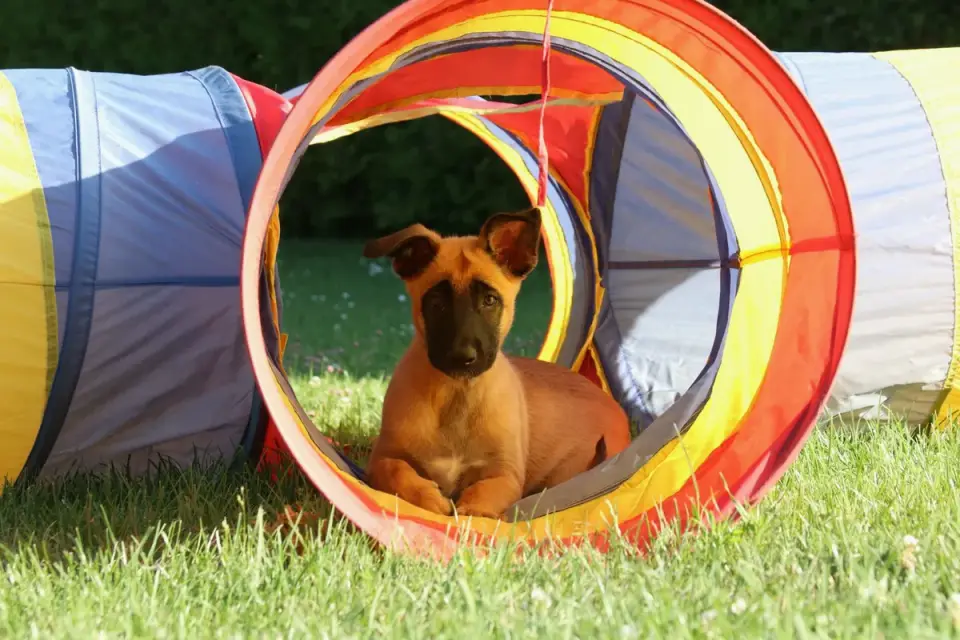
By the time a client gets this far with me, the honest answer is usually already sitting in how they described their own week. I think about a family I worked with who wanted “a German Shepherd like the movies” but whose actual daily schedule was two working parents, a nine-to-five, and a fenced quarter-acre yard — that household did beautifully with an adult rescue Shepherd with a known moderate energy level, not a working-line puppy from drivey competition parents. I’ve also watched a Malinois thrive with a client who ran search-and-rescue drills on weekends and did structured obedience work every single evening without exception; that dog never once became a “problem,” because the output matched the input almost exactly. The breed on paper mattered far less than the honesty of that match.
If you genuinely need a dog for versatile family life with some working-dog capability, a German Shepherd — ideally from health-tested parents with hip and elbow clearances and, where relevant, DM genetic testing — is usually the more forgiving choice. If you need a dog that will work alongside you at a near-professional intensity and you can supply that daily, a Malinois rewards that investment more completely than almost any other breed. Neither is the “easier” dog. They’re both a commitment to a job, not just a pet.
FAQs
Q: Is a Belgian Malinois harder to train than a German Shepherd? A: Not typically — both breeds are highly trainable and were bred for working roles. The difference is usually in intensity and follow-through: a Malinois tends to need more consistent daily engagement to stay settled, while a German Shepherd is often somewhat more tolerant of a lighter day here and there.
Q: Do German Shepherds get hip dysplasia more than Belgian Malinois? A: Historical data from the OFA’s public hip-screening registry shows German Shepherds ranking among the higher-prevalence large breeds for hip dysplasia, with Belgian Malinois submissions showing lower rates over time — though individual risk still depends on genetics and how a puppy is raised through its growth phase.
Q: Should I test a German Shepherd for degenerative myelopathy before adopting? A: It’s a reasonable question to raise with a breeder or with your vet, especially for working-line or older dogs, since a portion of the breed carries the associated SOD1 gene mutation. Ask your veterinarian whether genetic testing makes sense for your specific dog.
Q: Which breed is better for a first-time working-dog owner? A: Most first-time owners do better starting with a German Shepherd of moderate, well-documented energy level rather than a working-line Malinois, simply because the daily output required to keep a Malinois settled is genuinely demanding to sustain long-term.
Frequently asked questions
Is a Belgian Malinois harder to train than a German Shepherd?
Not typically — both breeds are highly trainable and were bred for working roles. The difference is usually in intensity and follow-through: a Malinois tends to need more consistent daily engagement to stay settled, while a German Shepherd is often somewhat more tolerant of a lighter day here and there.
Do German Shepherds get hip dysplasia more than Belgian Malinois?
Historical data from the OFA's public hip-screening registry shows German Shepherds ranking among the higher-prevalence large breeds for hip dysplasia, with Belgian Malinois submissions showing lower rates over time — though individual risk still depends on genetics and how a puppy is raised through its growth phase.
Should I test a German Shepherd for degenerative myelopathy before adopting?
It's a reasonable question to raise with a breeder or with your vet, especially for working-line or older dogs, since a portion of the breed carries the associated SOD1 gene mutation. Ask your veterinarian whether genetic testing makes sense for your specific dog.
Which breed is better for a first-time working-dog owner?
Most first-time owners do better starting with a German Shepherd of moderate, well-documented energy level rather than a working-line Malinois, simply because the daily output required to keep a Malinois settled is genuinely demanding to sustain long-term.
Sources
- German Shepherd Dog vs. Belgian Malinois: Similarities and Differences — AKC
- Disease Statistics — Orthopedic Foundation for Animals (OFA)
- A retrospective study of the prevalence of the canine degenerative myelopathy associated superoxide dismutase 1 mutation (SOD1:c.118G > A) in a referral population of German Shepherd dogs from the UK — Companion Animal Health and Genetics