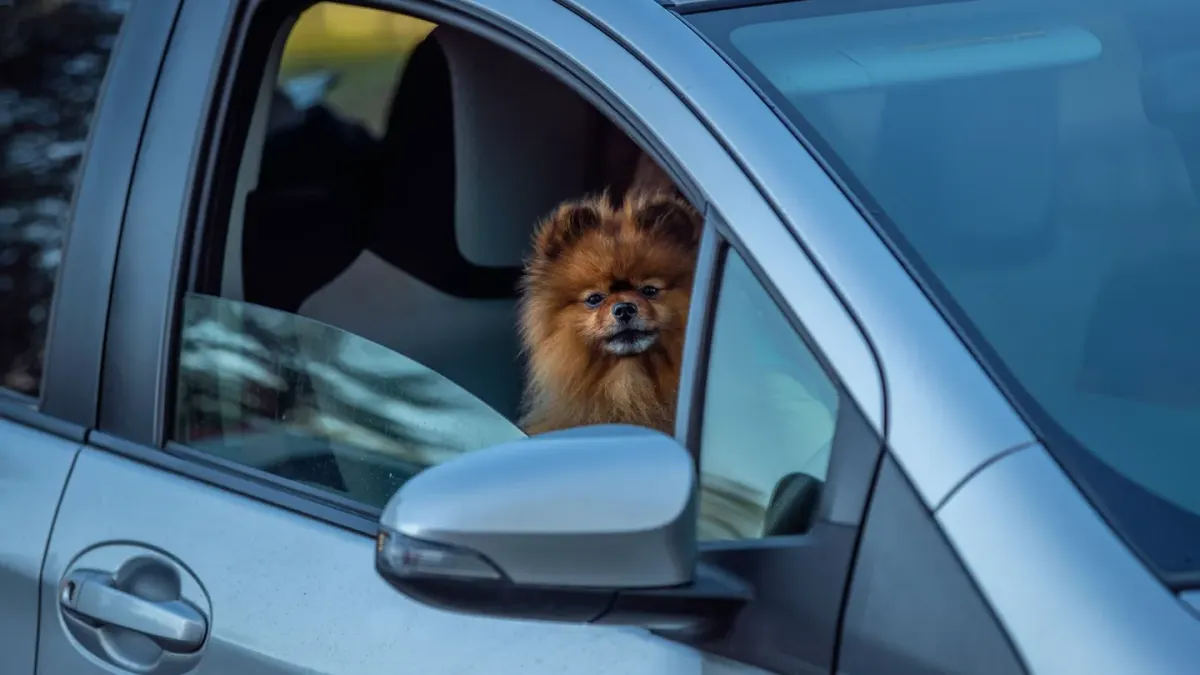
Gina loads Gator, her 7-year-old neutered male German Shorthaired Pointer, behind a mesh divider for the 40-mile drive out of Visalia, California, and Gator hits the divider hard every time she brakes for a light. The barrier keeps him out of the front seat, which feels like a win, until Gina realizes his shoulders and hips are still taking the full slide-and-slam of each stop.
That is the expectation to set first: a dog barrier for cars is a distraction tool, not a restraint system. It may help support calmer driving by blocking access to the driver, but it does little to manage load on tissue when the car decelerates fast.
Vets often see the aftermath in sore necks, strained forelimbs from bracing, and nails torn during a sudden shift in the cargo area. For an active dog that already accumulates training load, that extra, unpredictable load matters for recovery.
Why a barrier does not manage impact load
A wire, mesh, or fabric barrier divides space. It does not couple the dog to the vehicle, so the dog keeps moving after the car stops.
In a hard brake or turn, a 60-pound dog becomes a projectile inside his own compartment. He hits the barrier, the seatback, or the floor with unbraked momentum. The barrier may bend, unzip, or pop its pressure mounts, and then the dog enters the cabin anyway.
The American Veterinary Medical Association frames safe car travel around confinement and preventing driver interference, which is a useful baseline. A barrier meets only the second half of that goal.

What load means here
Think in sports-medicine terms: tissue tolerance versus applied force.
A working dog tolerates repeated, predictable loading during conditioned running and recovers in a known window. A crash or panic stop applies a single high-rate shear and compression that no amount of fitness prepares a joint to absorb, especially on slick cargo plastic.
A barrier cannot shorten that stopping distance for the dog’s body.
What actually contains force in a car
Containment means the dog decelerates with the car, not after it.
That requires either a crash-tested crate secured to tie-downs or a crash-tested harness that connects to the seatbelt system and keeps the dog on the seat. Both limit excursion, which is the distance the body travels before it stops.
The Center for Pet Safety has published independent crash-test work showing how far conventional harnesses stretch, slip, or fail, and why excursion predicts injury. Its findings push owners away from loose dividers and toward systems designed to stay attached under load.
A single barrier cannot do that job.
How crates and harnesses differ for active dogs
A secured hard crate spreads deceleration across the crate shell and keeps the dog from striking the cabin. It also gives stiff or older athletes a familiar, low-stress resting posture between stops, which may help support steadier recovery on long trial days.
A crash-tested harness is more compact and often better tolerated by dogs that pant or overheat in a crate. The tradeoff is higher focal load across the chest and shoulders, so fit, wide webbing, and a short tether matter more than padding claims.
Size changes the math. Small dogs slide under barriers and large dogs vault them, a point covered in Traveling With a Small Dog vs a Large Dog: What Actually Changes. Your choice still needs to couple the individual dog’s weight to the car.
How to set up the back seat for lower risk
Keep it preventive: structure first, then behavior, with realistic timelines for training.
Introduce a crate or harness over two to three weeks with short, rewarded sessions before you need it for travel. Baseline behavior in the driveway predicts behavior at highway speed, and low-stress handling keeps heart rate and bracing lower.
Secure the system every trip. A crate wedged behind a barrier but left unstrapped will still slide. Thread the seatbelt exactly as the harness maker directs, remove slack, and keep the tether short enough that the dog cannot reach the window ledge.
Add traction. A rubber-backed mat inside a crate or cargo area reduces the micro-slips that fatigue wrists and hips during normal driving. That does not replace restraint, but it lowers background load.
Control heat and air separately from the barrier choice. Mesh dividers can improve airflow, which owners like, but airflow never compensates for lack of restraint. Plan water, shade, and rest breaks the way you plan fueling for training.
For fly-drive trips, the same containment logic applies in the air portion, detailed in How to Fly With a Dog: The Complete Guide.
When a barrier still makes sense
A barrier is reasonable as a second layer behind a restrained dog — for example, a harnessed dog behind a divider to reduce visual arousal, or a crated dog with a barrier to keep gear from shifting forward.
What I would not do is rely on a barrier alone for a strong, driven dog like Gator. The best reason owners choose it is ease: no training, no fitting, easy transfer between cars. That convenience fades the first time the dog hits it at speed.
The National Highway Traffic Safety Administration treats anything that pulls attention from driving as a distraction risk, which is where barriers genuinely help. Use them to protect your focus, then let a tested crate or harness protect the dog.
What would change if you measured your setup by excursion instead of convenience — how far could your dog still travel after you stop?
Frequently asked questions
Will a dog barrier for cars keep my dog safe in a crash?
No. A barrier may help support focus by keeping a dog out of the front seat, but it does not restrain the dog's body or absorb deceleration forces. Use a secured crate or crash-tested harness for impact protection.
Can I use a barrier and a harness together?
Yes, when the harness is correctly fitted and attached to the seatbelt system. Keep the tether short, introduce the setup over two to three weeks, and make sure the barrier does not interfere with the attachment point.
Sources
- Traveling With Your Pet — American Veterinary Medical Association
- Pet Safety Research and Crash Testing — Center for Pet Safety
- Distracted Driving Overview — National Highway Traffic Safety Administration