On this page
The best harness for small dogs protects shoulders and fit first, so trail miles feel easy.
Gary learned that on a 3-mile crushed-gravel loop outside Springfield with Mazie, his 2-year-old spayed female Cocker Spaniel at 22 pounds. She started the spring pulling hard in a cute vest, then began to hitch her right foreleg and cough against the chest strap on uphills. Vets often see that pattern when a small dog works against fabric that crosses the shoulder. The fix was not lighter weight. It was a different shape and a tighter fit check.
My verdict for active outings: choose a Y-front that leaves the shoulder joint open, with at least two adjustment points and a secure belly strap you can fit to two fingers. That shape lets you manage load through stride and recovery, which is what Cornell University College of Veterinary Medicine emphasizes in conditioning and rehabilitation resources, and it avoids the throat pressure that collar alternatives are meant to prevent.
The trail test that cute can’t pass
Small dogs take more strides per mile than you do, and every restricted stride adds up over roots, rocks, and creek crossings. A vest that looks soft can still sit across the point of shoulder and shorten reach, especially when it gets damp and shifts. You want webbing that forms a Y at the chest, with the center line falling on the sternum and the arms of the Y running beside the windpipe, not over it.
Shoulders tell the truth.
Watch from the side at a walk and then a trot. Free movement looks smooth through the elbow, with the foreleg reaching forward without a pause. Pinching shows as a short, choppy step or a head bob when the strap catches. For leash mechanics behind that pull, the front-clip vs back-clip breakdown explains how attachment point changes turning force.
Y-front vs vest vs step-in on a small frame
Compare shapes by what they do under load, not by padding alone. A Y-front keeps pressure on sternum and ribcage while the shoulder rotates beneath open straps. A full vest spreads pressure wider, which helps some nervous dogs settle, yet the same coverage traps heat and can ride forward into the armpit on narrow chests. A step-in is quick for dogs that hate gear over the head, though many versions offer only one adjustment and loosen by mile two.
For most trail and neighborhood walks, I prioritize the Y-front with neck and girth adjustments plus a third belly slider when you can find it. You get tissue tolerance where it matters: load lands on bone and rib, not on soft trachea or the front of the shoulder. The American Kennel Club training library notes the same practical point that fit and control matter more than style for everyday walking gear.
Fit checks that keep shoulders free
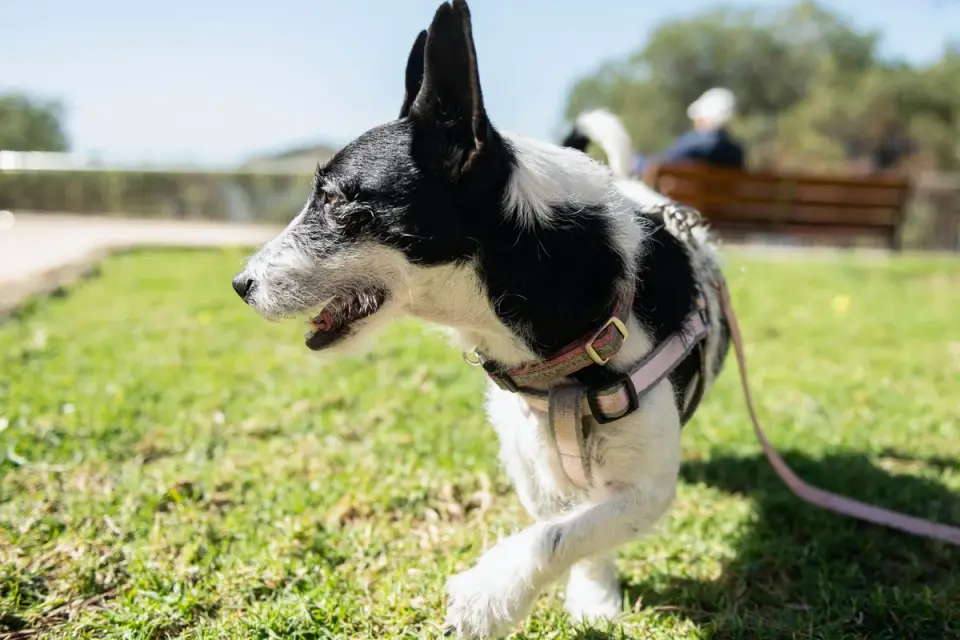
Fit decides function on a 10- to 25-pound body. Start with the neck loop high enough to stay off the shoulder cartilage, then set the girth so you can slide two flat fingers under all straps. Lift each foreleg gently forward as if reaching over a log and confirm the webbing does not catch the leg or gap open at the chest.
Then prove it moving. Walk 50 yards, trot 50 yards, stop and recheck. Nylon relaxes and fluffy undercoats compress, so what felt snug in the kitchen often loosens outdoors. Red flags are rubbing behind the elbows, a D-ring sliding to one side, or the whole harness rotating when Mazie shakes. If you travel or hike farther from home, pair this routine with the planning notes in traveling with a small dog vs a large dog.
Food supports the same recovery picture. Active small dogs still need enough high-quality dietary protein and balanced minerals to maintain muscle through regular walking load, a point grounded in nutritional evidence from maintenance requirements rather than any single supplement. Conditioning ideas sized for little legs are covered in load-smart exercise ideas for toy and small breeds.
The small-dog escape problem
Backing out is the edge case that changes the plan. Small, deep-chested dogs can reverse, tuck elbows, and slip a loose girth in one motion at a trailhead distraction. A snug belly strap, a martingale-style girth loop that cinches slightly under tension, or a three-strap design with a rear band behind the ribs lowers that risk. Test it safely at home by having a helper offer a treat ahead while you hold gentle rearward leash pressure for three seconds.
Skip dangling extras, oversized hardware, and a leash clip heavier than the harness itself. On a 12-pound dog, four ounces of metal changes feel. Choose a light, locking clip, keep nails trimmed so toes do not snag mesh, and rinse grit after sandy trails to prevent armpit sores.
Pick for stride and security and the miles get quiet.
Frequently asked questions
How tight should a small dog harness be?
You should slide two flat fingers under every strap, then lift each foreleg forward to confirm no pinching. Recheck after 10 minutes of walking because coat compression and nylon stretch loosen fit.
Is a Y-front better than a vest for small dogs on trails?
For most active small dogs, yes. A Y-front leaves the shoulder joint open for reach while load rests on sternum and ribs. Vests can work for short, calm walks but often trap heat and shift into the armpit on narrow chests.
What stops a small dog from backing out of a harness?
A correctly set girth plus a third belly strap or martingale cinch behind the ribs. Test with gentle rearward pressure at home and size down if the D-ring rotates or the chest piece gaps during a shake.
Sources
- Basic Harness Guidance — American Kennel Club
- Veterinary Resources — Cornell University College of Veterinary Medicine